For many shooters raised on the 1911, downsizing for daily carry can feel like giving up the controls, balance, and confidence they know by heart. The Sig P238 changed that equation quietly, offering a pocket-size pistol that still feels familiar in all the right ways. Here are the reasons this little .380 earned such a loyal following among concealed carriers who never really stopped wanting a tiny 1911.
It felt instantly familiar

The P238 made an immediate impression because it did not ask 1911 shooters to relearn everything from scratch. The thumb safety, the single-action trigger, and the overall manual of arms felt comfortingly close to what many had practiced for years.
That kind of familiarity matters more than spec sheets suggest. When a concealed-carry gun behaves in a predictable way, confidence tends to follow. For shooters who already trusted cocked-and-locked carry on a 1911, the P238 felt less like a compromise and more like a logical next step.
Instead of introducing a totally new rhythm, it preserved muscle memory. That alone made it easier to accept as an everyday companion.
The controls made sense under stress
A lot of small carry guns are easy to describe but not always easy to run well when adrenaline shows up. The P238 stood out because its controls were laid out in a way that felt deliberate, accessible, and reassuringly old-school.
For people who grew up sweeping off a thumb safety during presentation, the motion was already wired in. That meant less hesitation and less second-guessing, especially during practice drills where repetition reveals what truly works.
In practical terms, the gun rewarded consistency. Shooters did not need to invent a new sequence every time they drew, fired, or reholstered, and that continuity became a major part of its appeal.
Its trigger felt better than many pocket pistols

Pocket pistols often get sold on size first and shootability second. The P238 flipped that script a bit, because its single-action trigger gave many owners a cleaner, crisper break than they expected from something so small.
That better trigger did more than make range sessions pleasant. It helped people shoot the gun more accurately and with more confidence, which is exactly what hesitant buyers often need before committing to a daily carry routine.
For longtime 1911 fans, the difference was especially noticeable. They were used to good triggers, and the P238 delivered a version of that familiar feel in a package that could disappear into a pocket or compact holster.
The recoil was manageable for its size
Small guns have a reputation for being surprisingly unpleasant, and not without reason. Lightweight frames and tiny grips can turn even mild cartridges into snappy little reminders that concealability often comes with tradeoffs.
The P238 earned praise because it softened that experience. Many shooters found its recoil more controllable than expected, which made practice less punishing and follow-up shots more realistic for ordinary people, not just range regulars.
That mattered for 1911 devotees who wanted a carry gun they would actually train with. A pistol can be tiny and reliable, but if it is miserable to shoot, it tends to stay home. The P238 usually avoided that fate.
It offered real sights and real shootability
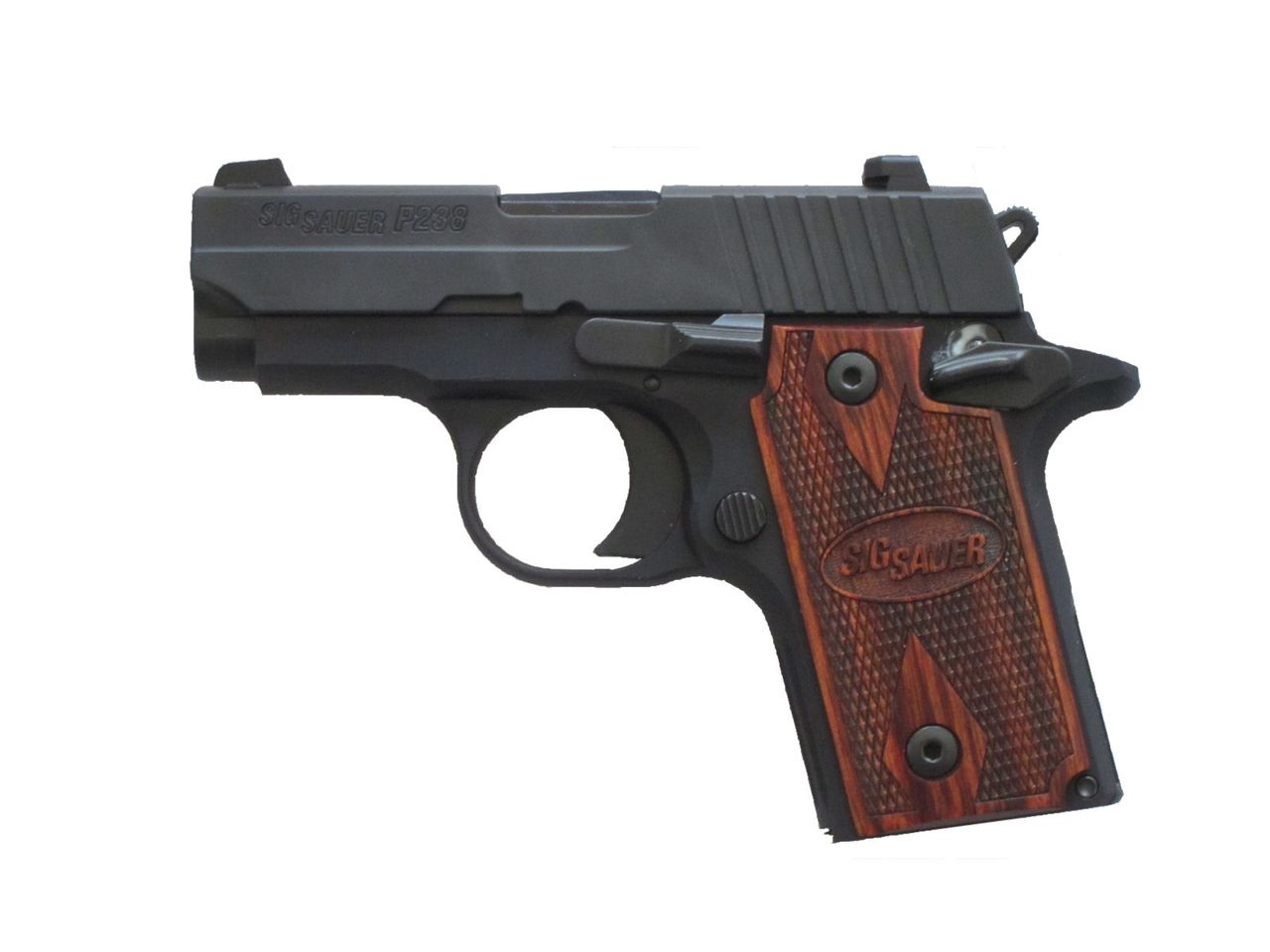
Many ultra-compact pistols feel designed around being carried more than being aimed. Tiny sights, abbreviated grips, and minimal ergonomics may help a gun disappear, but they can also make accurate shooting feel like an afterthought.
The P238 gained traction because it felt more complete than that. Its sights were usable, its grip was workable, and its proportions made it easier to hit with than many people expected from a pistol in this category.
That practical shootability gave 1911-oriented buyers a reason to trust it. They were not looking for a talisman or a last-resort novelty. They wanted a small pistol that still behaved like a serious handgun when the shooting started.
It shrank the 1911 idea without losing the charm

Part of the P238’s success came from something harder to quantify than caliber or capacity. It captured enough of the 1911’s personality that owners felt they were carrying a miniature expression of a platform they already admired.
The lines, the metal-frame feel, and the crisp operating logic all contributed to that impression. Even people who understood the mechanical differences often talked about the gun in emotional terms, because it scratched a very specific itch.
That matters in the concealed-carry world, where personal preference drives real habits. If a gun is enjoyable to own and satisfying to handle, people tend to carry it more consistently. The P238 leaned into that simple truth.
It was easy to carry every day
The biggest breakthrough was also the most practical one. The P238 was small enough and light enough to fit into everyday life without forcing major wardrobe changes, elaborate belts, or constant awareness of a heavy gun dragging at the waist.
That convenience helped bridge the gap between admiration and actual routine. Plenty of shooters love full-size 1911s, but loving a pistol is different from carrying it through errands, office hours, summer heat, and long drives.
The P238 made consistency possible. For many owners, it became the gun that was actually with them, and that simple fact did more to win loyalty than any marketing language ever could.
It became a confidence builder for the modern carry crowd

In the end, the P238 worked as a gateway gun because it eased a cultural transition as much as a technical one. It let traditionalists step into modern concealed carry without feeling like they had abandoned everything they valued about older fighting pistols.
That made it especially appealing to people moving from range familiarity to daily responsibility. The gun was approachable, shootable, and just familiar enough to calm the learning curve without making the experience feel dated.
Quietly, that formula created trust. And once a carry gun earns trust, it often earns permanence, which is exactly why the P238 still occupies a special place in the conversation.