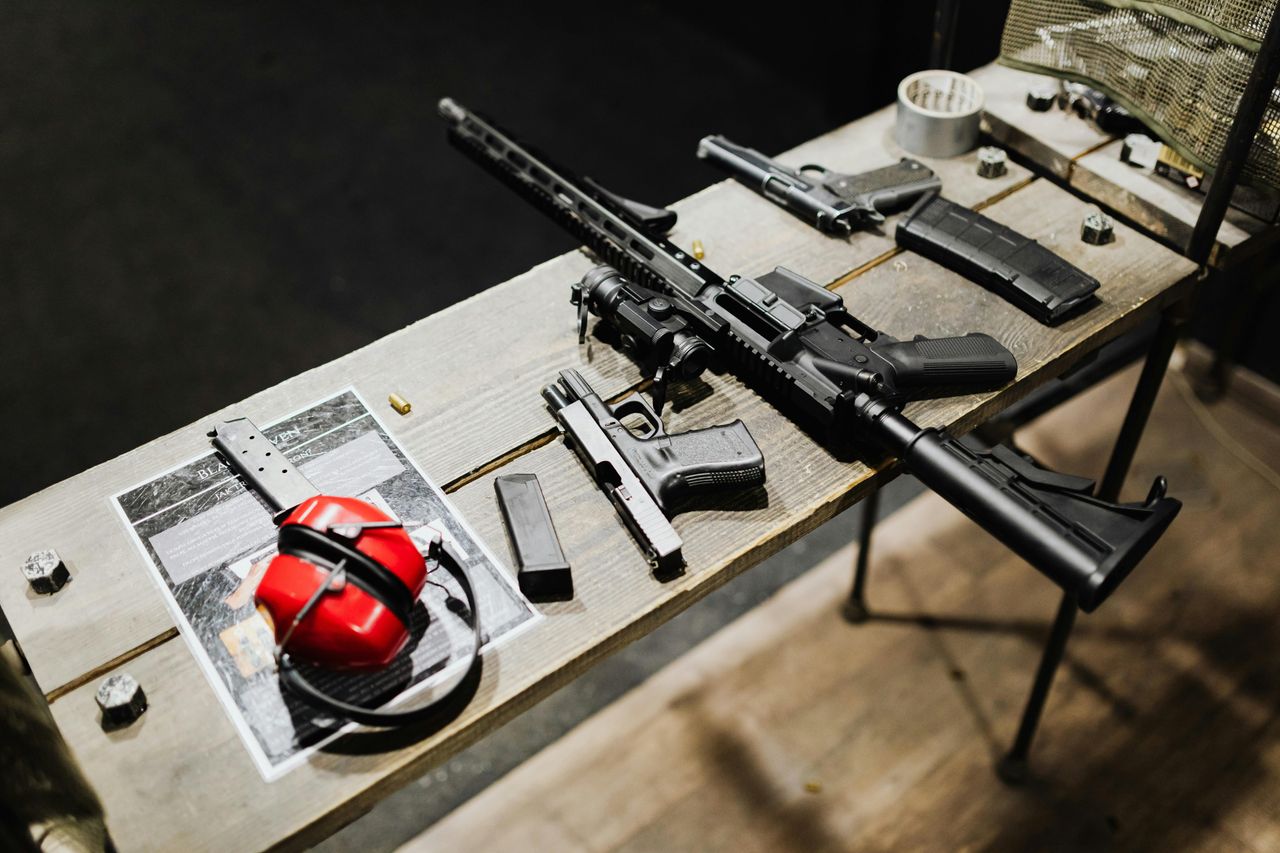
Classic firearms still set the benchmark for reliability, balance, and cultural impact, but a new generation of designs is pushing the conversation forward. From modular rifles to optics-ready pistols and compact bullpups, modern engineering is changing what shooters expect from familiar platforms. This gallery explores 10 standout designs that challenge long-held assumptions without ignoring the lessons of the past.
FN SCAR

The FN SCAR looks like a rifle built for the present tense. Its monolithic upper, folding stock, and adjustable controls give it a distinctly modular personality, which is a sharp contrast to the fixed, old-school feel of many legacy battle rifles.
What makes it stand out is not just appearance, but adaptability. Different barrel lengths, calibers, and accessory setups let it move between roles with ease, something classic designs rarely managed without major compromise.
For many shooters, the SCAR represents a shift from one-rifle, one-purpose thinking. It challenges the older idea that durability and flexibility cannot live in the same package.
IWI Tavor X95

The Tavor X95 asks a simple question: why should a rifle be long just because the barrel is? Its bullpup layout keeps the action behind the trigger, creating a compact profile that feels very different from the classic full-length rifle silhouette.
That compactness makes it especially appealing in tight spaces, but the design is about more than size. Ambidextrous controls, modular rails, and modern ergonomics show how the rifle was shaped around current use rather than historical convention.
Bullpups have always been divisive, and that is part of the point here. The X95 challenges traditional ideas about balance, handling, and what a practical rifle should look like.
SIG Sauer MCX Spear

The SIG Sauer MCX Spear feels like a rifle designed around modern mission creep. It brings together modular construction, suppressor-friendly engineering, and a platform built to handle evolving caliber demands, all while looking a step removed from older service rifle traditions.
Its short-stroke piston system also reflects a broader move toward cleaner, more adaptable operation under harsh conditions. That matters to professionals, but it also speaks to civilian interest in high-performance rifles that can be tuned to specific needs.
What the Spear really challenges is the idea that the standard rifle pattern is finished. It suggests that even the most familiar category still has room for bold reinvention.
Heckler & Koch VP9

The HK VP9 entered a crowded striker-fired market, yet it quickly made clear that refinement still matters. Its trigger, grip shape, and charging supports gave shooters a pistol that felt carefully thought out rather than simply cost-effective.
Compared with classic hammer-fired sidearms, the VP9 represents a more streamlined philosophy. It reduces complexity in day-to-day handling while leaning into interchangeable backstraps and side panels for a more tailored fit.
That user-focused approach is where the challenge lies. Older pistols often asked shooters to adapt to the gun, while the VP9 is part of a modern wave that expects the gun to adapt to the shooter.
Glock 19 Gen 5 MOS

The Glock 19 has already become a modern classic, but the Gen 5 MOS version pushes the formula further by embracing optics-ready practicality. That small change carries big implications, especially in a handgun world once dominated by iron sights and fixed assumptions.
Its appeal comes from how little drama it creates. Reliable, simple, and easy to configure, it reflects the contemporary belief that a sidearm should serve as a platform as much as a finished product.
For traditionalists, that can feel almost too utilitarian. But that is exactly why it challenges the classics, because it proves that plain design, modularity, and widespread adaptability can become a new kind of benchmark.
Staccato P
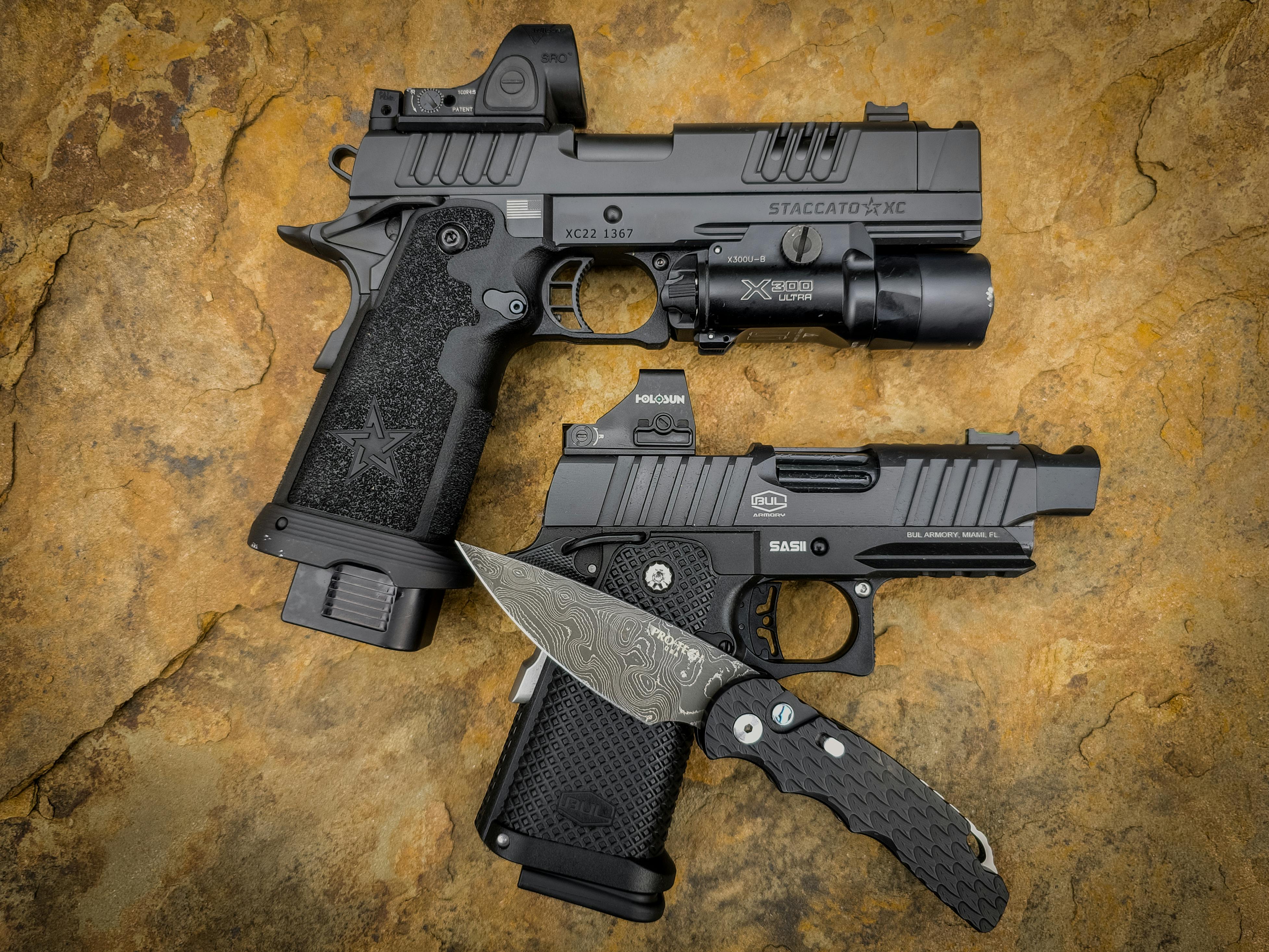
The Staccato P takes the familiar 1911 lineage and stretches it into something distinctly current. By using the 2011-style double-stack format, it keeps the celebrated trigger feel of a classic while adding capacity and duty-ready features that older versions lacked.
This is where nostalgia meets engineering. You can still see the bones of John Browning’s iconic design, but the execution is aimed at modern law enforcement, competition, and defensive expectations rather than pure historical reverence.
That balancing act is what makes it so interesting. The Staccato P does not reject the classic pistol outright, but it absolutely questions whether the original format should remain untouched.
KelTec KSG

The KelTec KSG barely resembles the traditional pump shotgun that many people picture first. Its dual magazine tubes and bullpup layout create a compact, almost futuristic profile that immediately signals a break from the walnut-and-steel past.
Even setting looks aside, the design changes how a shotgun is stored, handled, and deployed. It offers significant capacity in a shorter package, which directly challenges the old tradeoff between firepower and maneuverability.
Not everyone loves its feel, and that is part of the larger story. The KSG shows how modern firearm design is often willing to prioritize innovation, even when it means stepping far outside the comfort zone of familiar classics.
Beretta PMX

The Beretta PMX reflects a contemporary approach to the compact subgun concept. Lightweight polymer construction, ambidextrous controls, and rail space make it feel more like a modular tool than a descendant of the all-metal classics that defined the category for decades.
That matters because the old submachine gun formula was often tied to a specific era and style of use. The PMX, by contrast, is shaped by current demands for flexibility, reduced weight, and easy customization.
It may not have the romantic aura of older designs, but that is almost the point. The PMX challenges the classics by treating legacy charm as optional and practical efficiency as the main event.
Desert Tech MDRX

The Desert Tech MDRX goes after convention from multiple angles at once. Its bullpup form is compact, its caliber-swapping concept is ambitious, and its visual language feels more like modern industrial design than anything inherited from a traditional rifle rack.
That versatility is central to its identity. The idea that one rifle can shift between configurations and roles speaks directly to today’s interest in modular systems rather than single-purpose firearms.
It is not a design built to reassure purists. Instead, the MDRX openly questions whether classic layout, fixed identity, and familiar controls should still define the limits of rifle development.
Laugo Alien

Few pistols make a first impression quite like the Laugo Alien. With its ultra-low bore axis, unusual slide arrangement, and aggressively modern shape, it looks and feels like a deliberate challenge to the established language of service and competition handguns.
The goal is not novelty for novelty’s sake. By reducing muzzle rise and rethinking how the upper assembly operates, the Alien aims to deliver a flatter, faster shooting experience than more conventional designs.
That is what makes it such a striking finale for this list. The Alien does not simply update a classic pattern, it asks whether the pattern itself was ever the final answer in the first place.