The fight over youth hunting age minimums is getting louder. And it is no longer coming only from lawmakers or advocacy groups.
More parents are arguing that the rules were built for a different era, and that blunt age cutoffs do not reflect how kids actually learn to hunt today.
The Old Logic Behind Age Minimums Is Running Into A New Reality
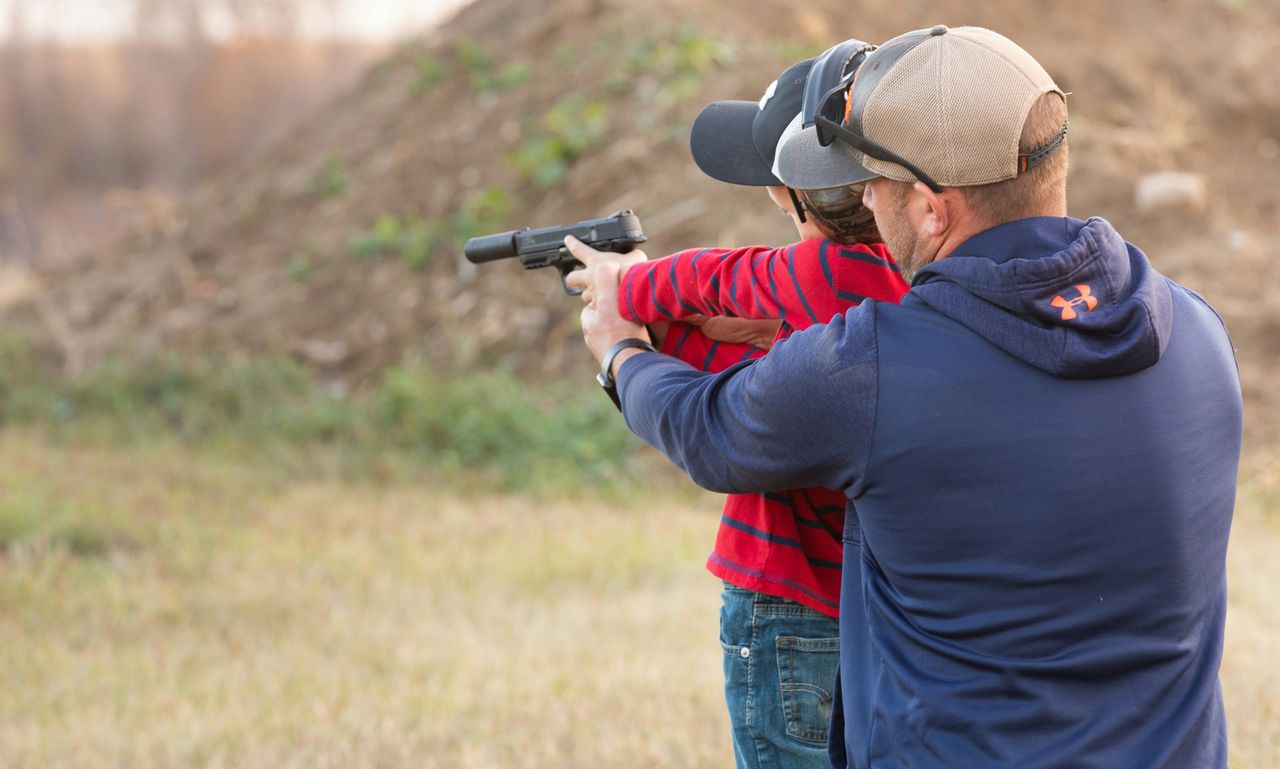
For decades, minimum age rules were designed around a simple idea: younger children should not handle firearms or enter the field before the law says they are ready. That made sense when state systems were less standardized, hunter education was less widespread, and family mentoring rules were not as developed as they are now. Age was the easiest line for regulators to draw, even if it was never a perfect measure of maturity.
Now that approach is colliding with modern hunting culture. According to the International Hunter Education Association, nearly 40 million students have completed hunter education since 1949, and more than 550,000 students are certified each year. The group also says hunting injury rates have fallen dramatically over the last 50 years as education expanded. Those facts have strengthened the argument that training and supervision matter at least as much as age.
Parents pushing for change often say the law still treats hunting readiness as a birthday issue, when in practice it is a skills issue. A child who has spent years shooting under close adult supervision may be barred in one state, while a similarly aged child can legally hunt in another. That inconsistency is one reason the current rules now look outdated to many families.
The result is a debate that feels less ideological than practical. Parents are asking why a rigid minimum age should outweigh completed coursework, proven firearm discipline, and direct adult control in the field. In their view, the legal framework has not kept pace with how youth hunting is actually taught today, according to IHEA-USA and multiple state wildlife agencies.
State Laws Are So Different That Parents See The System As Arbitrary
One reason this issue keeps resurfacing is that the rules vary enormously from state to state. Texas, for example, allows broad youth participation under supervision and states in its 2025-2026 regulations that the minimum age of hunter education certification is 9. Texas Parks and Wildlife also says there is no minimum age requirement for certain youth and youth-adult drawn hunts, except where federal waterfowl rules apply.
Kentucky takes a similarly flexible approach in some cases. The Kentucky Department of Fish and Wildlife says youth hunters under age 12 do not need a hunting license or deer permit, and its youth turkey season FAQ says there is no minimum age for participants. Minnesota, by contrast, ties opportunities more tightly to age categories, with youth deer licenses and special youth hunt rules that distinguish between groups such as ages 10 to 12 and older teens.
New York offers another model that shows how politically sensitive the issue can become. State materials note that a 2021 law lowered the youth big-game firearm hunting age from 14 to 12 in participating counties, with adult mentors required. The state’s youth hunt guidance also says supervising adults must have at least three years of big-game firearm hunting experience and maintain physical control over the youth hunter.
To parents, that patchwork looks less like a coherent safety system and more like historical drift. If a 10- or 12-year-old can legally hunt under strict supervision in one place but not another, families naturally ask whether the number itself is evidence-based. The differences do not prove every minimum age is wrong, but they do make it much harder to argue that any single cutoff is obviously the right one.
Parents Say Readiness Cannot Be Measured By Birthday Alone
The heart of the parental case is not that all children should hunt younger. It is that some children are ready earlier than the law allows, while others are not ready even after they clear the minimum age. In other words, critics of fixed limits say age is a rough proxy that works administratively but often fails in the field.
Many parents describe hunting readiness as a mix of temperament, physical control, instruction, and trust. Can the child follow commands instantly, keep the muzzle in a safe direction, sit still for long stretches, identify game correctly, and handle disappointment without losing focus? Those are the standards families talk about, and they are not automatically answered by turning 10, 12, or 14.
That argument gains force from the way modern states already regulate youth participation through layered safeguards. Texas requires either hunter education or accompaniment by a qualified adult for those under 17, and on public lands youths under 17 must be under immediate supervision by an authorized adult. New York’s mentored system similarly relies on experienced adults staying in direct control during the hunt.
Parents say that if the real safety mechanism is the mentor, the training, and the conditions of the hunt, then the law should reflect that honestly. They are not asking regulators to ignore age entirely. They are asking whether age should remain the primary gatekeeper when most actual risk management now comes from supervised instruction, certification, and tightly structured youth seasons.
Recruitment Pressures Are Also Changing The Political Math

There is another force behind these challenges: hunting participation matters to conservation systems, and agencies know recruitment is getting harder. The U.S. Fish and Wildlife Service reported that 14.4 million people hunted in 2022, and the agency’s recruitment and retention work has become central to how states think about the future of license sales, excise-tax funding, and outdoor traditions. State wildlife agencies increasingly talk about R3, meaning recruitment, retention, and reactivation.
Texas Parks and Wildlife says directly that increased participation in hunting and shooting sports helps fund conservation work, including habitat improvements, access projects, and mentored hunting programs. The agency also notes that hunting participation has not kept pace with the state’s population growth. That makes youth entry more important than ever, especially as families have more competing demands on weekends and school calendars.
Parents know this, and many frame age minimum reform as a conservation issue as much as a family issue. If children cannot start when they are excited, mentored, and available, some may never start at all. A rule that delays entry by a few years may seem minor on paper, but families say it can mean the difference between building a lifelong hunter and losing the moment completely.
That does not mean agencies are lowering barriers recklessly. In many states, youth seasons are tightly supervised and deliberately limited. But the political argument for flexibility is stronger when regulators are also trying to bring new participants into a system that depends on long-term involvement to sustain conservation funding and hunting culture.
Safety Is Still The Deciding Argument For Opponents Of Looser Rules
Even with all that pressure, safety remains the strongest counterargument. Opponents of lowering age minimums say children develop unevenly, and that a legal floor protects against bad judgment by adults who may overestimate a child’s readiness. They argue that once the state lowers the number, it cannot ensure every family will apply the same discipline or caution as the best mentors do.
That concern is not abstract. Firearms laws, public attitudes, and risk tolerance differ sharply across states. Some critics fear that flexible rules can work well in highly engaged hunting families but fail in less experienced households. They also worry that public trust in hunting can be damaged quickly by a small number of high-profile incidents involving very young participants.
Still, supporters of reform respond that safety data often points to education and supervision, not age alone. New York’s Department of Environmental Conservation said its 2024-25 seasons were the second safest on record and credited hunter education, regulations, and firearm safety compliance. That does not settle the argument, but it does reinforce the idea that behavior-based safeguards can be highly effective.
So the debate is not really safety versus recklessness. It is a clash between two models of safety. One relies heavily on age thresholds as a protective backstop. The other relies more on training, mentoring, direct control, and gradual entry into the field. Parents challenging the old rules are arguing for the second model, not for the removal of safety standards.
The Bigger Cultural Shift Is About Who Gets To Judge Readiness

Beneath the legal details sits a deeper question about authority. Should the state decide, through a bright-line age rule, when a child may begin hunting? Or should parents, within a tightly regulated framework, have more discretion when they can prove the hunt is mentored and the child is prepared? That is the tension driving much of this debate.
For many families, hunting is not treated like a casual recreation that begins at a fixed age. It is taught over years through observation, chores, range time, wildlife knowledge, and careful exposure to responsibility. Parents who challenge current rules often feel the law ignores that apprenticeship model and replaces it with a one-size-fits-all standard built for administrative convenience.
There is also a rural-urban divide inside this argument. In places where hunting remains a common family tradition, younger participation can feel normal and carefully managed. In more urbanized settings, the same image may look alarming to nonhunters, which creates political pressure for stricter statewide rules. The conflict is partly about risk, but it is also about different lived experiences of firearms and outdoor culture.
That is why the issue keeps expanding beyond hunting itself. It touches parenting, local control, tradition, and public confidence. Once parents start asking whether the rules fit real family practice, they are also asking a broader civic question: how much flexibility should the law allow when competence does not line up neatly with age?
What A Better Fit Might Look Like
If lawmakers want a middle ground, they do not have to choose between rigid age floors and a free-for-all. A better fit would likely involve conditional access rather than automatic access. That could mean allowing younger participation only in mentored hunts, only after hunter education or field-day completion where applicable, and only with adults who meet experience standards like New York’s three-year requirement for youth big-game mentors.
States could also separate methods and settings more carefully. A child might be allowed to start in archery, small game, or special youth-only seasons before moving into more demanding firearm hunts. Texas already shows how layered systems can work, with different rules for public lands, drawn hunts, hunter education, and supervised youth access. That kind of structure gives regulators tools beyond a single age number.
Parents challenging today’s minimums are not all demanding the same outcome. Some want lower ages. Others want waivers, apprentice pathways, or more room for agency discretion. What unites them is the belief that the old framework is too blunt for modern hunting, where training, mentor quality, and supervision can be defined much more precisely than they once were.
That is why this fight is not likely to fade soon. As states balance safety, recruitment, public perception, and family tradition, youth hunting laws will keep evolving. The pressure from parents is really a push for a new question: not simply how old a young hunter is, but how well the system can judge whether that young hunter is truly ready.