Some debates fade when better gear comes along. This one never does, because both rifles keep proving why they matter.
Why these two rifles became legends

The Ruger 10/22 and Marlin Model 60 rose to prominence for the same basic reason: they made .22 LR shooting affordable, approachable, and genuinely fun for generations of shooters. Introduced in 1964, the 10/22 quickly built a reputation for reliability and easy handling. The Model 60, which arrived a few years earlier in 1960, gained traction with buyers who wanted a soft-shooting semiauto that felt accurate right out of the box.
Both rifles also benefited from timing. Postwar America saw an explosion in recreational shooting, small-game hunting, and backyard plinking, where legal and safe. A lightweight .22 semiauto with modest recoil and inexpensive ammunition fit perfectly into that world. Families bought them for farm use, squirrel woods, and first range trips, then passed them down.
That shared history is what keeps the comparison alive. These are not niche collector pieces discussed only by specialists. They are working rifles with deep cultural roots, and millions of shooters have a personal story tied to one or the other. When a platform becomes part of family memory, brand loyalty turns into something stronger than specs.
The core design difference that shapes everything

The biggest mechanical divide is easy to explain and impossible to ignore: the Ruger 10/22 uses a detachable rotary magazine, while the Marlin Model 60 traditionally uses a tubular magazine under the barrel. That one distinction changes loading habits, field use, balance, capacity discussions, and how each rifle feels in day-to-day ownership. It is the center of the whole argument.
The 10/22 magazine is one of the smartest pieces of rimfire engineering ever popularized. Its rotary design sits flush with the stock, preserves clean lines, and generally feeds well with standard velocity and high-velocity ammunition. For range shooters, spare magazines make reloads fast and convenient. For anyone who values modularity, it feels modern even decades after its introduction.
The Model 60’s tube magazine appeals to a different kind of shooter. It eliminates the need to keep track of detachable magazines and often allows generous capacity, though exact numbers vary by production era and local regulations. Many hunters appreciate being able to top off the tube and carry the rifle without an exposed magazine. Others simply prefer the traditional feel, especially on a classic walnut-stocked rimfire.
Neither system is universally better. The Ruger favors speed, convenience, and accessories. The Marlin favors simplicity, continuity, and a more old-school shooting rhythm that many owners find deeply satisfying.
Accuracy, reliability, and what owners actually notice
Ask longtime owners which rifle shoots better, and the answer often surprises newcomers: many will tell you the Model 60 has historically enjoyed a reputation for very good out-of-the-box accuracy. Marlin’s Micro-Groove rifling became a selling point, and plenty of shooters found their rifles grouped impressively with ordinary bulk or midgrade ammunition. In practical terms, that meant fewer excuses and more confidence on squirrels, cans, and paper targets.
The 10/22, by contrast, built its legend less on factory precision than on dependable all-around performance. A standard carbine often shoots well enough for plinking and small game, but its real strength is consistency combined with an enormous path for improvement. If a stock rifle prints acceptable groups, many owners know they can tighten those groups later with a barrel, trigger, or stock swap.
Reliability is also a nuanced discussion. Both rifles can run for years with minimal drama if kept reasonably clean and fed ammunition they like. The 10/22 has long enjoyed a reputation for digesting a wide range of loads, while the Model 60 can be wonderfully smooth when maintained properly. Rimfire ammunition is inherently dirtier than centerfire, so many “rifle problems” are really ammo or fouling problems.
In the real world, owners tend to remember patterns, not laboratory data. The shooter whose Marlin always grouped tighter becomes a lifelong Model 60 advocate. The shooter whose Ruger ran through bricks of ammo and accepted every upgrade becomes equally loyal.
Customization versus leave-it-alone practicality
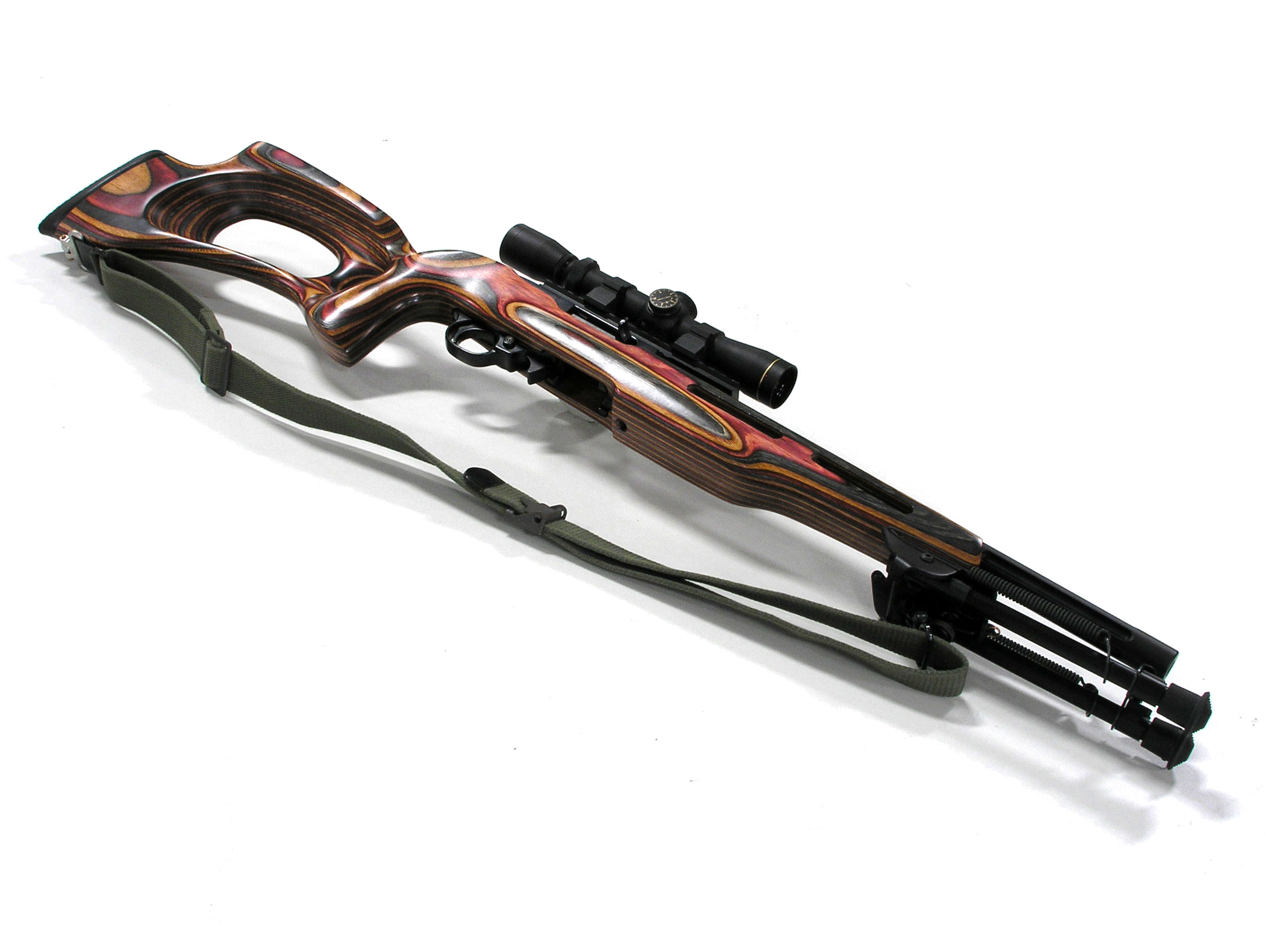
If this debate were judged purely on aftermarket support, the Ruger 10/22 would win by knockout. Few rifles in any category have inspired such a vast ecosystem of stocks, triggers, barrels, optics rails, extended magazine releases, bolt parts, chassis systems, and complete receiver upgrades. You can buy a basic carbine and slowly tune it, or you can build something so extensively modified that almost none of the original rifle remains.
That flexibility is the 10/22’s superpower. It serves as a first rifle, a trainer, a suppressor host where legal, a steel challenge rimfire, or a compact pack gun depending on configuration. Entire competitions and cottage industries grew around that modularity. In many gun shops, the 10/22 is less a product than a platform.
The Model 60 takes the opposite route, and for many people that is a strength, not a weakness. It is usually purchased to be shot as-is, maintained sensibly, and enjoyed without turning ownership into a project. There is a calm practicality to that. You buy it, zero it, learn what ammo it likes, and get on with the business of shooting.
This difference reveals personality as much as preference. Tinkerers gravitate to the Ruger because it invites experimentation. Traditionalists often prefer the Marlin because it asks for less attention and rewards straightforward use.
Handling in the field and on the range

In hand, these rifles feel more different than a spec sheet suggests. The 10/22 carbine is trim, compact, and fast to the shoulder, with a reputation for easy balance that makes it popular with younger shooters and anyone walking a lot of ground. The controls are familiar to generations of users, and modern versions have gradually improved some ergonomics that earlier owners used to replace immediately.
The Model 60 often feels a bit more like a classic sporting rifle. Depending on stock style and production era, it can seem longer, smoother, and slightly more deliberate in the way it swings. For woods hunting, that can be a virtue. The under-barrel tube contributes to a distinct feel, especially once loaded, and many owners like the steadiness it brings for offhand shots.
At the bench, preferences split again. Some shooters like the Ruger’s detachable magazine because it simplifies loading cycles and bench use. Others appreciate the Marlin’s natural pointability and the way many examples settle into a rhythm once zeroed. Neither rifle is hard to shoot well, but each rewards a slightly different pace.
For first-time shooters, both are manageable introductions to rifles. Recoil is negligible, report is mild compared with larger calibers, and the .22 LR cartridge encourages longer practice sessions without punishing cost or fatigue.
Price, value, and what you really get for the money
Historically, both rifles built their reputations by offering a lot for the money. The Model 60 often earned praise as the bargain accuracy pick, giving owners strong practical performance without requiring upgrades. The 10/22 sometimes cost a bit more, but buyers were investing in a platform with broad support and durable resale appeal. That distinction still frames the value conversation today.
A stock 10/22 can be the beginning of a longer financial journey. Many owners start with a reasonably priced carbine, then add magazines, optics, sling hardware, trigger components, and eventually premium parts. None of that is mandatory, but it is undeniably tempting. The total cost of ownership can climb well beyond the rifle’s sticker price.
The Model 60 usually keeps the spending more contained. You might add a scope, rings, and a case, then stop there because the rifle already does what you bought it to do. For shooters who want one rimfire without a customization rabbit hole, that can be a better kind of value. It saves money not just upfront, but over time.
Resale and collectibility add another wrinkle. Older examples of both rifles attract loyal buyers, especially clean specimens with traditional wood stocks. Yet the 10/22’s ongoing popularity and universal parts market often give it broader long-term market confidence.
Why the argument will never truly end
This debate survives because the rifles represent two valid philosophies of shooting. The Ruger 10/22 stands for flexibility, personalization, and the idea that a rimfire can evolve with its owner. The Marlin Model 60 stands for classic utility, strong out-of-the-box performance, and the appeal of a rifle that simply does its job with very little drama. Neither philosophy has ever gone out of style.
Talk to hunters, plinkers, instructors, and collectors, and the same pattern appears. People do not choose only with their heads. They choose with memory, habit, handling feel, and trust built over thousands of rounds. The rifle that taught someone to shoot at age 12 often remains “the right one” forever, no matter what a chart says.
If you want the most customizable rimfire ever made, the 10/22 is hard to beat. If you want a traditional semiauto .22 that has won affection through straightforward performance, the Model 60 still makes an excellent case for itself. That is exactly why this argument never gets settled.
The truth is not that one rifle defeats the other. The truth is that both solved the rimfire problem so well, in such different ways, that generations of shooters keep finding room for both in the gun cabinet and in the conversation.