Some guns become famous through marketing. Others get there by surviving hard use, winning contracts, and staying relevant for generations.
What it really means for a gun to earn respect
When people say a gun does not need approval, they usually do not mean it is beyond criticism. They mean the design has already been tested in the only places that matter: on duty, in the field, in competition, and in the hands of ordinary owners who keep choosing it year after year. Reputation in this world is not built in a weekend. It is built over decades of reliability, parts support, and predictable performance.
That standard matters because the firearms market is crowded with trend-driven releases. New coatings, new slide cuts, and new branding can create excitement, but excitement is not the same thing as trust. A trusted gun is one that armorers know how to service, instructors know how to teach, and users know how to run under stress. That kind of confidence compounds over time.
The broader market reflects that staying power. According to NSSF, adjusted FBI NICS background checks still topped 15.2 million in 2024, showing that firearms demand remains strong even after the pandemic surge cooled. In a big market, only a few platforms keep rising above fashion and becoming reference points for everyone else.
The Glock 19 and the rise of the practical pistol

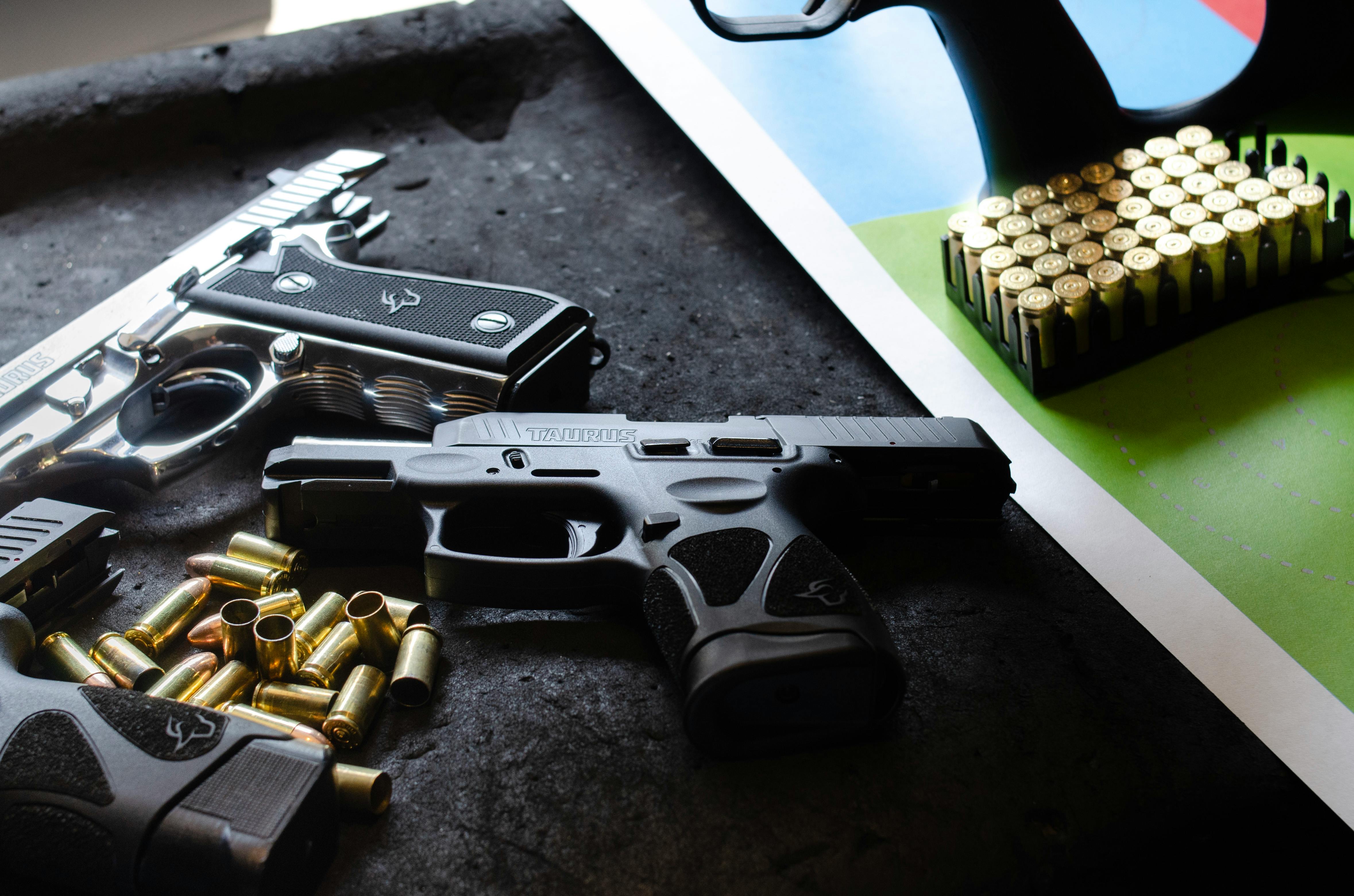
If one handgun best represents modern practical acceptance, it is the Glock 19. Glock’s own history traces the company’s rise from Austrian military contracts in the early 1980s, and the compact Glock 19 became a defining model by combining service-size shootability with concealed-carry practicality. That balance is why it became a favorite among civilians, trainers, and law enforcement users without needing much explanation from anyone.
Part of the appeal is how little drama the platform brings. The striker-fired system is simple, the controls are consistent, and the aftermarket became so vast that entire product categories grew around the pistol. Holsters, sights, magazines, triggers, optics cuts, training protocols, and even competing pistols were shaped in response to Glock’s formula. When a design becomes the measuring stick, it has clearly crossed into another tier.
Its influence also came from timing. As agencies and private owners moved toward lighter, higher-capacity 9mm pistols, Glock was already there with a reliable polymer-framed answer. The Associated Press noted after Gaston Glock’s death in 2023 that Glock pistols were seen as lighter, cheaper, and more reliable than many competing models when they arrived. That reputation was not invented later. It was earned early and reinforced constantly.
The 1911 proves that longevity is its own endorsement
Very few firearms can claim more than a century of serious relevance, but the 1911 can. The U.S. Army officially adopted the Colt .45 pistol in March 1911, and the Smithsonian notes that the Model 1911 remained an official U.S. military sidearm until 1986. That service life alone would secure its legacy. Add in two world wars, Korea, Vietnam, and decades of civilian competition use, and the design becomes impossible to dismiss.
What keeps the 1911 in the conversation is not nostalgia alone. It is the combination of a straight-to-the-rear trigger pull, natural pointability, and a slim profile that still feels excellent in the hand. Even people who prefer newer pistols often admit the platform set a standard for shootability that many later designs still chase. A gun does not last this long on sentiment alone. It lasts because it does something exceptionally well.
Its continued presence also says something about how gun culture works. The 1911 invites tuning, personalization, and craftsmanship in a way that few mass-market pistols do. That means it lives in multiple worlds at once: military history, defensive carry, competition, collecting, and custom gunsmithing. Plenty of newer pistols are easier to maintain, but very few have inspired this much loyalty across so many generations.
The AK pattern became legendary by being brutally simple
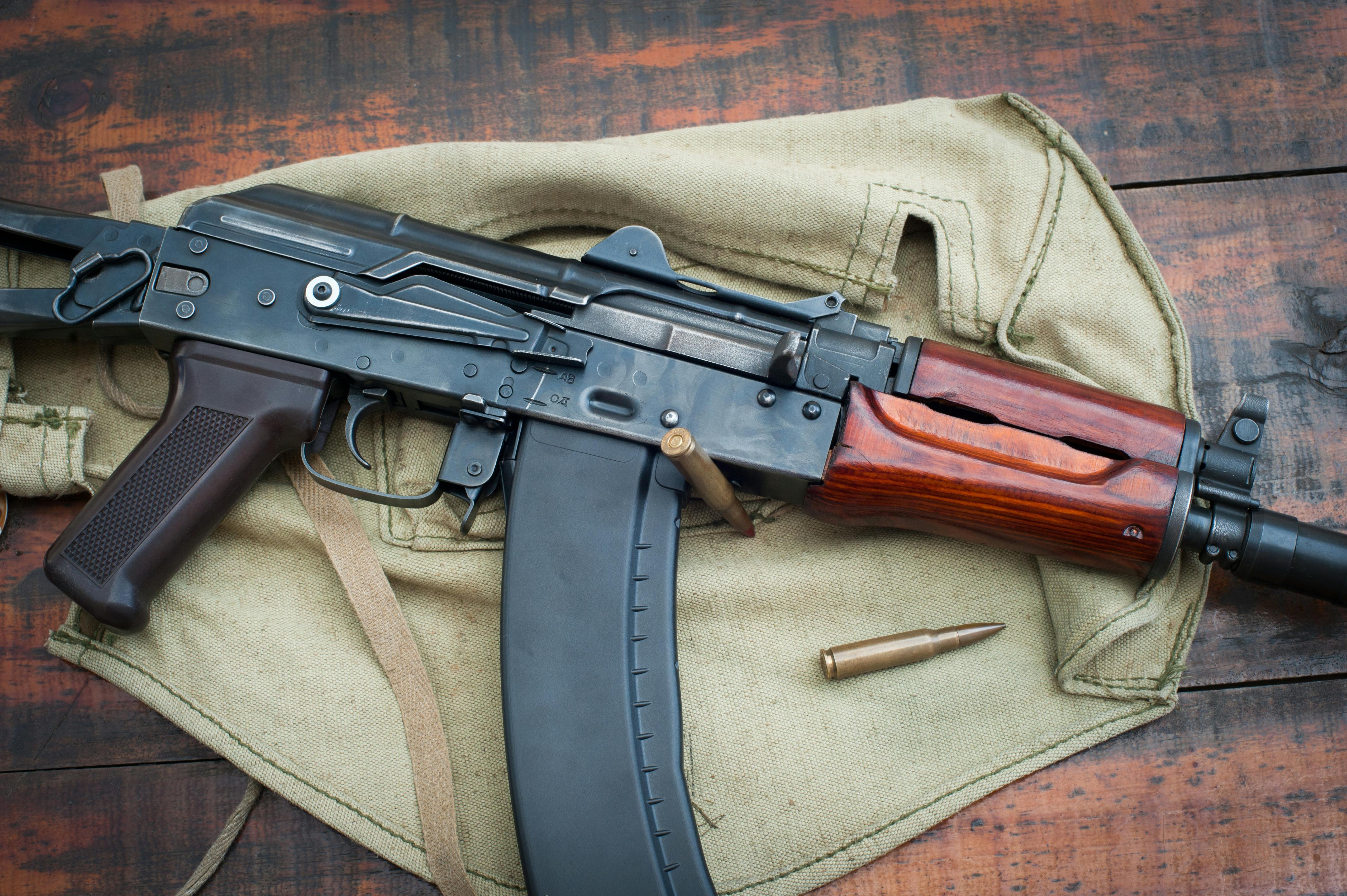
The AK-47 and the rifle family it inspired earned a different kind of authority. Britannica describes the AK-47 as simple to operate, rugged, reliable under harsh conditions, and easy to mass produce after its Soviet adoption in 1949. That is the core of its legend. The rifle did not become iconic because it was refined. It became iconic because it kept working where refinement was often a luxury.
That simplicity changed global small-arms history. The AK pattern spread through military service, proxy wars, insurgencies, state arsenals, and civilian markets on nearly every continent. For better or worse, its silhouette became one of the most recognizable mechanical forms on earth. A rifle does not reach that level of cultural saturation unless its underlying design solves real problems for real users.
The deeper lesson is that elegance in firearms is not always about polish. Sometimes it is about tolerance for dirt, rough handling, inconsistent maintenance, and large-scale production. The AK gave armies and irregular forces a weapon system that could be taught quickly and kept alive with limited resources. In that sense, it became the opposite of a safe queen. It was respected because it was usable, not because it was precious.
The Mossberg 500 and the power of plain reliability
Shotguns rarely get the same glamorous treatment as pistols and rifles, but the Mossberg 500 deserves a place in this conversation. Mossberg introduced the 500 series in 1961, and the platform grew into one of the most-produced pump shotguns in the world. Its success came from a simple formula: dependable function, reasonable cost, and enough modularity to cover hunting, home defense, and law enforcement needs without reinventing the gun.
That versatility matters more than people sometimes admit. A shotgun that works for deer season, a patrol cruiser, and home defense occupies a special place in the market. Owners do not have to be persuaded that the design is useful because they can see the evidence in hardware stores, duck blinds, squad cars, and gun safes across the country. The tang safety and straightforward manual of arms only strengthened that broad appeal.
What the Mossberg 500 proves is that trust often grows from familiarity rather than prestige. It is not a showpiece platform for most buyers. It is the gun that gets dragged through rain, loaned to a family member, or kept ready because nobody worries much about whether it will do its job. That kind of quiet confidence is often the purest form of approval any firearm can earn.
Why proven guns keep winning even when newer ones arrive

The firearms that seem not to need approval usually have already passed the hardest test of all: replacement pressure. Decade after decade, new models promise lighter weight, better ergonomics, optics-ready slides, cleaner triggers, or improved modularity. Some of those improvements are real. The U.S. Army’s Modular Handgun System, for example, selected the SIG Sauer M17 and M18 family, and the military has continued refining that system with approved configuration updates in recent years.
Even so, older benchmark designs still anchor the conversation. The Glock 19 remains the default recommendation in countless training circles. The 1911 remains the trigger standard many shooters still judge other pistols against. The AK remains the symbol of rugged simplicity. The Mossberg 500 remains shorthand for an honest working shotgun. Newer guns may outperform them in specific categories, but outperforming a legend on paper is not the same as displacing it in culture.
That is the real point behind the phrase. Guns so good they do not need approval are not perfect, and they are certainly not above debate. They simply reached a point where their record speaks louder than opinion. In firearms, that is as close to timeless as any machine gets.