Some gear changes feel temporary. This one often sounds permanent.
Talk to deer hunters who made the jump from a compound bow to a crossbow, and a pattern shows up fast: many say the switch gave them more confidence, more comfort, and more time in the woods, and they do not miss the old routine nearly as much as they expected.
The biggest change is how much pressure disappears before the shot.
A compound bow asks a lot from a hunter in the most stressful seconds of the hunt. You have to draw smoothly, hold at full draw, settle the pin, judge distance, and release cleanly while an animal may be watching every move. That sequence is part of the appeal for dedicated bowhunters, but it is also the reason many eventually burn out on it.
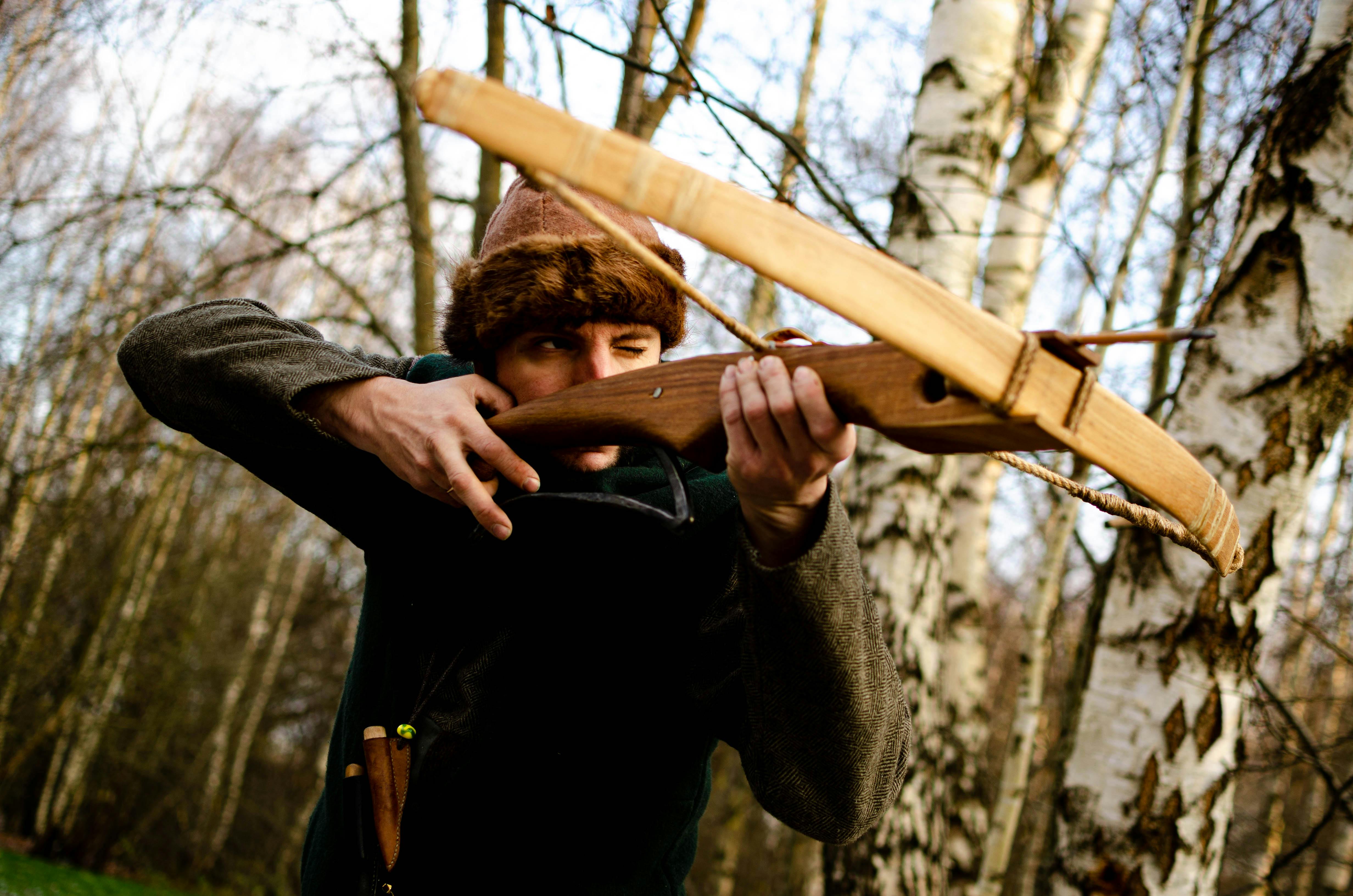
A crossbow changes that entire pre-shot equation. The bow is already cocked, the shooter is already looking through an optic, and there is no need to draw when the deer is inside the danger zone. That alone removes one of the most failure-prone moments in archery hunting, especially from a cramped blind or a treestand with awkward body angles.
Hunters often describe the result in simple language: fewer things can go wrong. That matters because deer hunting rarely gives perfect shot windows. A buck might stop behind brush, quarter hard, or step into an opening for only a second. With a crossbow, many hunters feel prepared instead of rushed.
That feeling is backed by broad industry research. The Archery Trade Association and Responsive Management recently released a major crossbow study based on more than 10,000 completed surveys across 13 states, presenting crossbows as a meaningful tool for retention in bowhunting rather than a fringe option. The size of that sample matters because it reflects how common this shift has become in the field.
Hunters say the crossbow keeps them effective as their bodies change.

One of the clearest reasons hunters say they never go back is physical reality. Shoulders wear down, elbows ache, necks stiffen, and drawing a compound in cold weather after hours on stand is not always as easy at 50 or 60 as it was at 25. Crossbows let hunters keep participating without pretending time has not changed their bodies.
The ATA-backed research notes that crossbows are often favored by older hunters, which lines up with a broader aging hunting population. As hunters look for ways to stay active later in life, a crossbow becomes less of a shortcut and more of an access point. That distinction matters to people who still want to hunt hard, but no longer want every sit to depend on pain tolerance.
The benefit is not limited to age. Hunters recovering from injuries, managing reduced mobility, or dealing with limited draw strength often find that a crossbow allows them to return to archery seasons with real confidence. For them, the alternative is not always a compound bow. Sometimes the alternative is hunting less or quitting bow season entirely.
That is one reason retention data stands out. In Minnesota’s 2025 report on expanded crossbow use, 62% of surveyed crossbow users said they were more likely to continue deer hunting because crossbows had been made legal, and 11% said they began archery hunting because of the expansion. Those are not trivial numbers. They suggest the crossbow is helping hold hunters in the sport.
Accuracy feels easier to achieve under real hunting conditions
Plenty of compound shooters are extremely accurate, especially after months of practice. But the question hunters ask after switching is not which platform can win a backyard shooting contest. It is which one helps them make the shot when breathing hard, bundled in layers, twisted in a stand, and watching a mature buck edge through cover at last light?
That is where many hunters become crossbow converts. The platform behaves more like a supported aiming system than a drawn, dynamic shot process. The hunter can shoulder it, settle the optic, and focus on the shot instead of the mechanics of reaching full draw without being detected.
Performance differences also help explain the confidence boost. Outdoor Life’s 2024 comparison noted that modern crossbows shoot flatter than compounds, making slight range errors less punishing in the field. In the same test, the TenPoint TRX 515 launched a 445-grain arrow at 495 fps, while a Mathews Lift compound pushed a 406-grain arrow at 283 fps. That does not mean speed is everything, but a flatter trajectory can make real-world aiming more forgiving.
What hunters love most is not raw power on paper. It is the sense that if the deer stops at 38 yards instead of 34, the shot is still manageable. That margin of forgiveness is a powerful psychological advantage, and once hunters get used to it, many do not want to return to a setup that demands more exact range judgment under pressure.
The learning curve feels shorter, especially for busy adults.
A compound bow rewards repetition. To stay sharp, you have to shoot regularly, maintain strength and form, and keep your release sequence clean. For serious archers, practicing rhythm is part of the lifestyle. For everyone else, especially adults balancing work and family, it can feel like another obligation.
Crossbows appeal to hunters who still care deeply about deer season but no longer have the time to practice three nights a week all summer. They can sight in, confirm their setup, and maintain hunting-level confidence with far fewer reps than a compound typically demands. That does not make them effortless, but it does make them easier to keep field-ready.
This practical advantage matters more than some traditionalists like to admit. Modern deer hunters are often trying to preserve time in the woods, not build a second sport around the offseason. If a crossbow helps them stay lethal without requiring constant tuning of their own body mechanics, the value is obvious.
It also helps newer hunters enter archery seasons with less frustration. Minnesota’s report found no meaningful difference in success rates, wounding rates, or hunter effort between crossbow and vertical bow users. That finding undercuts the idea that crossbows automatically create unfair outcomes. In practice, they seem to simplify participation more than they transform actual deer harvest performance.
Regulations are expanding, and that changes the calculation
A big reason hunters say they will not go back is simple: they no longer have to. Over the past several years, more states have broadened where and when crossbows can be used, making them a standard part of deer season instead of a medical exception or niche tool. Once hunters gain that option, many embrace it quickly.
New York is one of the clearest examples. The state says that, beginning in fall 2025, hunters may use a crossbow in the same seasons, places, and manner as a vertical bow for hunting deer and bear, provided they meet license and education requirements. That is a major policy signal. It treats crossbows as a mainstream bowhunting implement.
Michigan also shows how normalized crossbows have become in much of the country. The state allows crossbow use throughout archery deer seasons in the Lower Peninsula, and during the early archery segment in the Upper Peninsula, with some seasonal limits later in the year. For hunters in those areas, the legal barrier that once kept crossbows on the sidelines is largely gone.
As regulations open up, the decision becomes purely practical. If a hunter can use the easier, more comfortable, more confidence-building tool for much of the same season, many will. That does not mean they disrespect compound bows. It means the old reasons for staying with one are no longer strong enough.
Many hunters realize they enjoy hunting more with a crossbow.

This may be the most honest answer of all. A lot of hunters switch because they simply have more fun. They worry less about getting busted on the draw, less about losing strength in cold weather, and less about whether a long break from practice ruined their season before it started.
That shift can be dramatic in blinds and tight treestands. Crossbows are bulkier and louder, and critics are right to point out those downsides. Outdoor Life noted that many crossbows are clunky, loud, and sometimes less durable than top compounds. But hunters who stick with them usually decide that those tradeoffs are worth it because the actual shot opportunity feels calmer and more controlled.
Enjoyment also grows from confidence after a successful season. A hunter who kills a doe cleanly on a marginal weather day, or finally gets a shot at a mature buck after years of getting picked off during the draw, tends to remember that outcome. Success has a way of changing philosophical opinions into practical preferences.
Once a hunter starts associating a crossbow with less frustration and more filled tags, loyalty shifts quickly. It is hard to romanticize the compound learning curve when the new setup makes the whole season feel more manageable and rewarding.
The hunters who never go back are choosing results over identity.
At the center of this debate is identity. Some hunters love the compound because it represents a more traditional, more athletic version of bowhunting. That feeling is real, and it deserves respect. But hunters who switch to crossbows and stay with them are usually making a different choice. They are choosing effectiveness over image.
That does not mean the compound bow is obsolete. For many hunters, it remains the more elegant tool, lighter in the hand, quicker to carry, and more satisfying to master. But elegance is not always what matters at dawn in November when a deer appears at the edge of a narrow lane, and you have seconds to act.
The evidence increasingly suggests that crossbows are not just a fad. They are helping retain older hunters, recruit new ones, and keep archery participation alive in states that want more people in the field. When that practical value lines up with personal success, hunters stop seeing the crossbow as a compromise.
That is why so many say they will never go back. The crossbow gives them access, control, forgiveness, and confidence, all at the exact moment those things matter most. For a deer hunter who wants to stay in the game and make clean shots, that combination is hard to walk away from.