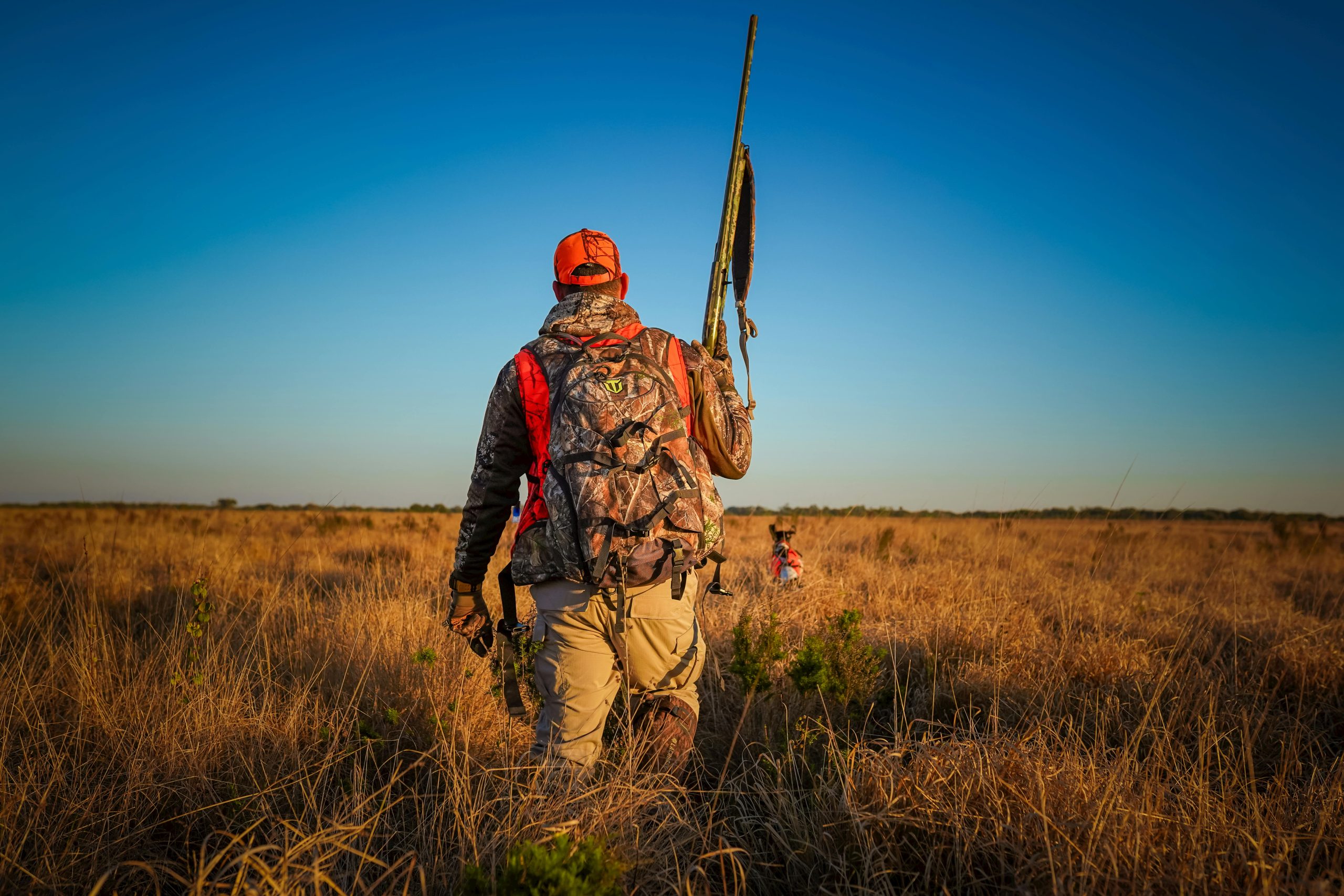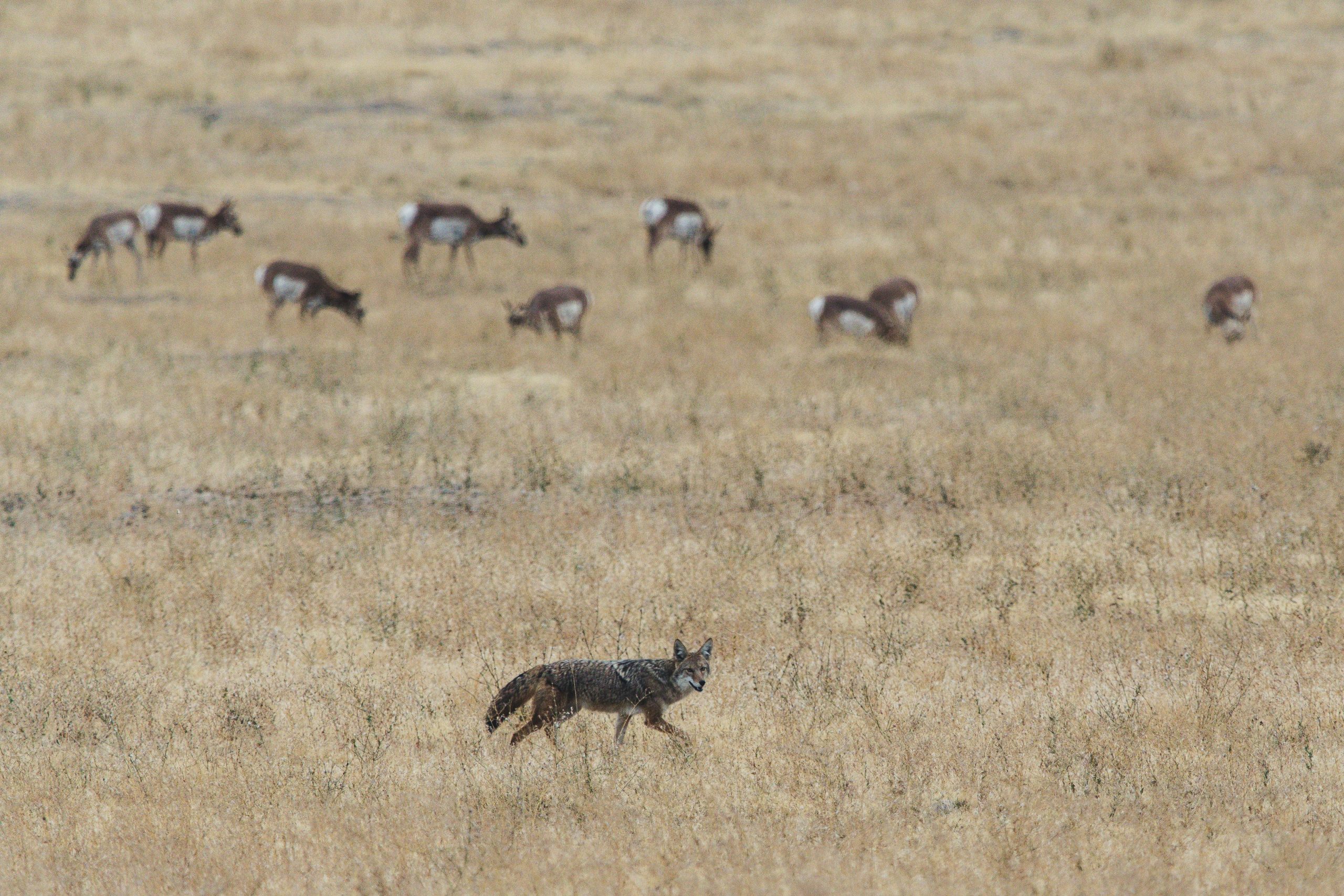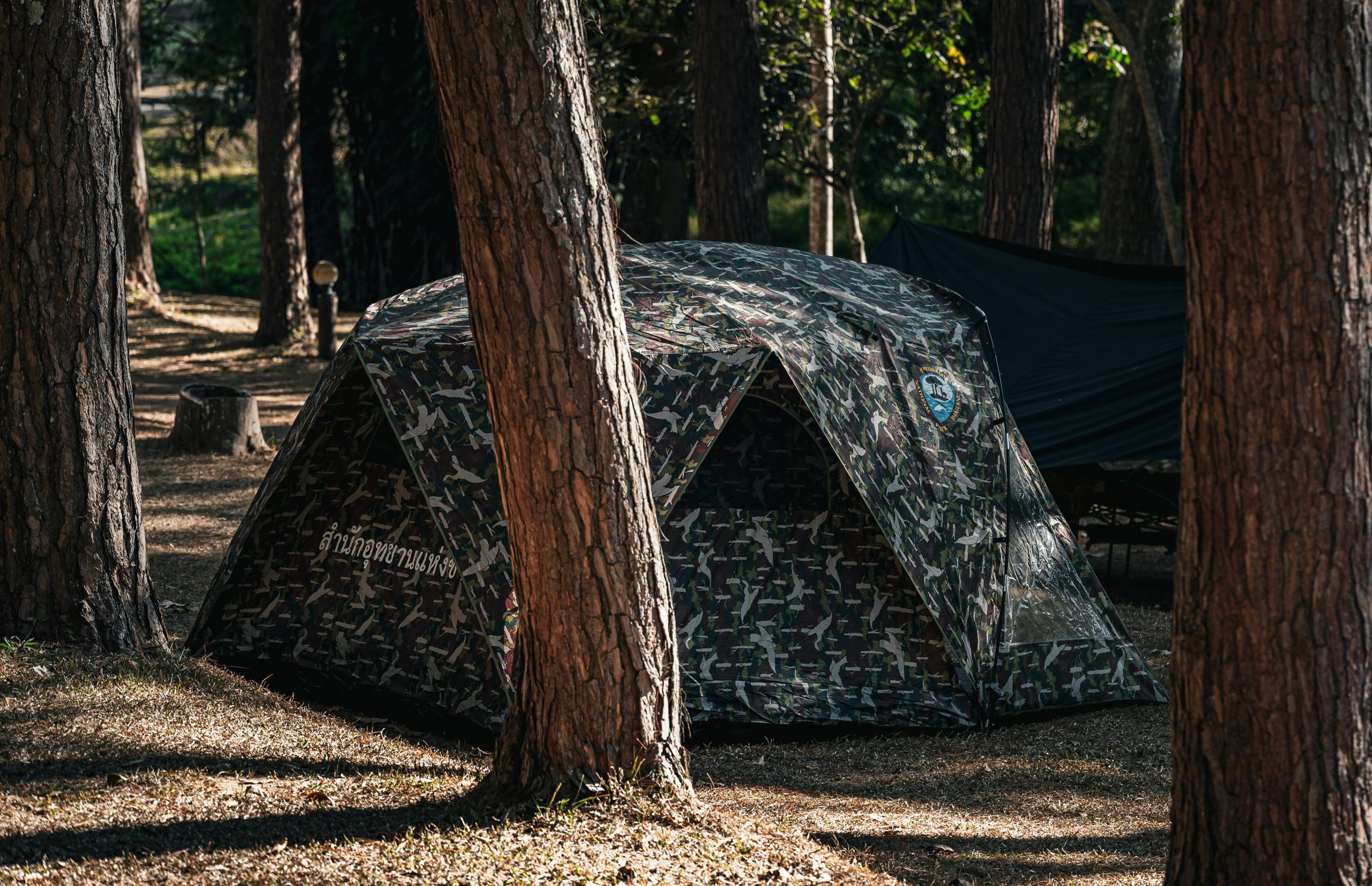
In wilderness survival, staying hidden is just as important as staying dry or warm. Wild animals are naturally curious, territorial, and highly sensitive to unfamiliar sights, smells, and sounds. A poorly designed shelter can quickly attract attention, even if it seems hidden to human eyes. A proper camouflage shelter blends into the environment visually, controls scent, minimizes noise, and avoids disrupting animal movement patterns. This guide focuses on practical, field-tested techniques using natural materials and smart positioning rather than intimidation or weapons. When built correctly, a camouflage shelter becomes part of the landscape itself, reducing encounters and allowing you to rest, observe, and move safely without alerting wildlife to your presence.
Selecting a Low Activity Location
Choosing the right location is the foundation of animal avoidance. Most wildlife follow consistent travel routes such as game trails, ridgelines, drainage paths, and water access points. Building near these paths increases the chance of accidental encounters. Instead, select slightly elevated ground away from obvious food sources, tracks, droppings, or bedding areas. Avoid valley bottoms where scent pools overnight. Look for quiet zones with limited visibility from multiple angles. A shelter placed where animals rarely need to travel is far less likely to be investigated, regardless of how well it is camouflaged.
Image keywords: game trail, elevated terrain, forest interior
Shaping the Shelter Like Natural Features
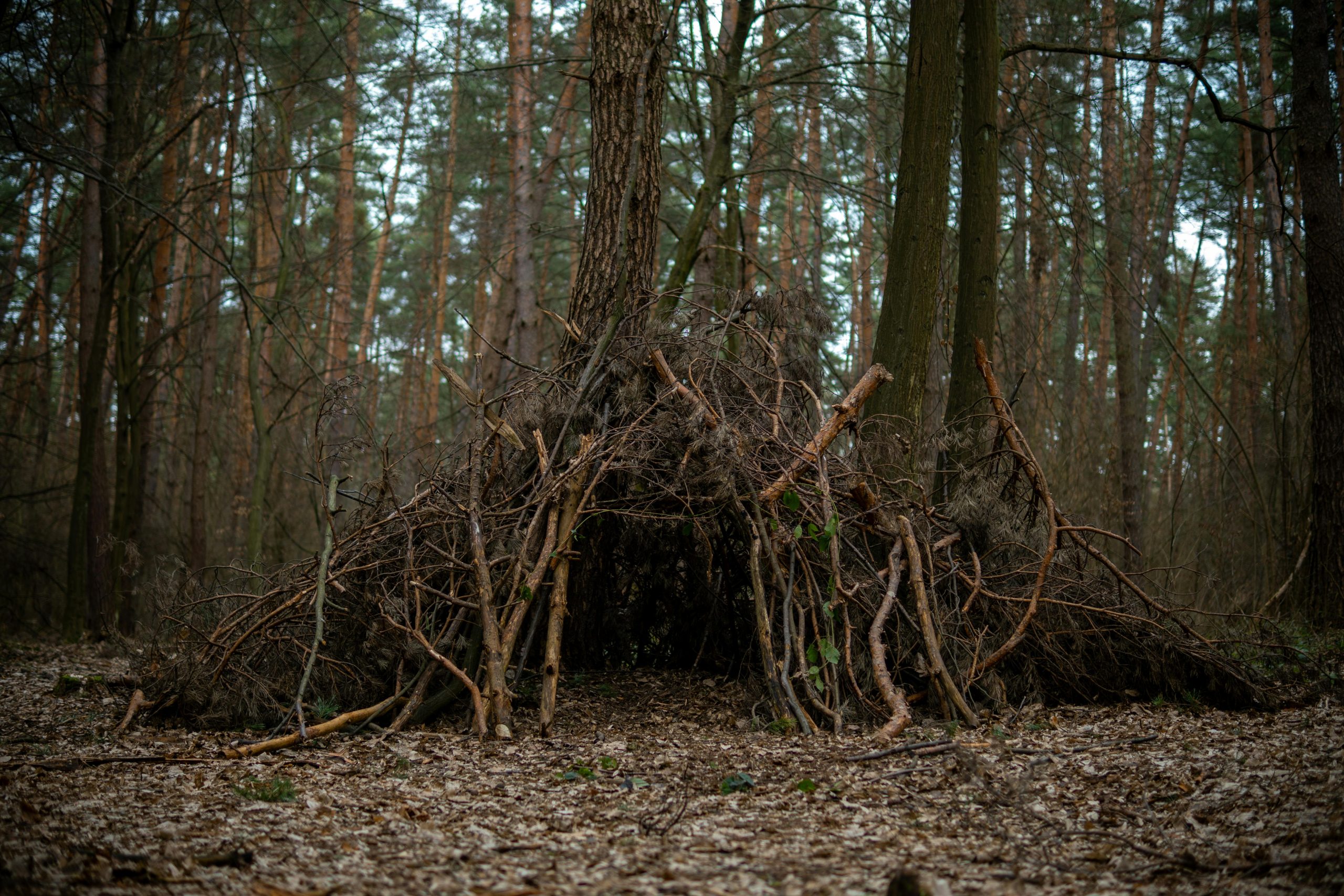
Animals quickly notice unnatural outlines. Straight walls, sharp corners, and symmetrical shapes do not exist naturally in the wild. Your shelter should copy forms animals already ignore, such as fallen logs, brush piles, or uneven rock clusters. Rounded and sloped shapes break shadows and reduce visible edges. Keep the structure low and irregular, avoiding uniform spacing. When viewed from any direction, the shelter should look accidental rather than constructed. Mimicking natural shapes lowers curiosity and prevents animals from identifying the shelter as something worth inspecting.
Using Only Local Natural Materials
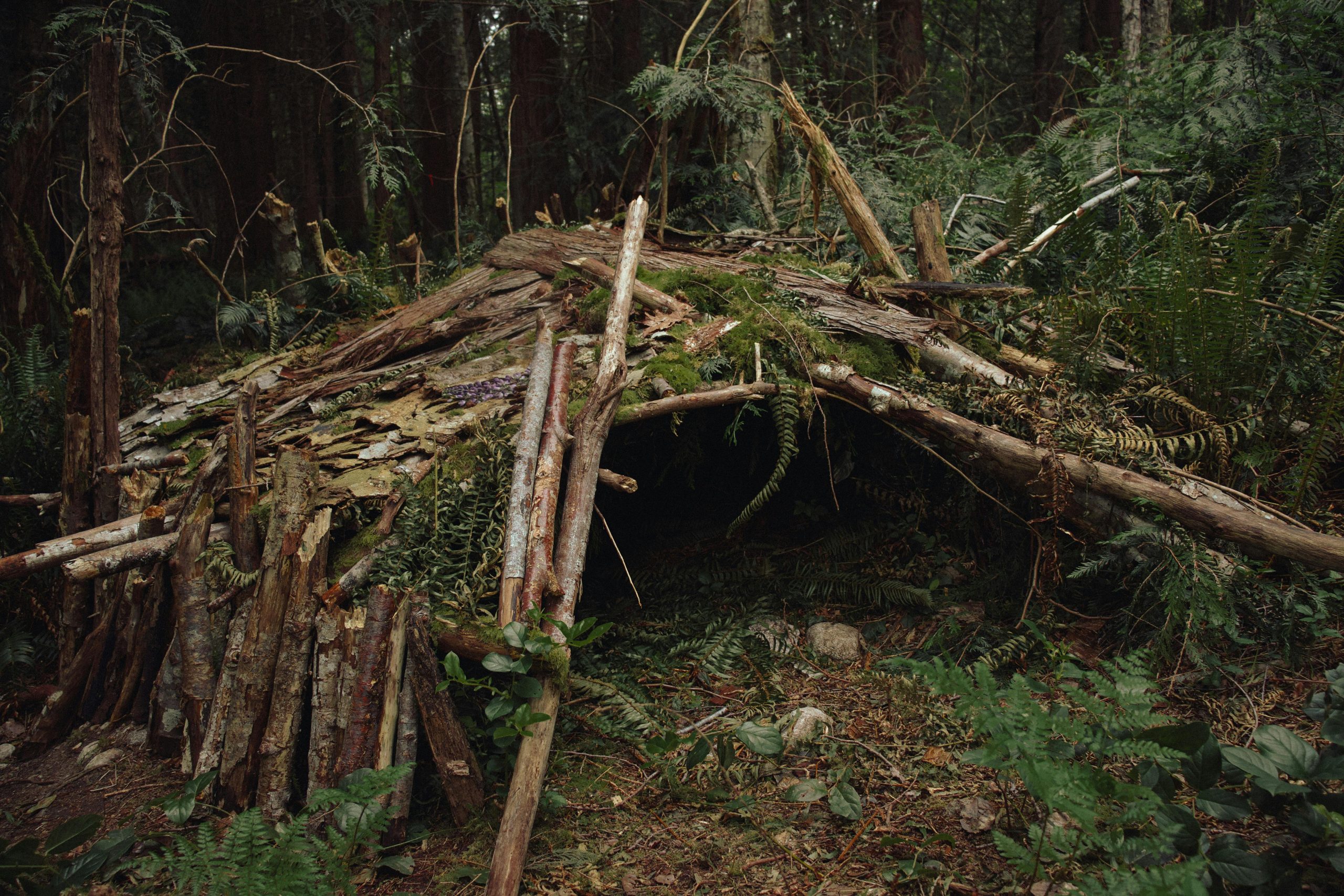
Camouflage fails when materials contrast with their surroundings. Always gather branches, leaves, grass, and bark from the immediate area around the shelter. This ensures color, texture, and scent consistency. Transporting materials from other locations introduces visual differences that animals may notice. Layer debris naturally, following the direction it falls in the environment. Replace materials as they dry or fade. Seasonal awareness is critical because summer greenery stands out in autumn or winter. Consistent materials help the shelter disappear into its surroundings completely.
Managing Human Scent Exposure
Most animals rely more on smell than sight. Even a hidden shelter can draw attention if it carries a strong human scent. Avoid cooking, eating, or storing food near the shelter. Use bare or dirt-ruled hands when handling materials. Mask scent by rubbing crushed leaves, soil, or pine needles onto surfaces. Establish a food area far downwind from your shelter. Scent control does not make you invisible, but it greatly reduces investigation driven by curiosity or territorial behavior.
Designing a Concealed Entrance
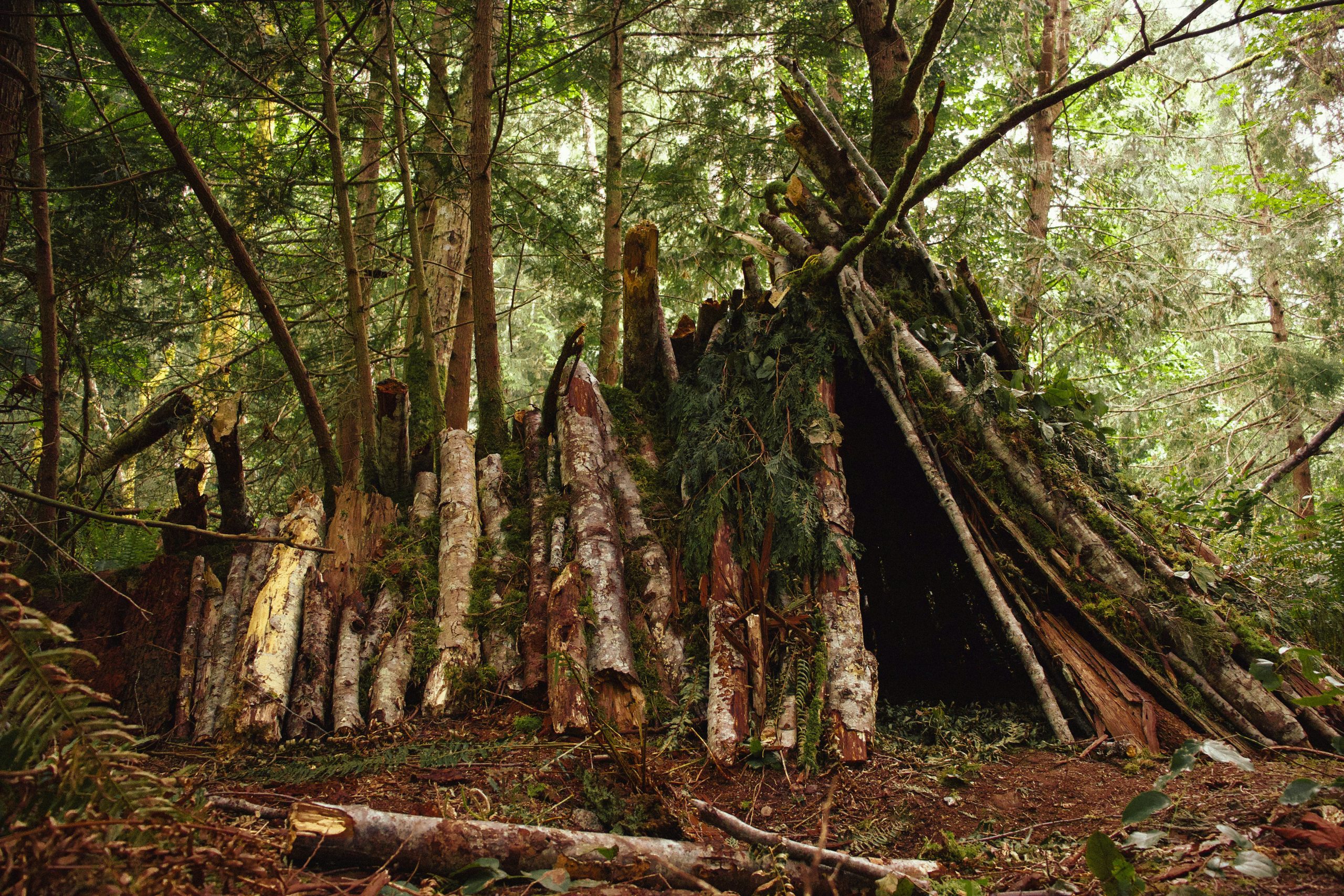
A wide or obvious opening signals vulnerability and invites inspection. Keep the entrance narrow and slightly offset rather than facing open ground. Angle it away from trails, wind direction, and animal movement routes. Use overlapping sticks, grass, or hanging vegetation to break up the dark hole effect without blocking airflow. The goal is to make the entrance visually confusing while still functional. From a distance, the shelter should appear solid and closed rather than hollow or accessible.
Reinforcing Against Animal Curiosity
Animals often test unfamiliar objects with noses, paws, or light pressure. Reinforce the shelter exterior using tightly packed branches and interwoven sticks to resist probing. Avoid loose materials that collapse or shift easily. Add a stiff or thorny brush to the outer edges where animals may push or sniff. Resistance signals that the structure is not worth further effort. The goal is discouragement, not harm. A firm, stable shelter feels uninteresting and unrewarding to investigate.
Reducing Interior Noise and Movement
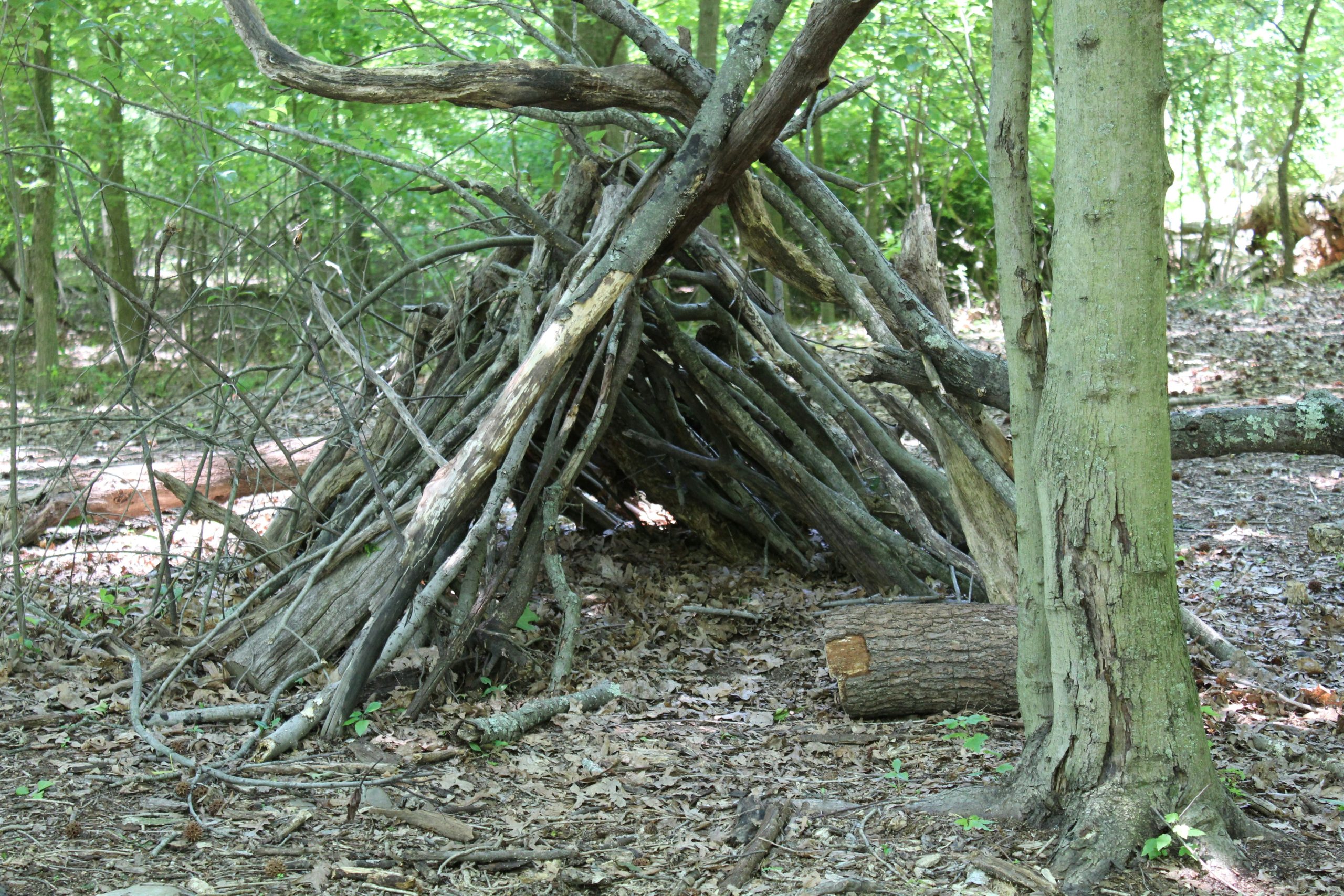
Unnatural sounds alert wildlife quickly, especially in quiet environments. Line the interior floor with dry leaves, moss, or grass to absorb movement noise. Secure all items so they do not scrape or roll. Move slowly and deliberately inside the shelter. Avoid brushing the walls or roof when shifting position. Animals notice rhythm and vibration even without clear sound. A quiet shelter allows animals to pass nearby without recognizing human presence inside.
Controlling Light at Night
Light exposure is one of the fastest ways to reveal a shelter. Even dim glows travel far through darkness. Avoid open flames inside the shelter. If light is necessary, block it completely using bark sheets, fabric, or layered vegetation. Ensure no light escapes through the entrance. Animals associate unusual nighttime light with danger or curiosity. Maintaining darkness keeps your shelter anonymous and prevents drawing attention during night movement periods.
Aging the Shelter Naturally
A freshly built shelter often stands out because nature rarely looks tidy or new. Animals are sensitive to disturbances in their environment and may investigate areas that appear recently altered. To avoid this, help your shelter age naturally by lightly scattering forest debris such as dry leaves, dust, pine needles, and small twigs across exposed surfaces. Break up clean lines and sharp edges so the structure blends seamlessly into the ground. Avoid clearing vegetation too neatly around the shelter. As the weather changes, refresh materials to match seasonal colors and textures. A shelter that looks weathered and accidental is far less likely to attract curiosity.
Planning Observation and Exit Routes
A well-designed camouflage shelter must allow awareness without exposure. Carefully plan discreet observation gaps that align with shadows, brush clusters, or natural breaks in vegetation. These openings should be small enough to remain unnoticed while still allowing you to monitor movement nearby. Just as important is planning at least one concealed exit route that avoids open ground, water sources, or animal trails. Practice moving quietly and slowly along this path. Having a planned escape reduces panic and prevents sudden movements that could trigger defensive behavior from nearby wildlife.