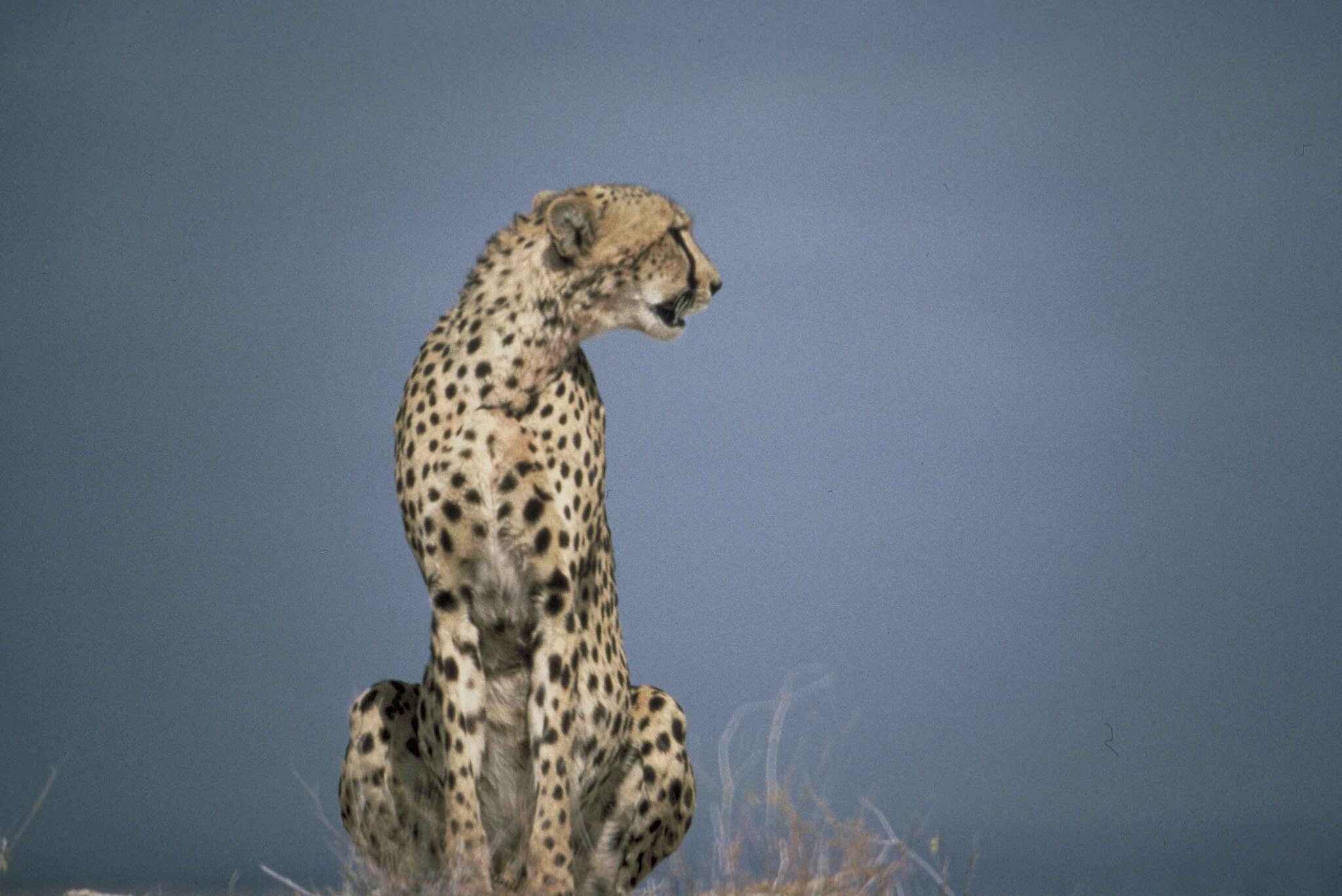
Among all terrestrial predators, one animal operates under a completely different rulebook. The cheetah does not overpower, outlast, or ambush in darkness. Instead, it compresses the entire act of hunting into a brief, violent burst of speed that few creatures can even comprehend, let alone escape. Every physical feature, from its elongated legs to its flexible spine and oversized lungs, exists for a single purpose. This extreme specialization makes the cheetah both extraordinary and fragile. To understand why this long-legged predator hunts like nothing else alive, it is necessary to examine how its body, behavior, and survival strategy are shaped by the unforgiving demands of speed.
A Frame Designed Only for Speed
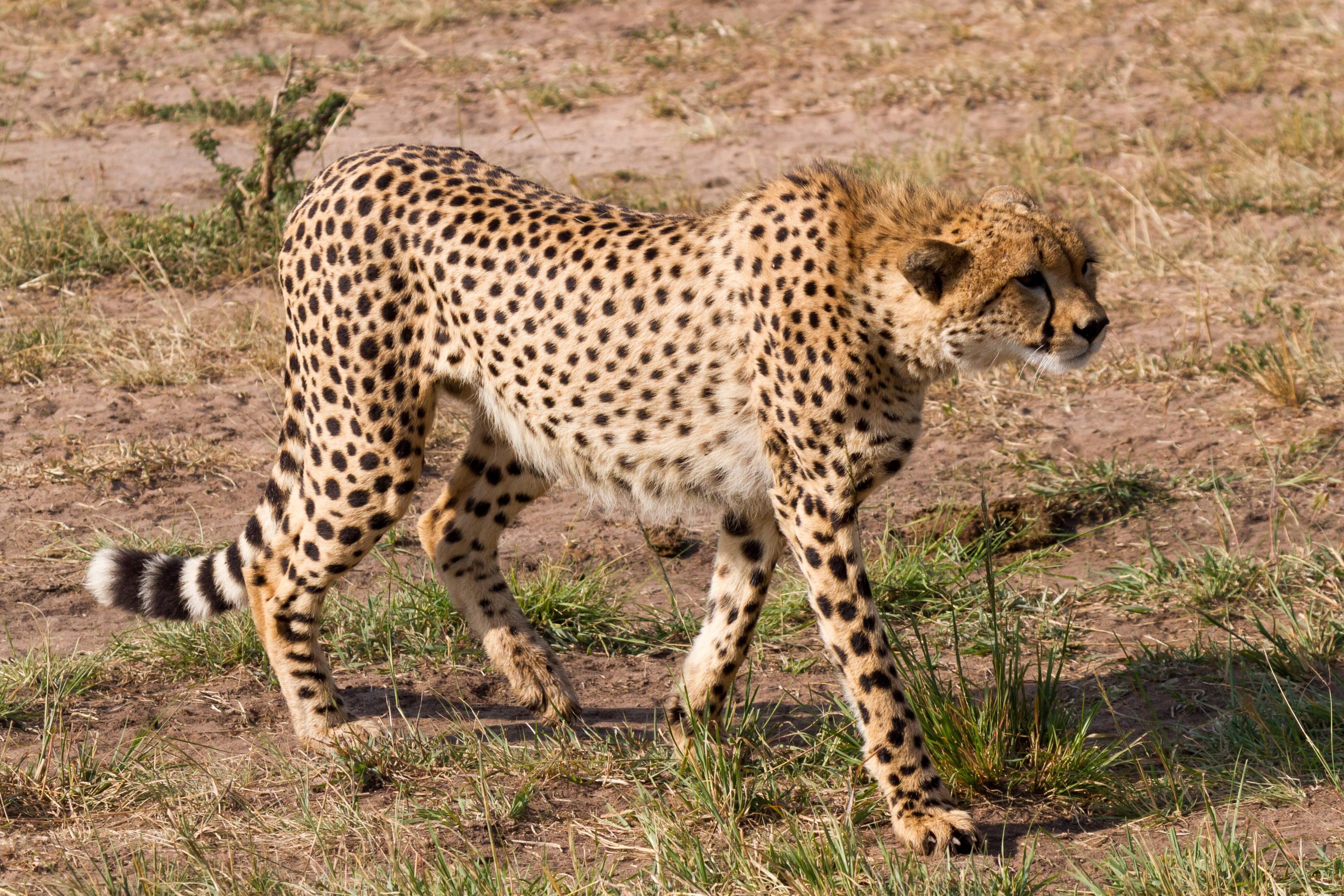
The cheetah’s long legs are the foundation of a body built almost exclusively for velocity. Each limb is elongated and lightweight, allowing greater stride length without adding unnecessary mass. The bones are thinner than those of other big cats, reducing inertia and enabling faster acceleration. Muscles are arranged to favor rapid contraction rather than sustained force, making explosive movement possible. Even the cheetah’s narrow waist and deep chest contribute to balance during high-speed turns. This design leaves little margin for error, as the animal lacks the strength for prolonged fights. However, it allows the cheetah to reach extreme speeds within seconds, something no other land predator can replicate.
The Spine That Creates a Flying Stride
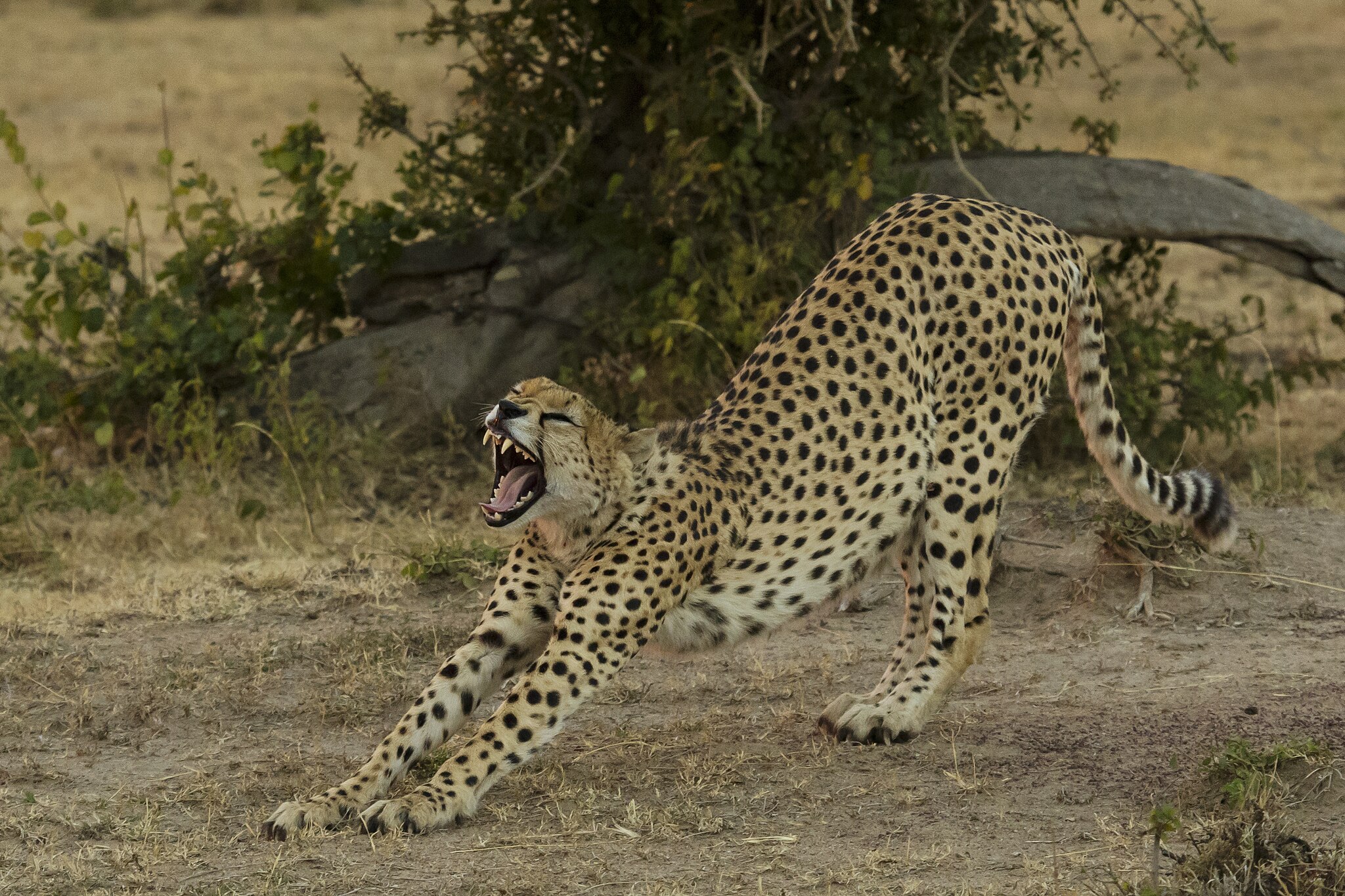
At the center of the cheetah’s speed lies its remarkably flexible spine, which bends and extends far beyond what is seen in other mammals. During a sprint, the spine compresses and then snaps open, doubling the length of each stride. At full extension, all four feet leave the ground, creating brief moments where the cheetah is airborne. This motion allows the animal to cover enormous distances with fewer steps, conserving precious time during a chase. The spine also absorbs shock from repeated impacts at high speed. While this flexibility sacrifices stability in combat, it transforms the cheetah into a predator capable of near-flight across open ground.
Vision Tuned for High-Speed Pursuit
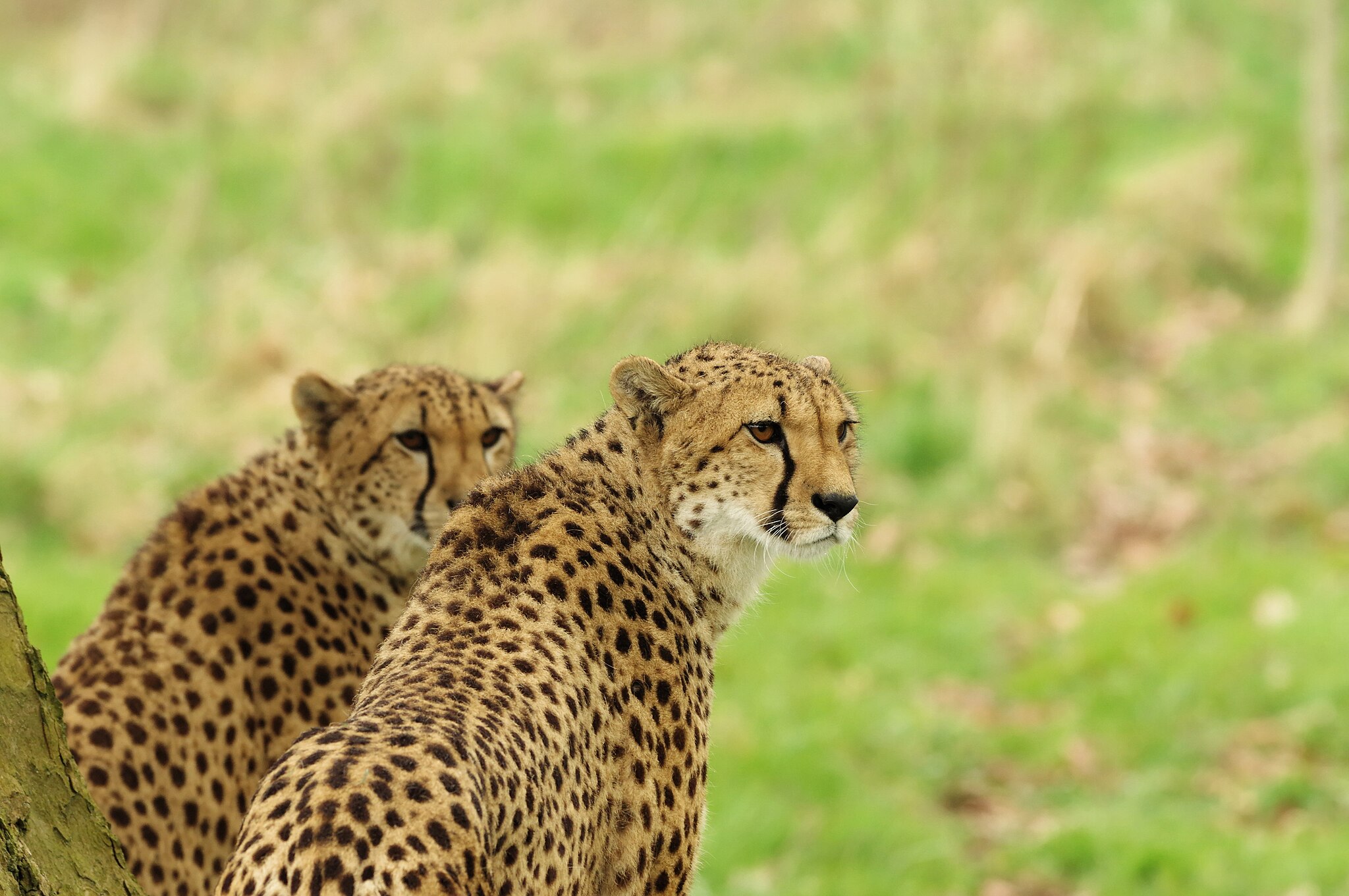
The cheetah’s eyes are adapted not just for clarity, but for tracking movement at extreme speed. Forward-facing eyes provide excellent depth perception, allowing accurate judgment of distance during a chase. Black tear marks reduce glare from the sun, which is critical since cheetahs hunt mostly during daylight hours. Enlarged nasal passages support heavy breathing without disrupting focus. The brain processes visual information rapidly, enabling split-second adjustments when prey changes direction. This visual system allows the cheetah to anticipate motion rather than react late. Without such precision, speed alone would be useless, making eyesight a silent but vital hunting weapon.
A Hunt That Lasts Seconds, Not Minutes
Unlike endurance hunters, cheetahs rely on short, decisive chases that rarely exceed twenty seconds. After stalking close enough to reduce wasted effort, the cheetah explodes forward with astonishing acceleration. During this brief window, it must close the distance, trip or knock down the prey, and end the chase quickly. If the prey escapes beyond this limit, the hunt is abandoned immediately. Prolonged pursuit risks dangerous overheating and exhaustion. This strict time constraint forces the cheetah to choose targets carefully, favoring young or isolated animals. Every hunt is a calculated gamble where failure costs precious energy and survival.
Turning Without Losing Speed
What truly separates the cheetah from other fast animals is its ability to change direction at full speed. The long, muscular tail acts as a counterbalance, swinging sharply to stabilize sudden turns. Flexible ankles and specialized hip joints allow rapid shifts without skidding or loss of traction. When prey zigzags in panic, the cheetah mirrors these movements almost instantly. Most animals must slow down to turn safely, but the cheetah maintains momentum through precise body control. This ability transforms open terrain into a dynamic chase environment where speed and agility work together seamlessly.
Breathing on the Edge of Overload
During a sprint, a cheetah’s entire respiratory system operates at its absolute limit. Oversized lungs and a powerful heart deliver oxygen to muscles at an extraordinary rate. Breathing synchronizes with each stride, maximizing efficiency during the chase. Body temperature rises rapidly, sometimes reaching dangerous levels within seconds. This forces the cheetah to stop immediately after a kill, leaving it vulnerable. Unlike stronger predators, it cannot defend its prey while recovering. Speed pushes the cheetah to the brink of collapse, making every successful hunt a narrow victory balanced against physical risk.
Intelligence Over Aggression
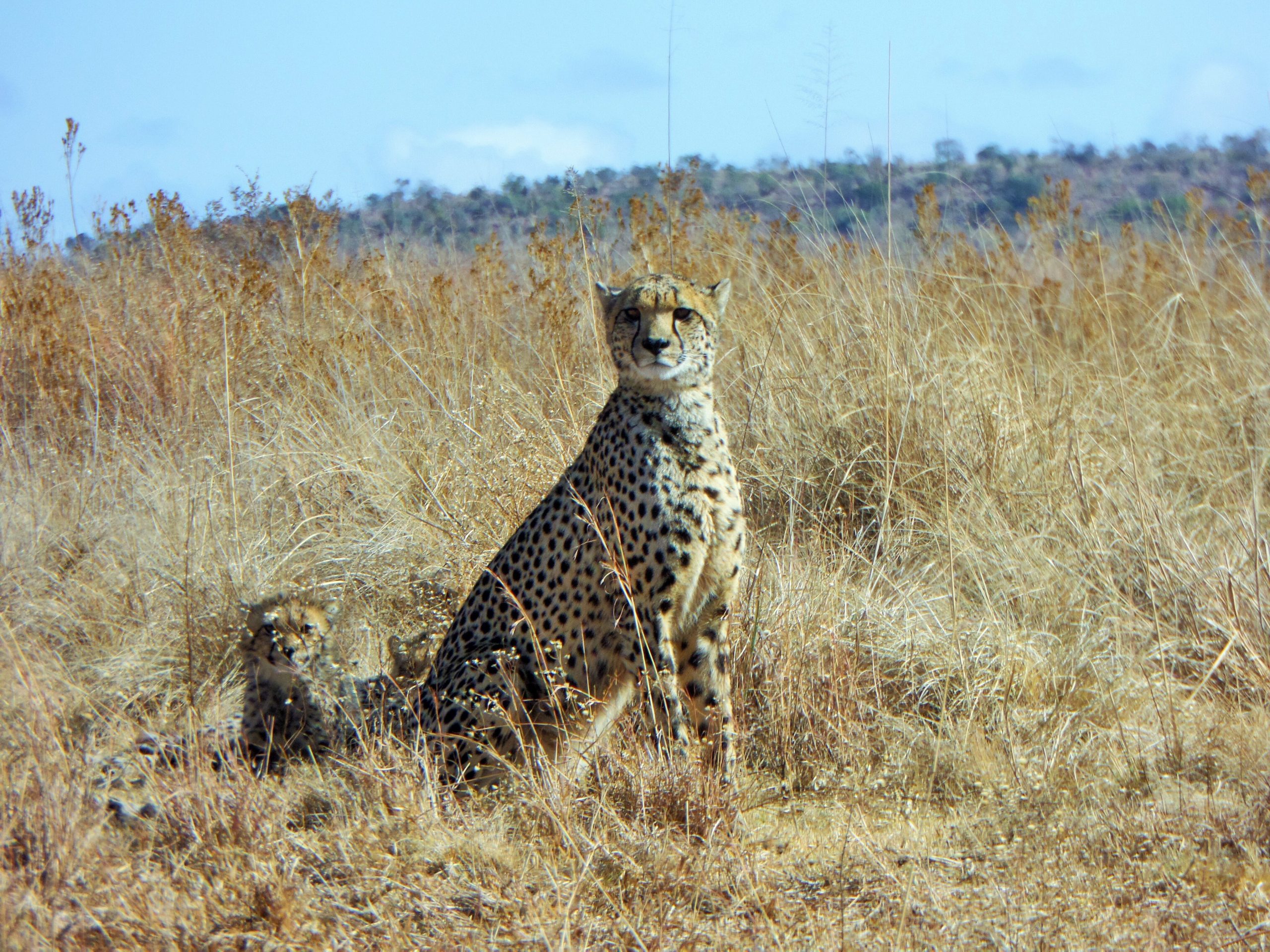
Cheetahs compensate for their lack of strength with careful observation and decision-making. Before committing to a chase, they study herds for signs of weakness, separation, or distraction. Mothers actively teach cubs how to select targets and avoid unnecessary effort. This thoughtful approach increases success while conserving energy. Unlike social predators that rely on teamwork, cheetahs hunt alone, requiring individual judgment at every stage. Their intelligence is subtle, focused on efficiency rather than dominance. Every choice made before the sprint determines whether the effort results in nourishment or dangerous exhaustion.
The Most Dangerous Moment Comes After the Kill
For a cheetah, catching prey does not mean safety. After a sprint, exhaustion and overheating force the animal to rest before feeding. This creates an opportunity for stronger predators to steal the kill. Lions and hyenas frequently exploit this weakness, knowing the cheetah cannot fight back. Some cheetahs attempt to drag prey into cover, while others remain alert while eating. Limited feeding time often means the cheetah must hunt again sooner than desired. This vulnerability shapes cautious behavior and reinforces the reality that speed alone cannot guarantee security.
An Evolutionary Gamble with Little Margin
The cheetah represents one of evolution’s most extreme experiments in specialization. Nearly every trait that makes it successful also increases its fragility. Slender bones break more easily, limited genetic diversity reduces adaptability, and reliance on open space restricts habitat options. Unlike adaptable predators, the cheetah cannot shift strategies easily when conditions change. Its survival depends on environments that allow speed to matter. As human activity fragments landscapes, this narrow margin becomes more dangerous. The cheetah’s design is brilliant, but unforgiving, leaving little room for long-term environmental disruption.
A Predator That Cannot Be Replaced
There is no other predator that fills the same ecological role as the cheetah. Its hunting style removes vulnerable prey without destabilizing entire populations. Losing the cheetah would mean losing a unique balance between restraint and precision. It is not simply another big cat, but a living expression of biological limits pushed to their edge. The cheetah’s long legs carry a legacy of speed that no other species can replicate. Protecting it preserves not just an animal, but a singular evolutionary pathway that exists nowhere else on the planet.