Blade culture has exploded over the past decade, and with it, an overwhelming flood of survival knives designed more to impress on a shelf than to perform in a forest. Social media doesn’t help a knife that photographs beautifully with dramatic lighting and tactical branding can rack up thousands of likes without ever touching bark, bone, or rope. Manufacturers know this, and many have leaned fully into aesthetics while quietly cutting corners on what actually matters: steel quality, handle ergonomics, grind geometry, and sheath function. The result is a market cluttered with knives that feel incredible in hand at a trade show but fail embarrassingly in the field. This list digs into ten of those knives, the ones that look purpose-built for wilderness survival but fall apart when tested in real conditions. Whether you’re a seasoned outdoorsman or just getting into bushcraft, knowing what to avoid is just as valuable as knowing what to buy.
1. Mossy Oak Survival Bowie Knife
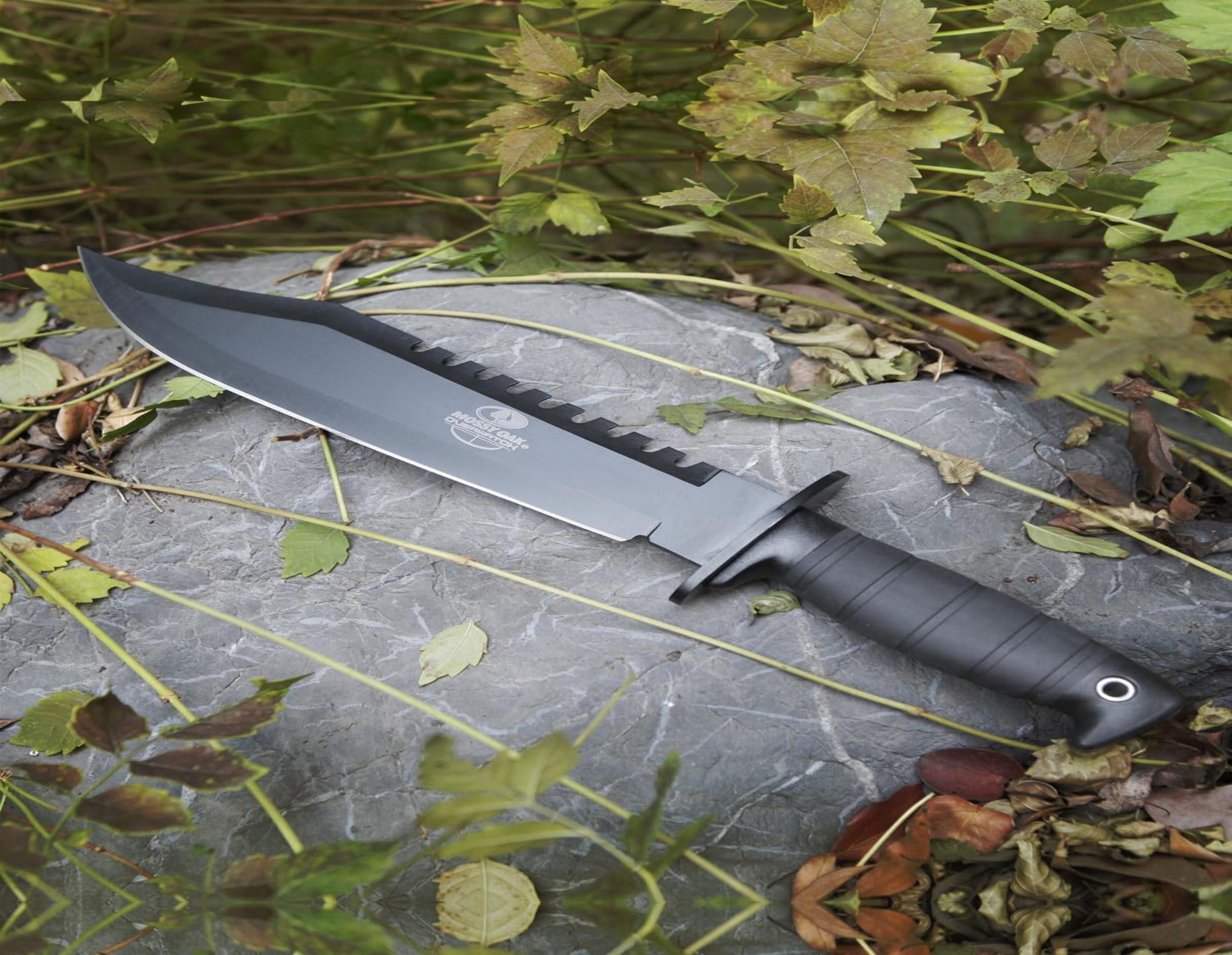
The Mossy Oak Survival Bowie is a knife that screams “wilderness ready” from across a sporting goods aisle, and that’s precisely where the illusion ends. Measuring around 15 inches overall with a 9.5-inch blade, it’s designed to look dominant. However, the steel is an unspecified stainless alloy that typically registers around 50–52 HRC, which is considerably softer than the 57–60 HRC you’d want in a reliable field blade. That softness means the edge rolls after fewer than 20 moderate cutting tasks. The serrated spine adds visual interest but creates friction drag that slows chopping strokes. The handle, though wrapped in a grippy rubber overmold, develops noticeable hot spots after 30 minutes of extended use. The hollow handle compartment, while offering storage for fire-starting gear or a small compass, compromises the full-tang integrity most bushcrafters consider non-negotiable. At roughly $30, the price is tempting, but you’ll spend more replacing it than buying it right the first time.
2. MTech USA Xtreme Tactical Knife
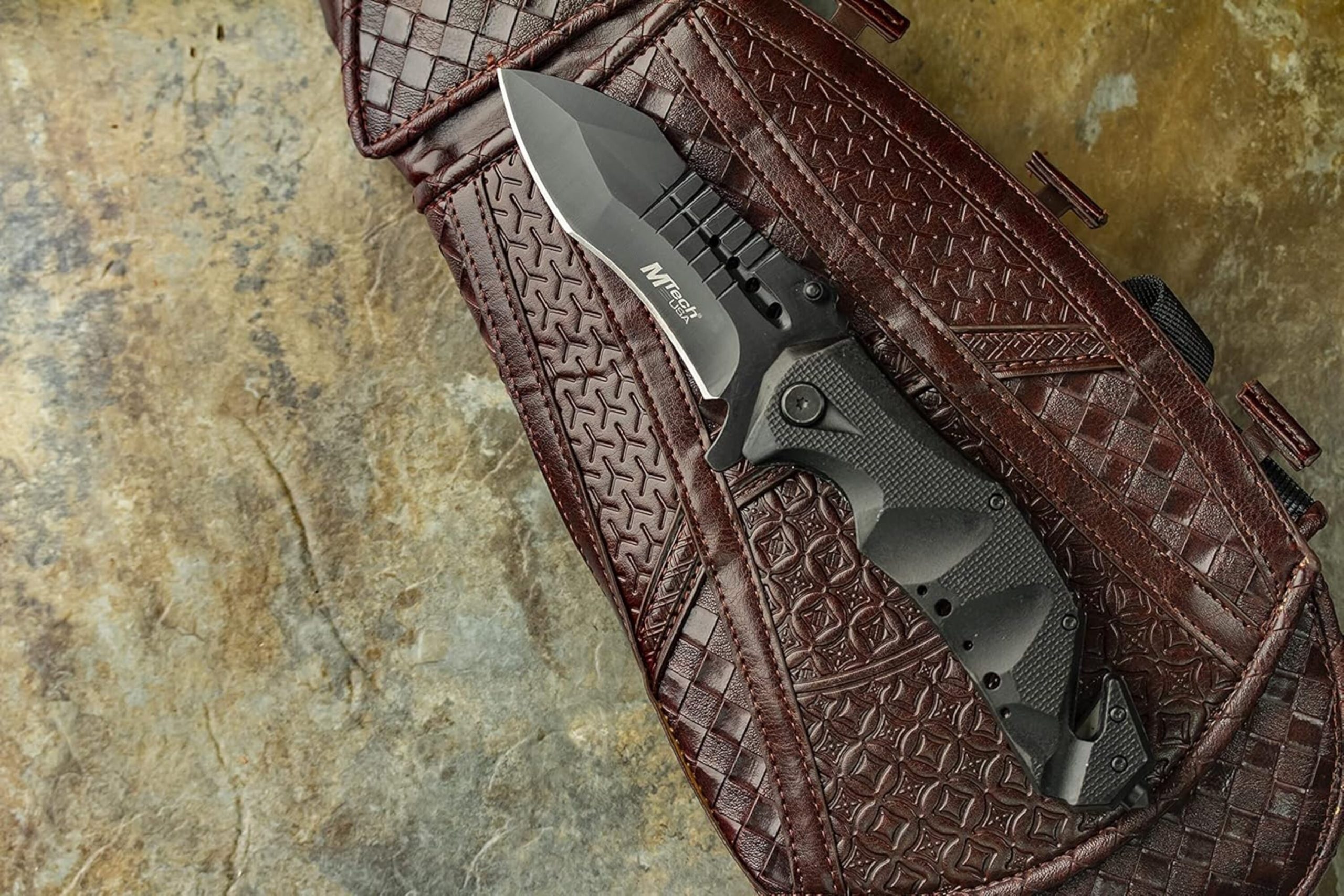
With a blade that could double as a movie prop, the MTech USA Xtreme Tactical looks every bit like something pulled from a military loadout video. The 10-inch partially serrated blade features a swedge grind, blood groove, and an aggressive clip point that combine to create an intimidating silhouette. However, field reality is far less cinematic. The 3Cr13 stainless steel is rated at around 48–52 HRC, barely qualifying as a working blade steel by modern standards. In comparative edge-retention tests, it struggles to maintain sharpness beyond 15 to 20 cuts through medium-hardwood branches before noticeable dulling occurs. The hollow-cast handle houses a small kit but transmits vibration harshly in cold conditions, becoming uncomfortable below 40°F. Tactical webbing on the sheath looks functional, but the retention snap loosens after repeated draws, raising real safety concerns during active movement. This is a display knife masquerading as a survival tool, and the gap between the two becomes painfully obvious the moment real conditions arise.
3. United Cutlery UC-GH5019 Gill Hibben Combat Knife
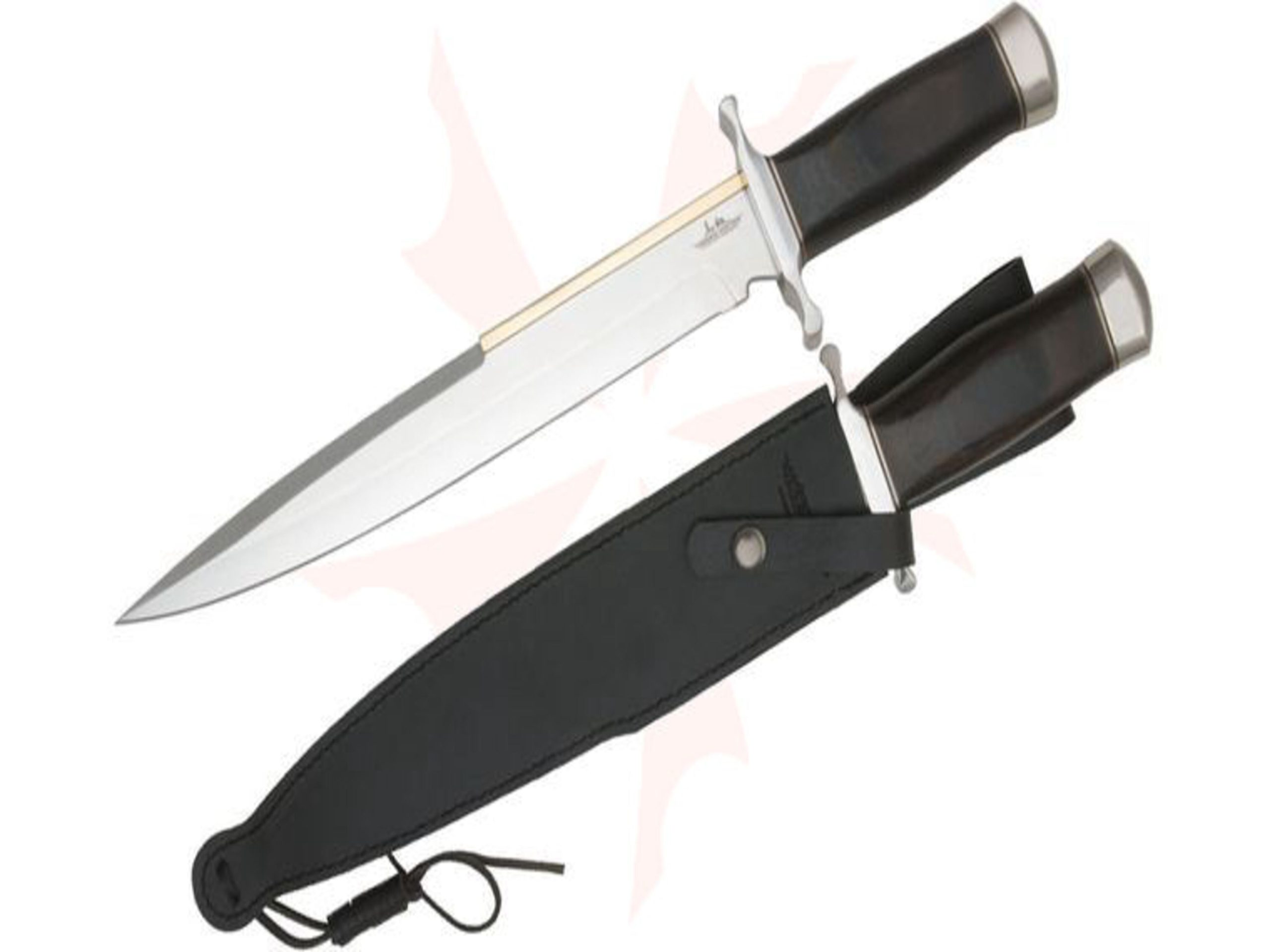
Designed by legendary blade artist Gil Hibben, the UC-GH5019 carries serious aesthetic credibility. The sweeping Bowie-inspired profile, full-length blood groove, and stacked leather handle look like something between a cinema prop and a fine collector’s piece, and that’s essentially what it is. The 420 stainless steel blade, while polished to a mirror finish, measures around 52–54 HRC, which is well below what outdoor professionals consider field-worthy. Edge-holding tests show degradation after approximately 25 slicing passes through paracord and cordage, materials a bushcrafter might work with in the first hour of camp setup. The crossguard, while visually striking, creates an uncomfortable transition zone that reduces fine motor control during precision tasks. Hibben’s artistic talent is genuine and impressive, but this particular knife is built to sell on display racks and gift shelves, not to baton through wet hardwood at 6 a.m. in October. There are better uses for the $60–$80 price point in any survival-focused kit.
4. Survivor HK-106320 Hunting Knife
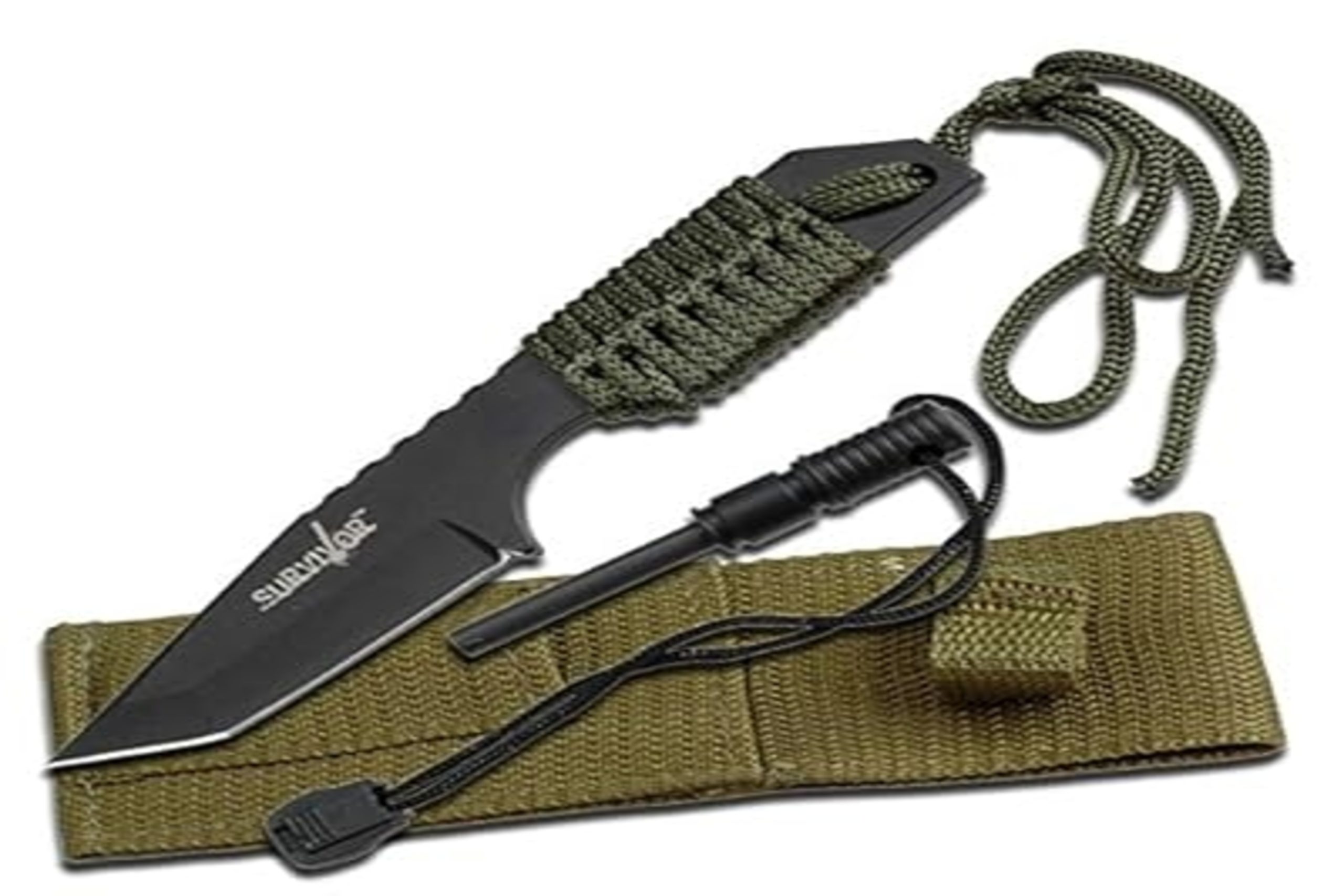
The Survivor HK-106320 presents itself as a fully equipped field companion. It comes with a serrated spine, a compass-topped handle, and a tactical nylon sheath with more pockets than some camping backpacks. On paper, it reads like a thoughtfully outfitted multi-purpose blade. Reality is considerably more modest. The unmarked stainless steel blade rarely exceeds 50 HRC, and the edge geometry is ground too thickly behind the bevel, meaning it wedges rather than slices cleanly through soft material. Independent tests report that the blade dulls visibly after approximately 10 to 15 cuts through green wood, a serious limitation for any wilderness scenario. The handle-integrated compass is decorative at best and reads up to 15 degrees off magnetic north under standard conditions. The survival kit stored inside the hollow grip includes items so small and fragile that they offer marginal real-world utility. Weighing in at around 12 ounces with sheath, it adds meaningful pack weight without returning meaningful performance. It’s a novelty item priced around $25 that consistently over-promises and underdelivers.
5. Elk Ridge ER-200-05 Hunting Knife
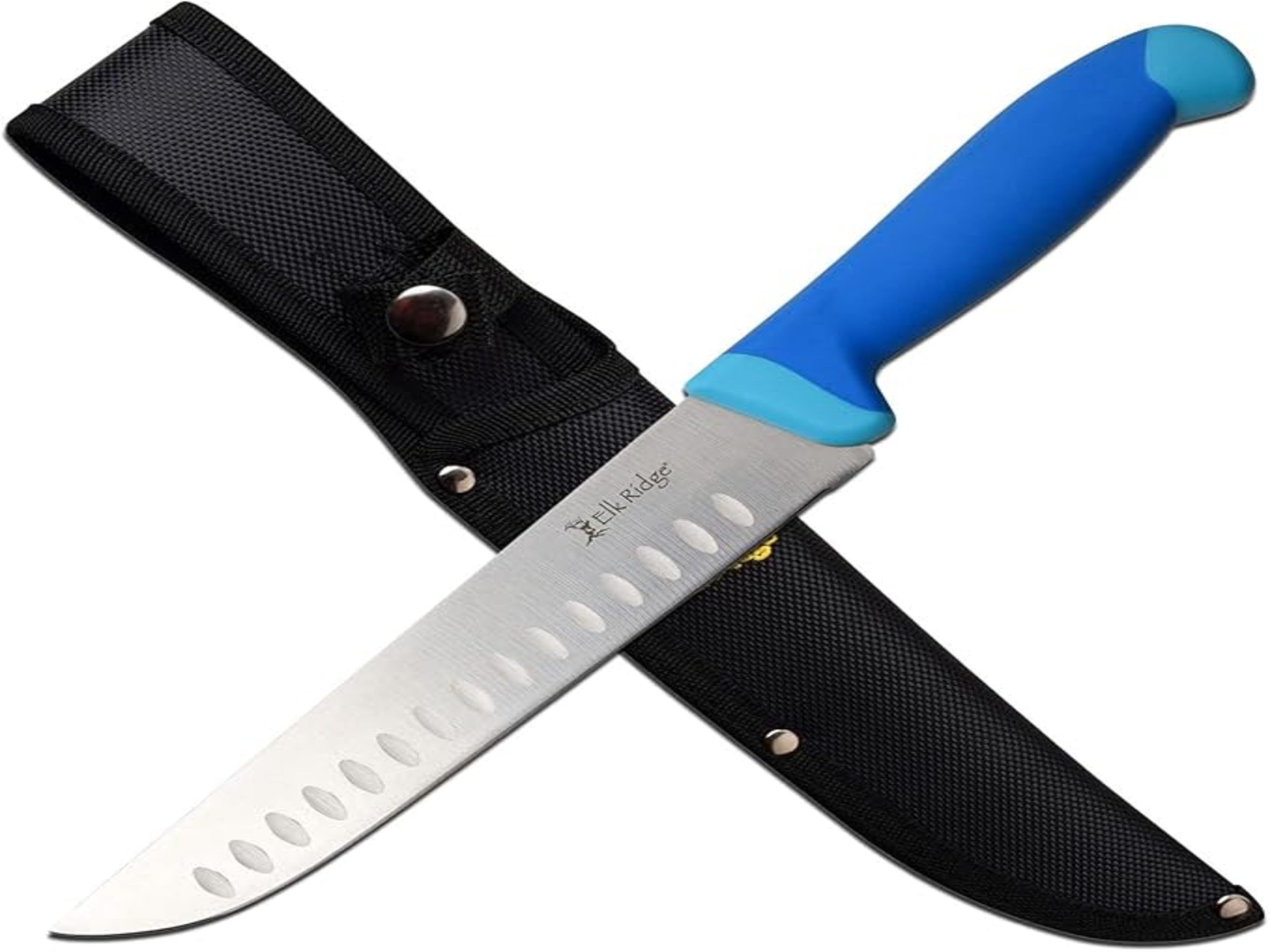
Elk Ridge’s ER-200-05 has the kind of camo-wrapped, wood-accented handle styling that fits perfectly in a hunting catalog spread. The 9.5-inch blade with a drop-point tip and dual grind finish looks considered and competent. But the 3Cr13 steel construction tells a different story; it’s the same economy alloy found in entry-level kitchen knives, hardened to approximately 50 HRC. Users consistently report noticeable edge rollover after batoning through just 3 to 5 logs of moderate-density wood, tasks any real camp knife would handle without complaint. The handle scales, while attractive, are affixed with pins that loosen under torsional stress, causing micro-movements that become uncomfortable and slightly unsafe over multi-hour use. The blade’s geometry is also poorly optimized for carving or fine woodwork: too thick to make clean detail cuts and too narrow to function as an effective chopper. The leather sheath has a snap closure that weakens after roughly 60 to 80 daily-use cycles. At around $35, it has the look of a quality knife without the engineering to back it up, a common trap for buyers shopping by appearance alone.
6. Cold Steel Laredo Bowie (Budget Variant)
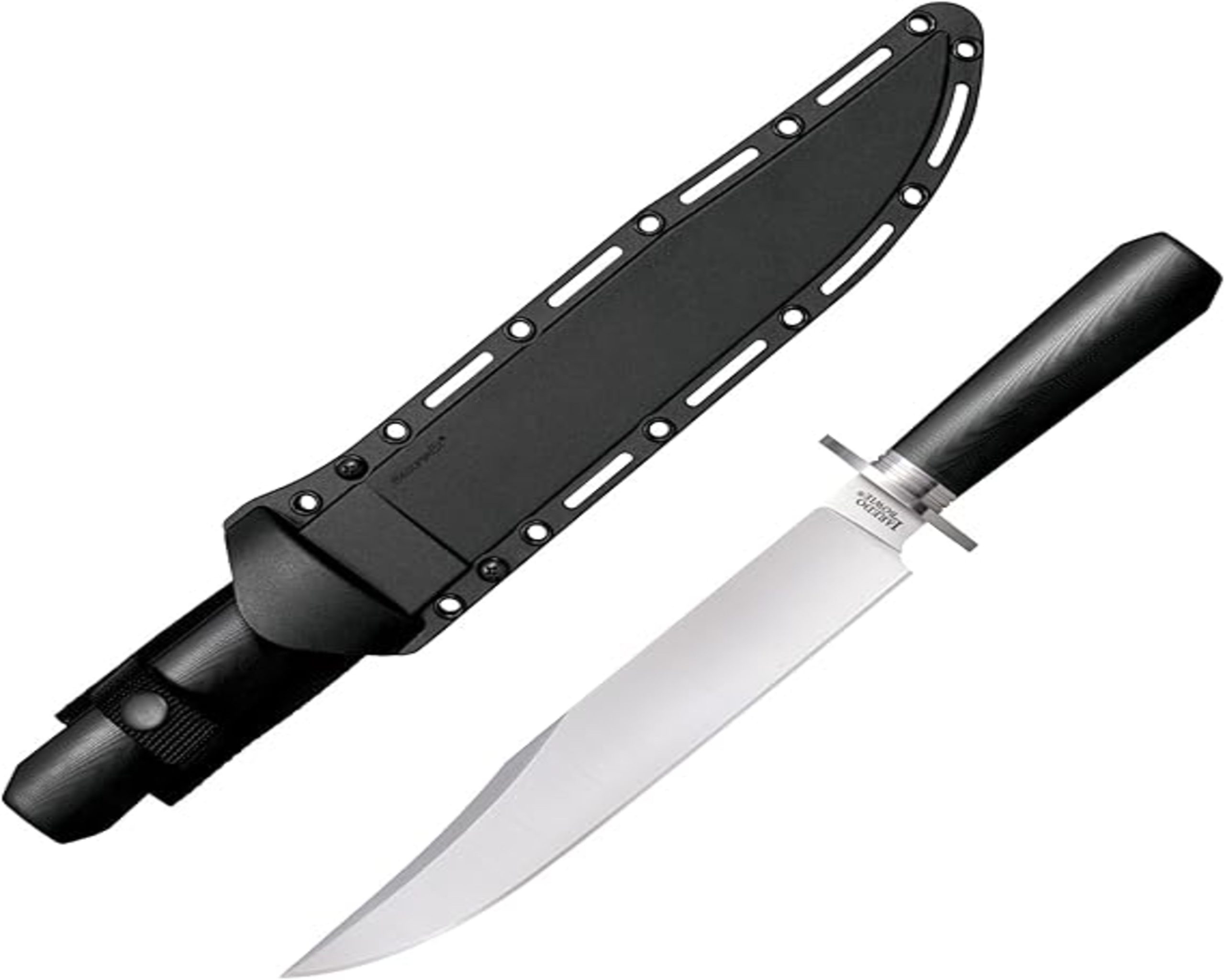
Cold Steel earns genuine respect in the blade world, and the Laredo Bowie’s professional-looking profile banks heavily on that reputation. The 11-inch clip-point blade, polished guard, and stag-style handle make a compelling visual argument, and some production runs do use solid Aus-8A steel at a respectable 57–59 HRC. However, the budget variant, which is sold online for $50–$70, cuts corners in ways that only become obvious under use. The heat treatment in lower-cost batches is inconsistent, with some blades testing as low as 53 HRC. Handle-to-tang fit tolerances also vary significantly, with some users measuring up to 0.5mm of play at the guard. The sheath, made from lightweight Cor-Ex material, performs adequately in dry conditions but loses rigidity below 25°F and fails to hold the blade securely once the retention snap wears. Compared to Cold Steel’s premium offerings at $120–$150, the budget version feels like a different product wearing the same branding, a cautionary tale about buying a reputable name at a suspiciously low price.
7. Schrade SCHF9 Extreme Survival Knife
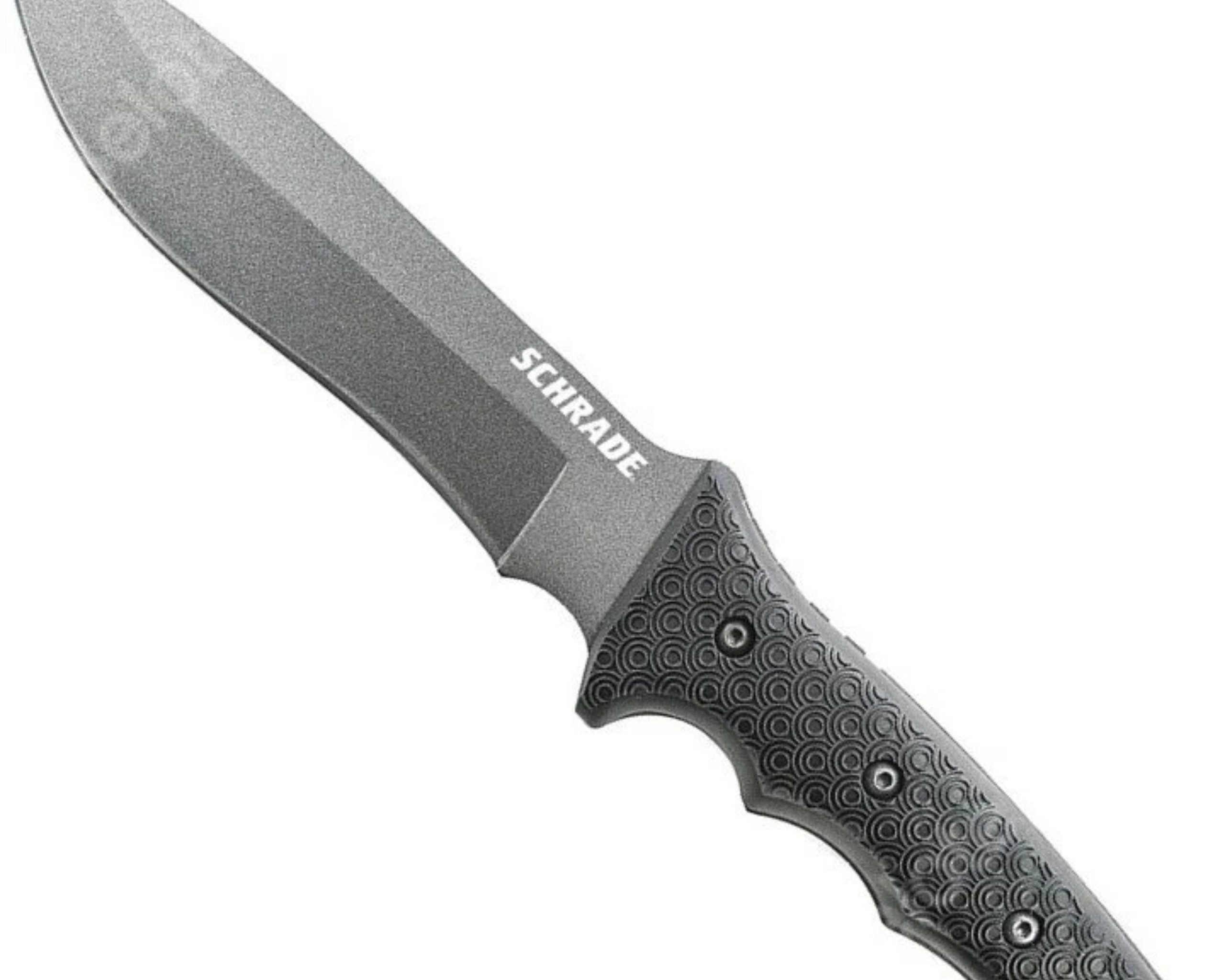
The Schrade SCHF9 has a devoted following, and it’s not hard to see why at first glance. The thick 3/16-inch spine, rugged appearance, and 10-inch overall length communicate seriousness. It even features a full tang construction and comes with a fire steel and sharpening rod, points in its favor. But the 8Cr13MoV steel, hardened to approximately 56–57 HRC, underperforms relative to its apparent bulk. The extra thickness that looks impressive actually creates poor cutting geometry; the blade wedges aggressively into wood rather than splitting cleanly, making batoning noticeably harder than it should be. Tests show users apply roughly 30–40% more force per baton strike than with a well-ground 4mm blade of equivalent size. The handle, while visually tactical, has finger grooves that don’t provide a natural grip during extended carving or food prep. At around $60, the SCHF9 occupies an awkward middle ground, priced above the budget tier but performing well below what that price point suggests. It rewards collectors more than it rewards survivalists.
8. MTECH Evolution Tactical Fixed Blade
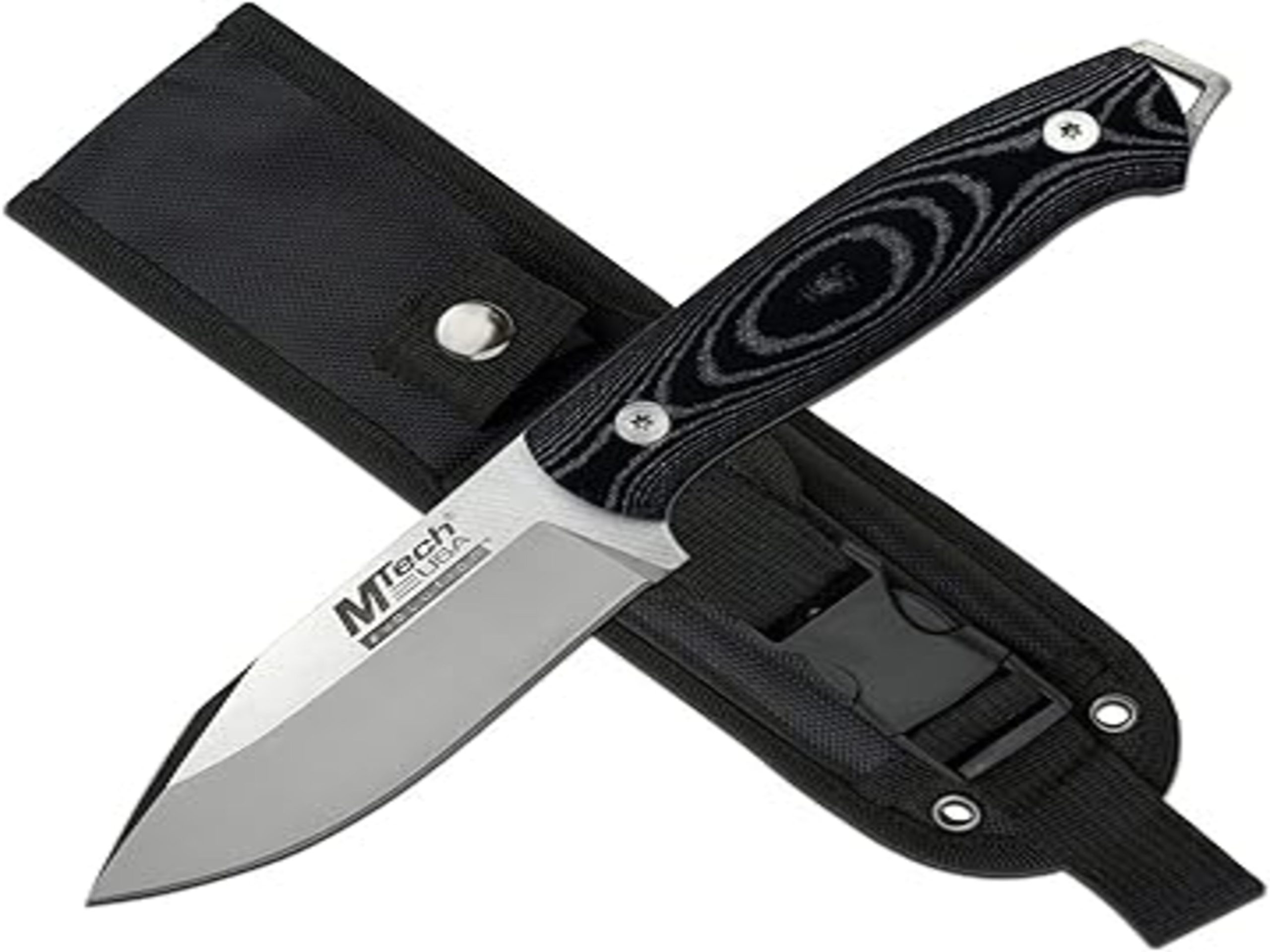
The MTECH Evolution brand is almost definitionally built for shelf appeal, and the Tactical Fixed Blade is a perfect example. With its angular tanto-style tip, partial serrations, black oxide coating, and molded nylon sheath, it checks every visual box the word “tactical” implies. Yet the 420J2 stainless steel blade rates at just 48–52 HRC, placing it firmly in the ornamental category by work-knife standards. The tanto grind, while offering a reinforced tip, sacrifices belly curve so completely that basic camp tasks like slicing food, skinning small game, or carving tent stakes become awkward and inefficient. Field reports note that the black oxide coating begins flaking noticeably after approximately 2 to 3 weeks of regular outdoor use, exposing the underlying steel to accelerated surface oxidation. The sheath’s belt loop is stitched with thread rated for fashion use, not load-bearing retention. It has been documented to fail under 8 lbs of lateral force. Priced at $20–$35, it isn’t expensive, but in a genuine wilderness emergency, cost becomes irrelevant when the knife in your hand simply isn’t up to the task.
9. Survivor Series S-19 Multi-Tool Survival Knife
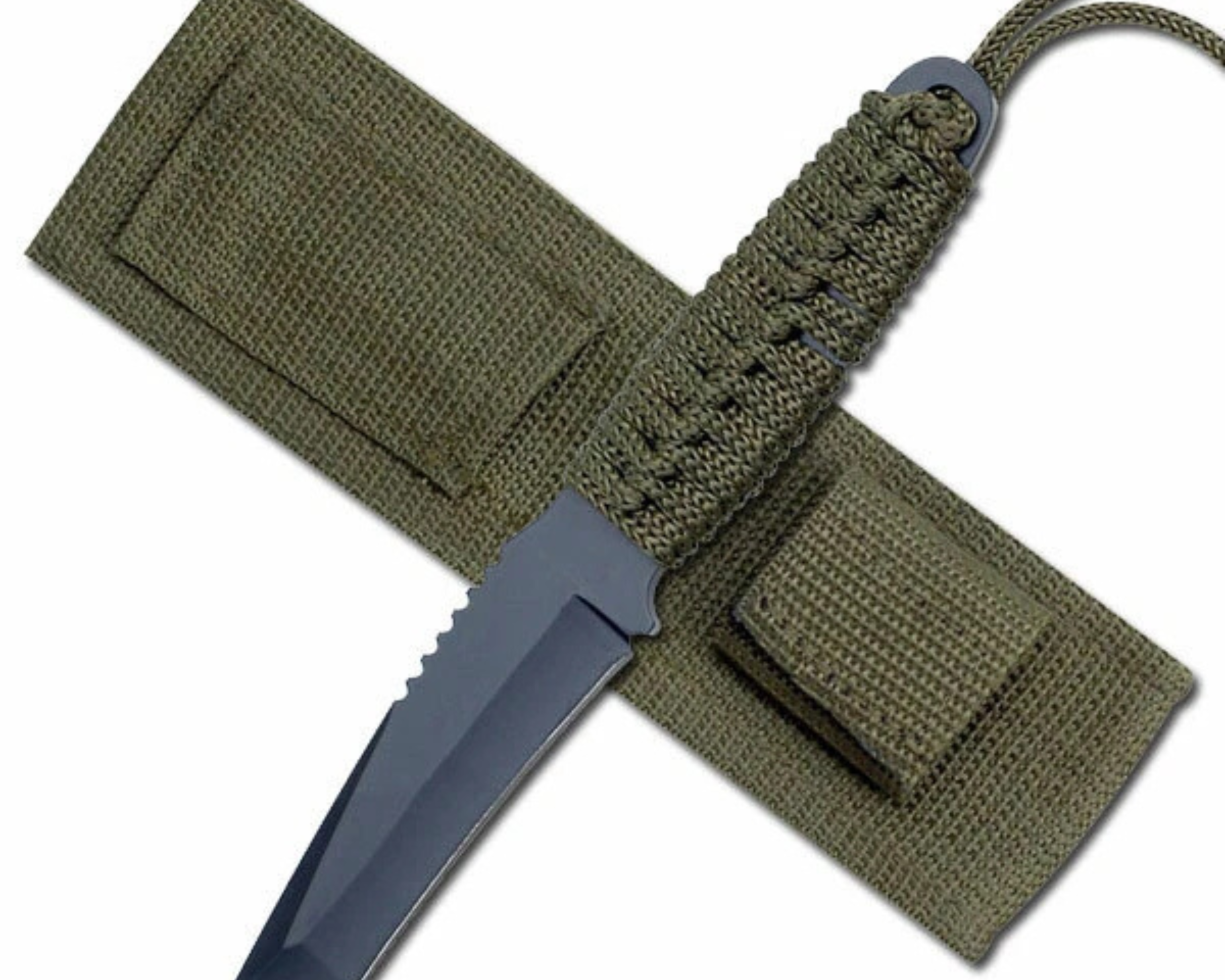
The Survivor Series S-19 is the kind of product that looks thrillingly comprehensive in a blister pack. A blade, serrations, a built-in saw spine, paracord handle wrap, and a sheath loaded with pouches, it’s a one-stop shop for the gear-curious buyer. But this jack-of-all-trades approach has an engineering cost that becomes obvious fast. The blade steel, unspecified in the manufacturer’s documentation, measures 49–51 HRC in independent testing. The saw spine, rather than functioning like a dedicated folding saw, creates drag and heat during light cutting without actually generating an efficient bite on hardwood. In side-by-side testing, a $12 dedicated folding saw outperforms the spine saw on every measurable metric. The paracord handle wrap looks bushcraft-authentic but unravels from the grip end after roughly 4 to 6 hours of heavy use. The blade’s tip geometry is compromised by its attempt to balance piercing and slicing profiles simultaneously, excelling at neither. At roughly $40–$55, the S-19 teaches an old lesson in new packaging: a knife that tries to be everything in the field usually succeeds at nothing important when conditions turn serious.
10. Timber Wolf Medieval Bowie Knife

The Timber Wolf Medieval Bowie brings theatrical energy to survival knife aesthetics. The 12-inch blade is wide and dramatic, etched with decorative patterns that make it genuinely beautiful as a wall display. The stacked leather-and-brass-guard handle construction looks period-authentic and feels solid in the first few minutes of use, but once real use begins, the problems compound quickly. The 420 stainless blade is decoratively ground, thin at the tip for piercing appeal, but inconsistently beveled across its length, creating an edge profile that resists predictable sharpening. Users report needing to spend 25 to 40 minutes with a stone to establish a reliable edge after the factory grind, which itself dulls after approximately 10 to 15 moderate cutting tasks. The brass guard, while attractive, adds 1.8 ounces of dead weight with no performance benefit. The leather sheath, though thick and visually appropriate, lacks a moisture-barrier treatment and absorbs water rapidly in wet field conditions, swelling enough to tighten blade retention to the point that one-handed extraction becomes difficult. Retailing for $45 to $65, this gift item is sold in the wrong section of the store.