Few firearms have crossed the boundary between mechanical tool and cultural symbol as completely as the Colt M1911. Designed for military service, the pistol eventually came to represent something broader than caliber or capacity. Across wars, social upheavals, and popular media, it became associated with resistance, independence, and refusal to yield. This transformation did not happen overnight or by accident. It was shaped by battlefield performance, individual stories, political moments, and decades of visual storytelling. The M1911’s weight, single-action trigger, and unmistakable profile gave it a personality that people projected meaning onto. Over time, it stopped being just a sidearm and became shorthand for defiance itself. This article explores nine key reasons the M1911 earned that reputation and why it still carries symbolic weight today.
Built for War, Not Compromise
The M1911 was designed during a period when military equipment prioritized function over comfort. Its purpose was simple: work under pressure and stop threats decisively. Early service use reinforced that image. Soldiers trusted the pistol because it functioned in mud, dust, and harsh conditions. That reliability became part of its identity. The pistol did not feel delicate or experimental. It felt deliberate and stubborn. This reputation mattered because defiance often grows from trust. When people believe a tool will not fail them, they project confidence and resolve onto it. The M1911’s early military service laid the foundation for its later symbolism by proving it could endure punishment without hesitation.
Adopted by Individuals, Not Just Armies
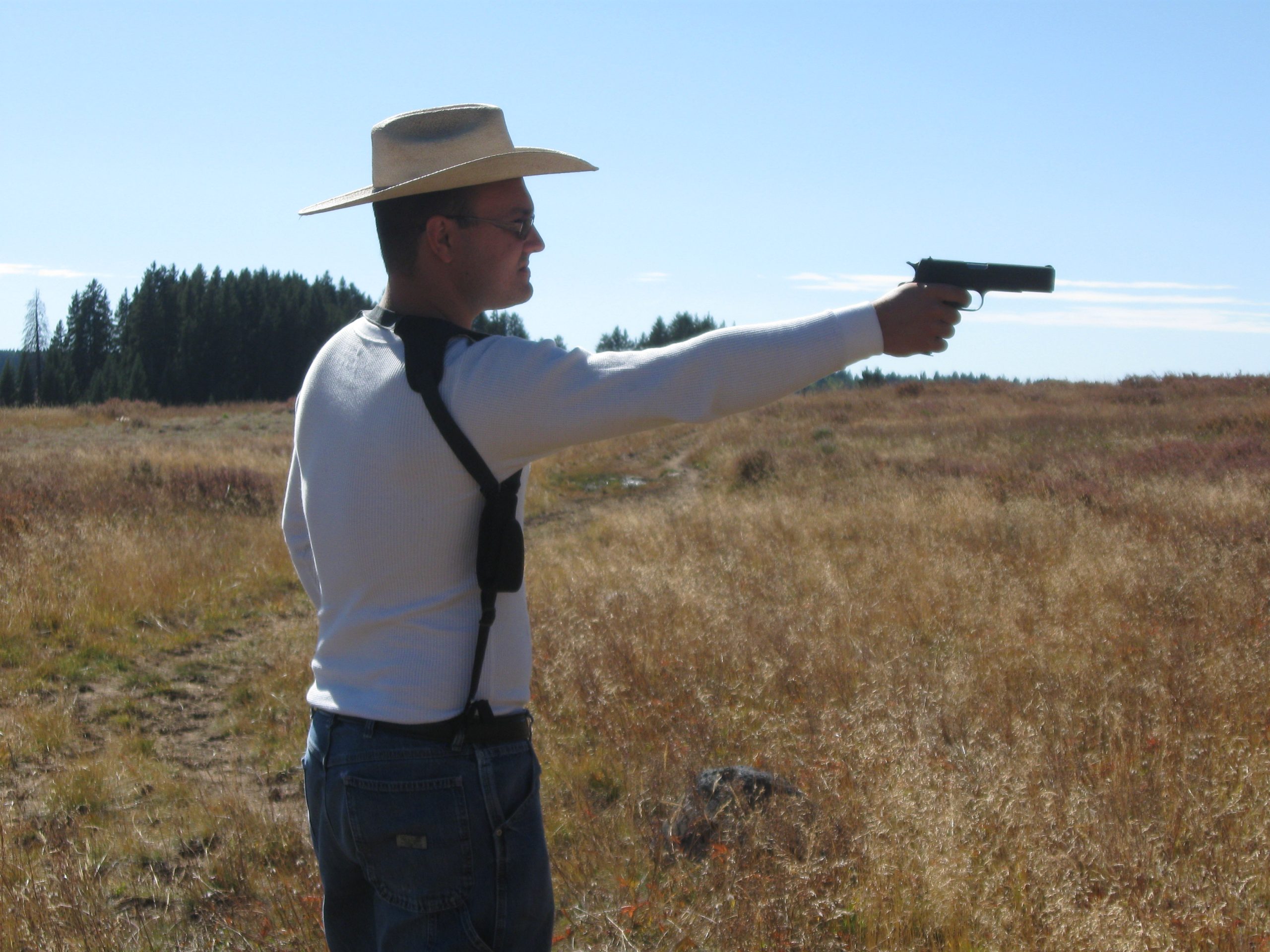
While the M1911 was issued by institutions, its legend grew through individual use. Soldiers personalized it, carried it beyond regulations, and spoke about it with uncommon respect. Veterans described the pistol as something they relied on when everything else felt uncertain. That personal connection separated it from other service weapons. It became a companion rather than equipment. Stories passed down through generations reinforced the idea that the M1911 represented personal resolve under pressure. Defiance is often personal, not institutional. The pistol’s association with individual survival and confidence helped elevate it from standard issue to symbolic object.
Surviving Replacement and Obsolescence
Few pistols remain relevant after being officially replaced. The M1911 defied that pattern. Even as newer designs entered service, it refused to disappear. Special units, competitors, and civilians continued to choose it deliberately. This persistence reinforced its defiant image. It was no longer just resisting enemies, but resisting obsolescence itself. The pistol’s continued use suggested that newer did not always mean better. That idea resonated with people who valued experience over novelty. The M1911 became a statement against trends, reinforcing its identity as a tool that endured by merit rather than marketing.
Visual Presence and Immediate Recognition
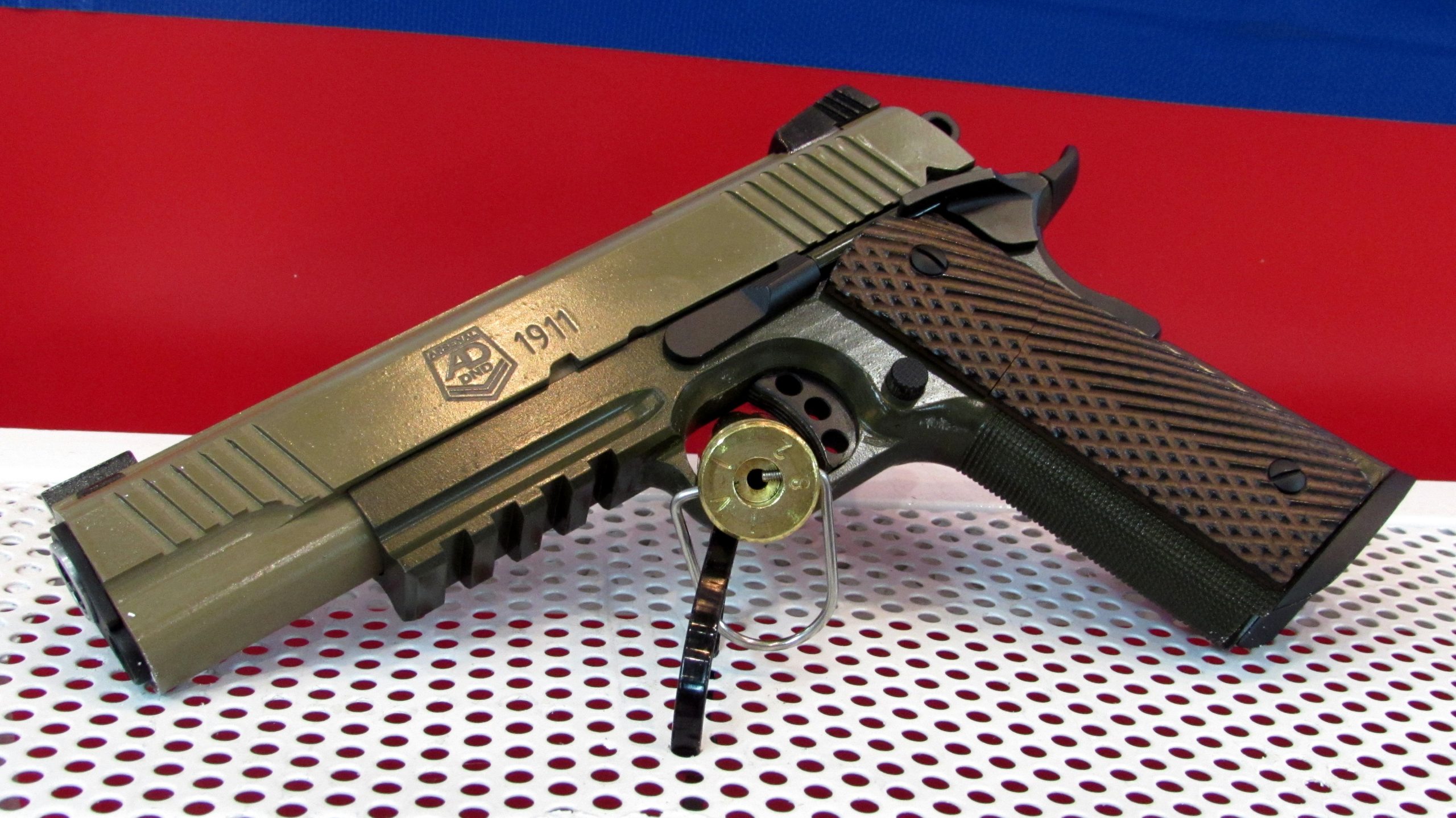
The M1911’s profile is instantly recognizable, even to people with limited firearms knowledge. Its straight lines, exposed hammer, and solid steel construction communicate seriousness without explanation. In photographs and film, it appears purposeful, heavy, and uncompromising. This visual clarity helped cement its symbolic role across generations. Audiences learned to associate it with characters who resisted authority, rejected control, or refused surrender. Filmmakers favored it because it looked honest and mechanical, free from futuristic embellishment or abstraction. Nothing about it felt hidden, sleek, or ambiguous. That transparency aligned naturally with the idea of defiance rooted in clarity, intent, and resolve. The pistol looked like it meant exactly what it was, and that visual honesty carried narrative power.
Cultural Adoption Beyond the Battlefield
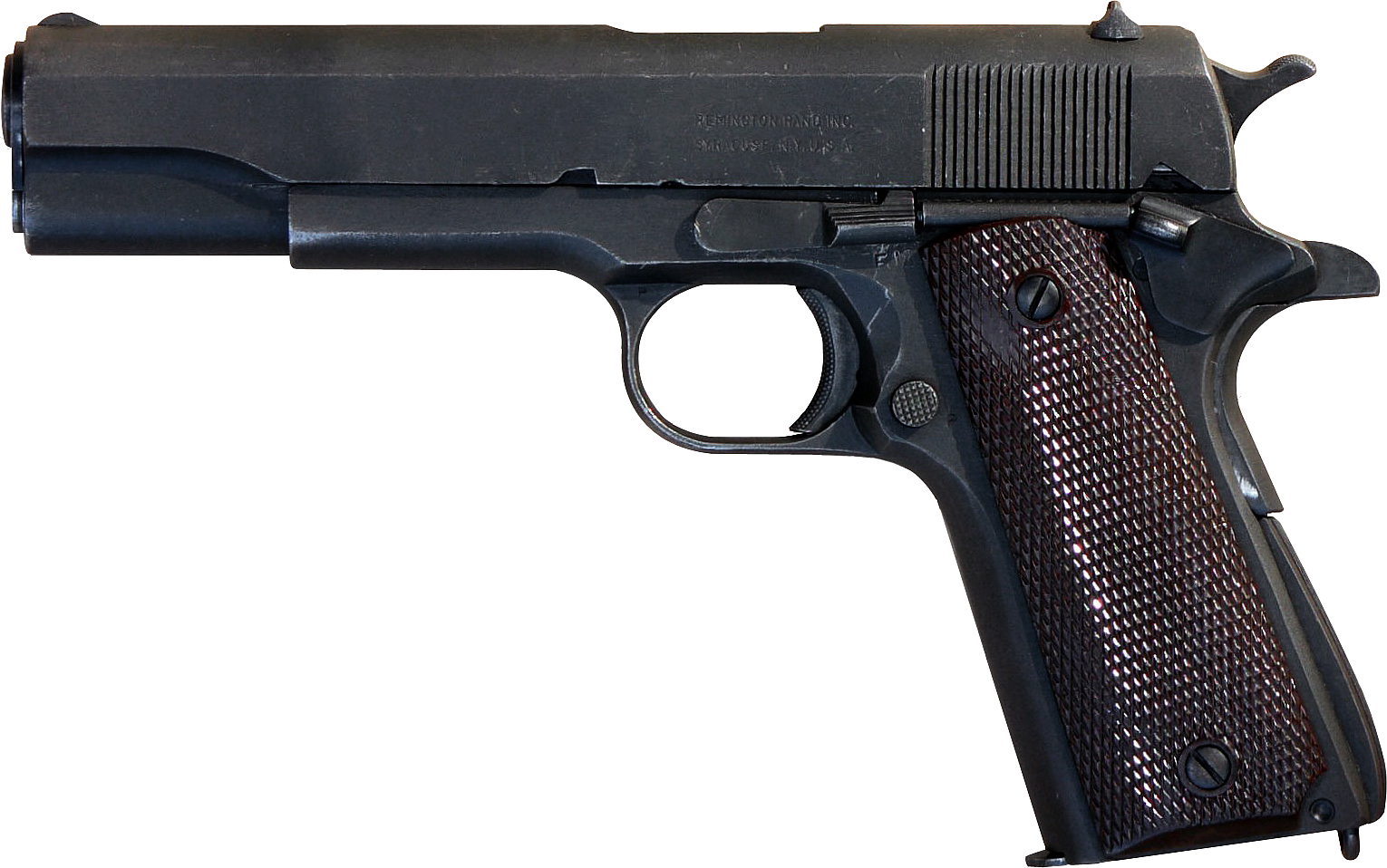
Over time, the M1911 moved far beyond military service into civilian culture, where its meaning continued to evolve. Competitive shooters, gunsmiths, collectors, and everyday carriers embraced it for different reasons, each adding new layers of symbolism. Customization transformed the pistol into a platform for craftsmanship and personal expression. Choosing a heavy, steel, single-action pistol in an era dominated by lightweight polymers became a deliberate statement rather than a convenient choice. It signaled intention, patience, and preference over speed or ease. This civilian adoption expanded its symbolism from combat resistance to resistance against conformity and disposable trends. The M1911 became a way for individuals to assert identity through deliberate, informed decision-making.
Media Reinforcement of Defiant Characters
Film and television played a powerful role in reinforcing the M1911’s image over time. Directors repeatedly placed it in the hands of characters defined by resolve instead of compliance. These characters were often outnumbered, underestimated, or driven by principle rather than authority or approval. The pistol became an extension of that attitude. Repetition strengthened the symbolism. Seeing the same firearm paired with similar traits across decades created instant recognition. The M1911 evolved into narrative shorthand. Audiences understood what it represented the moment it appeared on screen, without the need for explanation, exposition, or dialogue.
Mechanical Honesty and User Involvement
The M1911 demands attention and involvement from its user in ways many modern designs do not. Its manual safety, single-action trigger, and maintenance expectations reward familiarity, discipline, and intent. This relationship reinforces responsibility and accountability. The pistol does not pretend to be effortless or forgiving. It expects competence and engagement. That expectation aligns naturally with defiance rooted in self-reliance rather than automation. Users often describe it as honest because it performs exactly as designed, no more and no less. That mechanical honesty reflects values of control, mastery, and responsibility, deepening its symbolic weight beyond simple function or performance statistics.
Resistance to Modern Convenience
In a market increasingly driven by ease, automation, and efficiency, the M1911 stands apart by design. It is heavier, has a lower capacity, and is less forgiving of neglect than many modern firearms. Choosing it requires accepting tradeoffs consciously rather than ignoring them. That choice itself becomes an act of defiance. Owners are not unaware of alternatives or technological advances. They simply prioritize different values. The pistol’s continued popularity suggests a rejection of convenience in favor of discipline, tradition, and involvement. This resistance to simplification reinforces its image as a deliberate choice rather than a default solution shaped by trends or marketing.
Enduring Symbol Rather Than Trend
Today, the M1911 exists as both a functional firearm and an enduring cultural symbol. Its practical role continues, but its symbolic role may be even stronger. It represents persistence, individualism, and refusal to yield to pressure, fashion, or passing trends. Symbols endure because they adapt without losing identity. The M1911 has crossed generations while remaining instantly recognizable and culturally relevant. That balance explains its lasting association with defiance. Not because it is flawless or modern, but because it stands firmly as what it has always been, regardless of what comes after it.