Some guns arrive with enormous expectations. Manufacturers pour in engineering budgets, marketing campaigns, and precision tooling, all hoping to capture collector attention and command premium shelf prices.
Yet the collector world is unforgiving. It rewards rarity, history, and mechanical soul, not just novelty.
Several firearms over the decades entered the market promising to redefine what collectible meant, only to leave dealers with slow-moving inventory and auction houses with unsold lots. These are their stories.
Mateba Model 6 Unica (Italy, 1997)
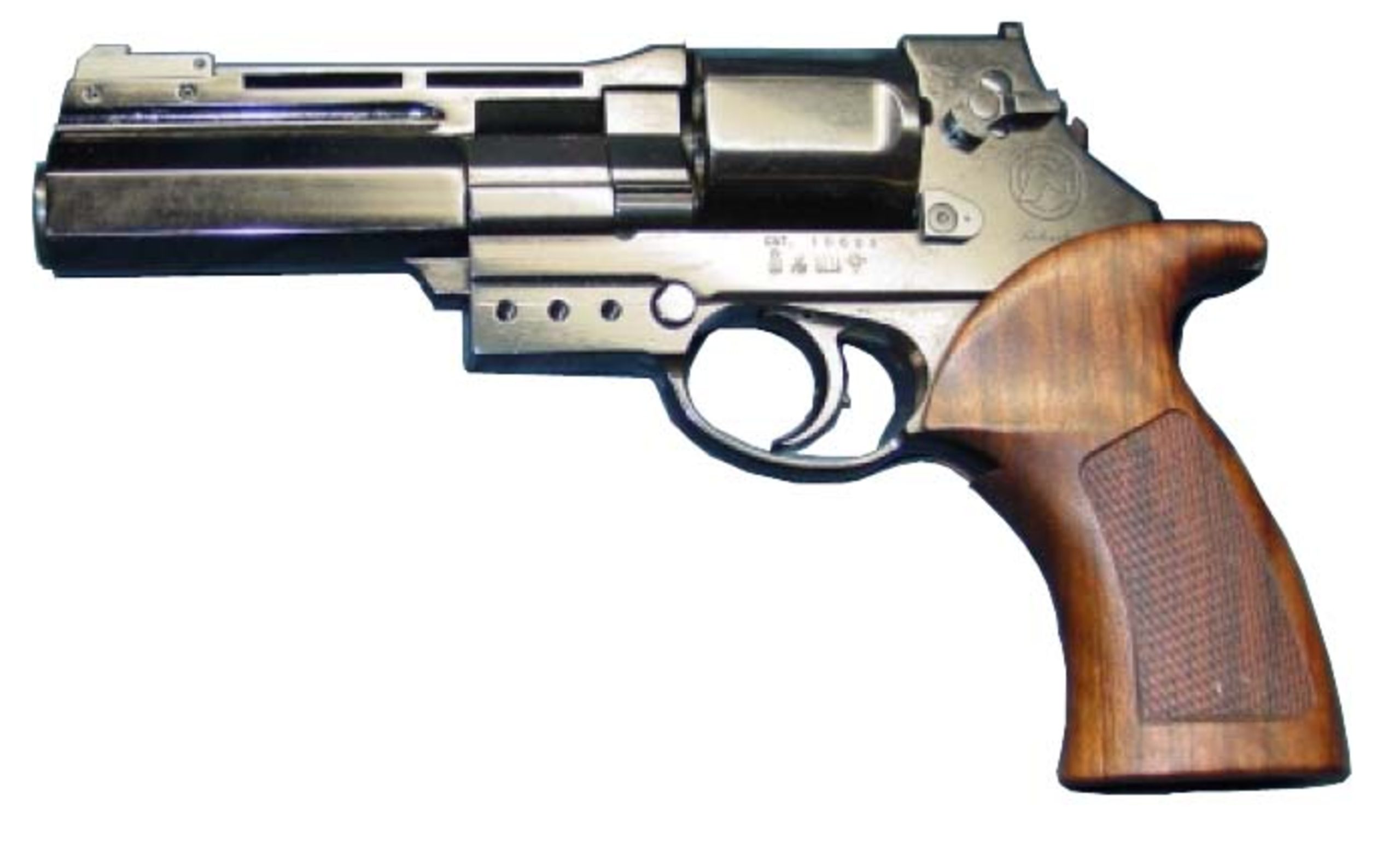
The Mateba Model 6 Unica was one of the most visually striking semi-automatic revolvers ever manufactured, chambered in .357 Magnum, .44 Magnum, and .454 Casull.
Its recoil-actuated cylinder rotation was genuinely innovative, firing from the bottom chamber at 6 o’clock rather than the traditional 12 o’clock position.
Production never exceeded roughly 2,000 units total before the company collapsed financially.
Collectors initially paid premiums of 200% over MSRP, expecting scarcity to drive value further upward.
Instead, mechanical reliability complaints surfaced repeatedly, with documented jam rates of nearly 1 in 40 rounds during sustained fire.
The trigger reset felt inconsistent across individual units, suggesting loose quality control tolerances.
Parts availability dried up almost immediately post-bankruptcy, making ownership more of a display commitment than a shooting one.
Today, even pristine examples rarely exceed $3,500 at auction, underwhelming given their mythology.
Calico M950 (USA, 1985)
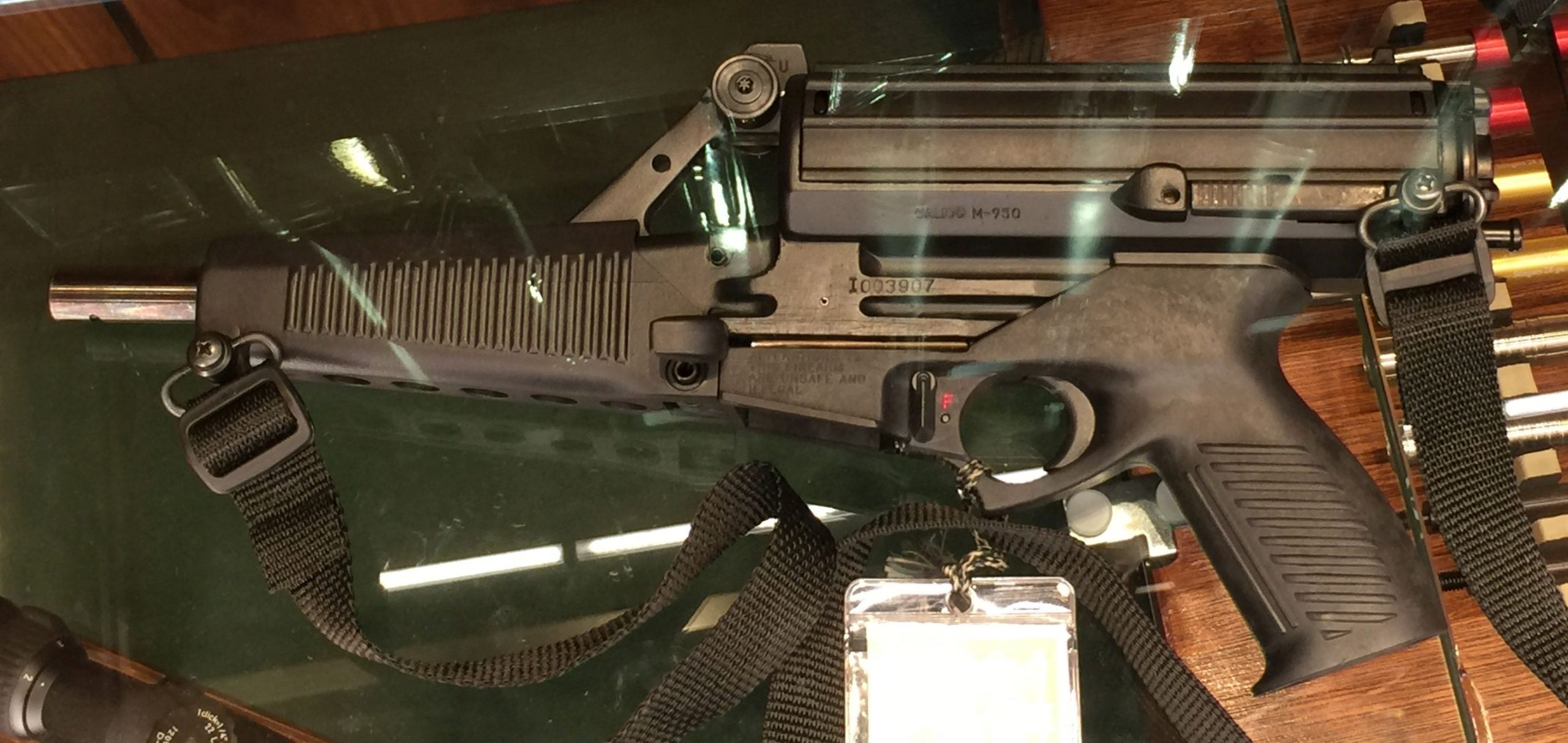
The Calico M950 arrived promising revolutionary capacity, featuring a helical feed magazine holding either 50 or 100 rounds of 9mm ammunition.
That feeding system was the problem. Feeding reliability was notoriously inconsistent, with malfunction rates reported anywhere between 1 in 15 and 1 in 30 rounds by independent testers.
The polymer helical magazine cracked under temperature stress, particularly below 40°F and above 95°F.
Roughly 25,000 units were manufactured before production slowed significantly by the mid-1990s.
Collectors who expected scarcity premiums found the pistol too mechanically frustrating to attract serious demand.
The grip ergonomics were awkward, placing the magazine load point directly atop the pistol in a design that felt conceptually clever but practically unwieldy.
Military and law enforcement adoption was essentially zero globally, removing the prestige those markets typically confer.
Current resale values hover between $600 and $950, modest for a firearm once marketed as a paradigm shift.
Webley-Fosbery Automatic Revolver (UK, 1901)
The Webley-Fosbery combined the romantic appeal of a British service revolver with semi-automatic recoil operation, a genuinely daring mechanical experiment for 1901.
Chambered in .455 Webley, it used slide-and-cylinder recoil to both cock the hammer and rotate the next chamber automatically.
Only approximately 4,700 units were ever manufactured, and they saw limited service use in World War I.
Collectors paid heavily for that rarity through the 1980s and 1990s, with fine examples touching $8,000 to $12,000 at specialist auctions.
The problem was practical: sand, mud, or debris easily disrupted the recoil groove mechanism, making field reliability questionable.
British officers who carried it in combat reported frequent stoppages under adverse conditions, which tarnished its reputation despite its elegance.
The collector market plateaued sharply after peaking, as newer military pistol collectors shifted attention elsewhere.
Values stabilized around $4,500 to $7,000 for very good condition examples, respectable but far below early enthusiasm.
Gyrojet Rocket Pistol (USA, 1965)
The Gyrojet fired self-propelled 13mm rocket rounds rather than conventional cartridges, theoretically eliminating recoil while achieving devastating terminal velocity at distance.
MBA Associates marketed it as a futuristic sidearm suitable for space-age military contracts, and early press coverage was breathless with excitement.
Production reached approximately 1,000 pistols and 4,000 carbines before collapsing around 1970.
The fundamental flaw was physics: at close range, the rocket round had barely accelerated, producing muzzle energy under 4 foot-pounds, genuinely less than some air rifles.
At 30 yards, the round finally reached meaningful velocity, by which point most defensive scenarios had already concluded.
Ammunition became nearly impossible to source within a decade, with surviving rounds now selling individually for $100 to $150 each.
Collector interest remained curiosity-driven rather than investment-driven for most of its post-production history.
Pistols sell today for $1,000 to $3,500, depending on condition, respectable but not exceptional given the historical novelty factor.
Dardick Model 1500 (USA, 1959)
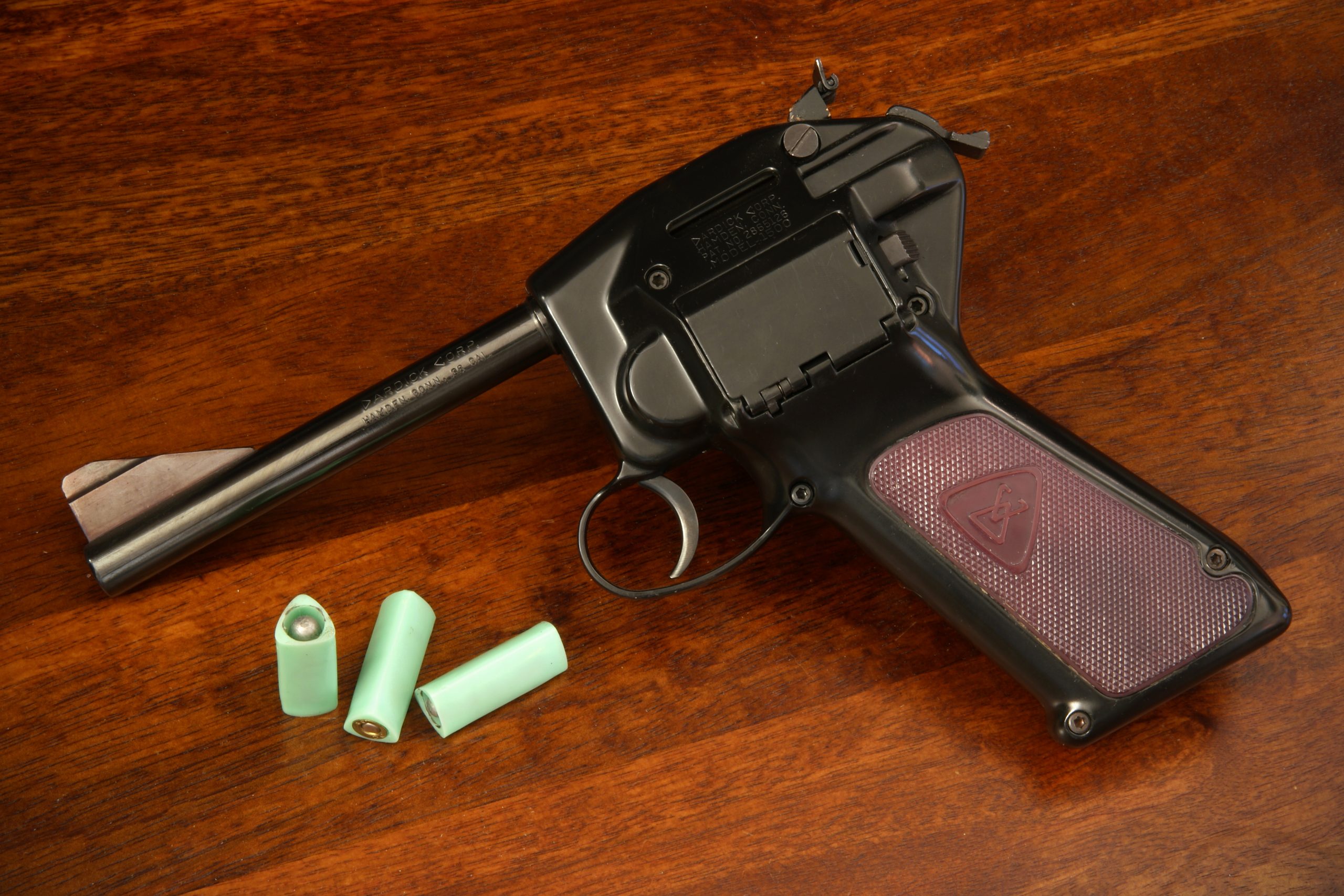
The Dardick used triangular open-chamber “trounds,” a proprietary cartridge format designed to allow the pistol to function as both a revolver and a semi-automatic simultaneously.
David Dardick genuinely believed the tround represented the future of ammunition feeding, and the mechanical concept was undeniably inventive.
Production was minuscule, with fewer than 40 known Model 1500 units ever manufactured, making it extraordinarily rare.
Despite that rarity, collector demand has remained peculiarly tepid, with examples selling between $2,500 and $5,000 at specialist auctions.
The proprietary ammunition problem is the central issue: no commercial round production exists today, meaning ownership is purely academic.
Original tround packages sell for $200 to $400 for just 20 rounds when found at auction, if found at all.
The pistol also looked ungainly, with a wide, rectangular profile that lacked the aesthetic appeal collectors often associate with desirable sidearms.
Its rarity alone should command significantly higher prices, yet the market remains persistently unconvinced of its long-term investment value.
Heckler & Koch P7M13 (Germany, 1983)
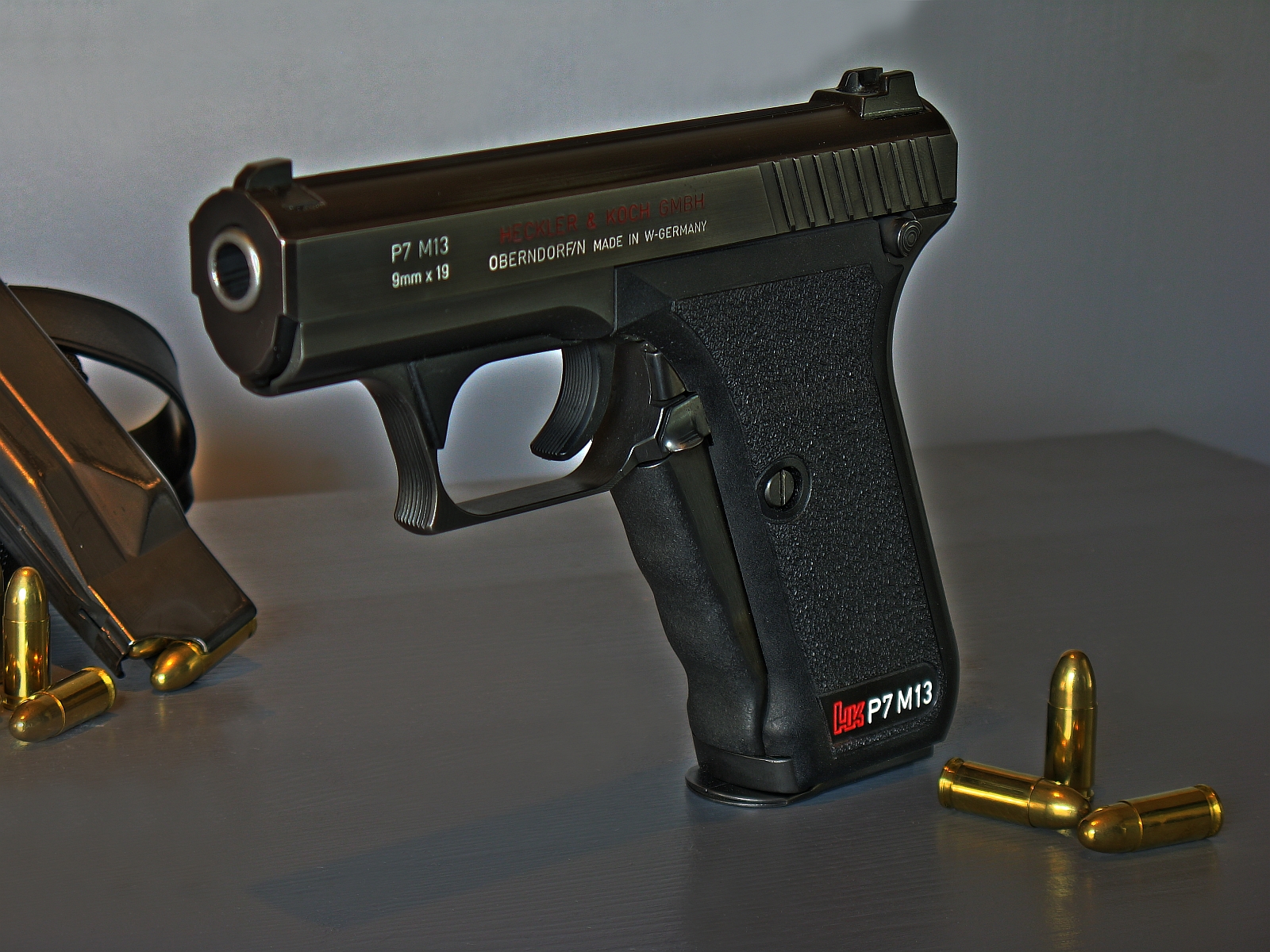
The P7M13 was technically brilliant, featuring a squeeze-cocking mechanism that made the pistol completely inert until firing pressure was applied to the front grip strap.
Chambered in 9mm with a 13-round capacity, it was adopted by several German police units and drew significant attention from American collectors throughout the 1980s.
MSRP at peak production was approximately $900, positioning it firmly in premium territory.
The gas-retarded blowback system produced an exceptionally consistent trigger pull, rated by independent testers at 4.5 pounds with virtually no creep.
But sustained fire heated the frame rapidly, with the area around the gas port becoming uncomfortable to handle after approximately 50 rounds.
That thermal issue, combined with complex disassembly requirements and a proprietary design that made aftermarket modifications impossible, limited its enthusiast base.
HK discontinued it commercially by 2008 after modest American sales volumes that never matched European law enforcement adoption numbers.
Current used market values sit between $1,800 and $2,800, appreciated but not spectacular, given its engineering pedigree.
Serbu Super-Shorty (USA, 1996)
The Serbu Super-Shorty is a federally registered any-other-weapon based on the Mossberg 500 or Remington 870 platform, cut to an overall length of just 16.5 inches.
It holds 2 rounds in its magazine tube plus 1 in the chamber, giving it a 3-round total capacity in 12-gauge or 20-gauge configurations.
The NFA registration requirement means paperwork delays of 10 to 14 months for civilian transfer, which suppresses casual buyer interest significantly.
Each unit sells new for approximately $500 to $700, and registered transferable examples on the secondary market rarely exceed $1,200 to $1,500.
Collectors initially expected NFA-registered shotguns of this novelty to appreciate similarly to registered machine guns, which regularly command 400% to 800% premiums over original retail.
That appreciation simply never occurred, largely because production quantities remained high enough to prevent genuine scarcity.
The practical utility case is also difficult to make: 3 rounds of 12-gauge from a 16.5-inch platform with no stock is genuinely difficult to control effectively.
The Super-Shorty became more of a conversation piece than a grail gun, which kept values disappointingly flat.
Chiappa Rhino (Italy, 2009)
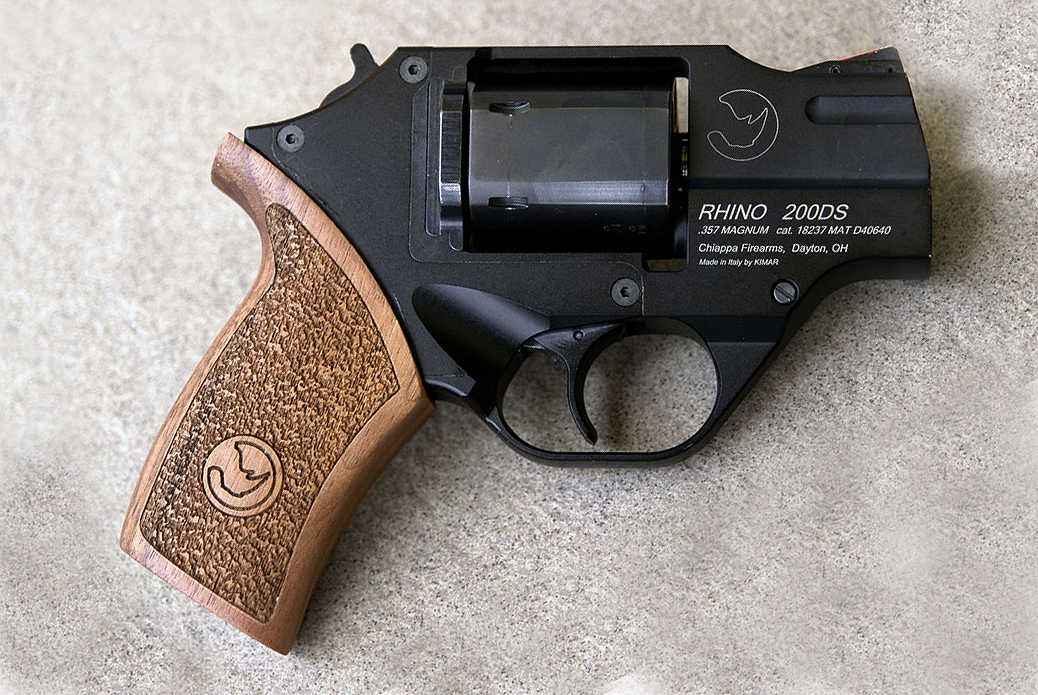
The Chiappa Rhino fires from the bottom chamber of its cylinder, identical in concept to the Mateba, but arrived with far better build quality and a more accessible price point of $900 to $1,400 new.
Chambered in .357 Magnum primarily, with .40 S&W and 9mm variants, it offered genuine muzzle flip reduction of approximately 30% compared to conventional revolvers.
Early marketing positioned it aggressively toward collectors seeking the next investment-grade Italian revolver, drawing favorable comparisons to the Mateba.
However, the Chiappa remained in continuous production, eliminating the scarcity that drives collector premiums in the first place.
By 2023, over 20,000 units had been manufactured globally across various configurations and barrel lengths from 2 inches to 6 inches.
The double-action trigger was criticized as inconsistent across production batches, with pull weights varying between 10 and 14 pounds between individual units.
Collector enthusiasm peaked early and softened quickly as the revolvers proved too available to appreciate meaningfully on the secondary market.
Used examples today sell for $650 to $950, often below original retail, a quiet verdict from the market.