Folding-stock submachine guns occupy a fascinating niche in small-arms history, blending compact design with the firepower demanded by military and security forces. Among them, extremely rare folding-stock variants stand apart, not because of mass adoption, but because they reflect moments of experimentation, urgency, and innovation. Many were produced in limited numbers, tested briefly, or issued only to specialized units. Their rarity today is often the result of canceled programs, postwar scrapping, or quiet retirement rather than battlefield failure. These firearms tell stories about evolving tactics, mechanized warfare, and the constant search for portability without sacrificing control. For collectors and historians, they represent milestones rather than mainstream success. The following list explores ten exceptionally rare folding-stock submachine guns, focusing on origin, mechanical layout, historical context, and why each remains so difficult to encounter today.
MP40/I Dual-Magazine Folding-Stock Variant
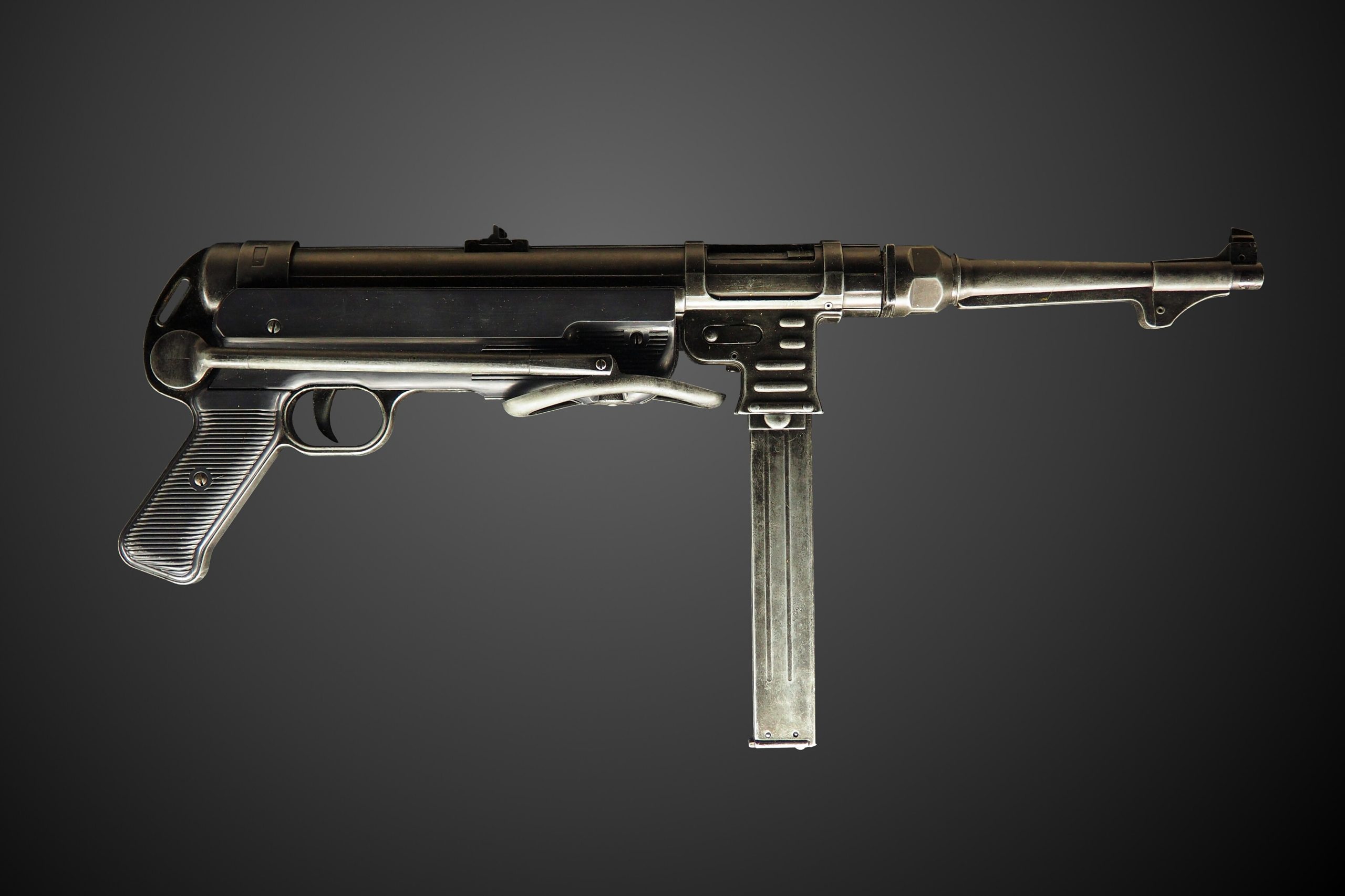
The MP40/I was an experimental evolution of Germany’s iconic MP40, retaining its under-folding steel stock while introducing a dual side-by-side magazine system. Chambered in 9×19mm Parabellum, it operated via simple blowback and fired from an open bolt. The goal was to double available ammunition before reloading, a response to intense close-quarters combat. While innovative, the added weight and balance issues limited acceptance. Only small trial batches were produced during World War II, and most were lost or dismantled after the conflict. Visually, it stands out immediately due to its widened magazine housing. Surviving examples are extraordinarily scarce and usually confined to major museums. Its importance lies in showcasing wartime desperation paired with creative engineering under extreme pressure.
Early Beretta PM12 Side-Folding Stock Model

Early side-folding stock versions of the Beretta PM12 represent a transitional phase in Italian submachine gun development. Chambered in 9×19mm and firing from an open bolt, the PM12 was already known for reliability and controllability. The folding stock was designed for airborne troops and vehicle crews needing compact storage. Unlike later standardized variants, early folding stocks were produced in limited quantities and featured subtle dimensional differences. The stock folded tightly along the receiver, maintaining a clean profile. These early models were quickly overshadowed by later revisions, making them uncommon today. Collectors value them for their precision machining and historical placement during Cold War rearmament. They reflect Beretta’s methodical refinement rather than radical redesign.
Sterling L2A3 Folding-Stock Experimental Pattern
The Sterling L2A3 is widely recognized, but experimental folding-stock patterns are seldom seen. These versions replaced the tubular fixed stock with a compact folding assembly intended for armored vehicle crews. Chambered in 9×19mm, the weapon retained its roller-grooved bolt, improving reliability in dirty conditions. The folding stock reduced overall length significantly while preserving balance. Only a small number were produced for evaluation, and most never progressed beyond trials. Period documentation is scarce, adding to their mystery. What makes this variant compelling is its contrast with Britain’s conservative procurement history. It represents a brief willingness to explore unconventional ergonomics while maintaining proven mechanical systems.
SIG MKMO Side-Folding Stock Configuration
The SIG MKMO folding-stock variant exemplifies Swiss precision applied to compact military arms. Chambered in 9×19mm, it used open-bolt blowback operation and was engineered with tight tolerances. The side-folding metal stock was solid, locking firmly in both positions. Production numbers were low across the MKMO line, and folding-stock examples were only a fraction of total output. Intended for security and specialized units, the weapon emphasized discretion and durability. Its restrained appearance hides exceptional craftsmanship. Today, the MKMO folding-stock configuration is rarely encountered outside institutional collections. Its rarity is rooted in limited demand rather than performance shortcomings.
H&K MP5 Early Folding-Stock Trial Model
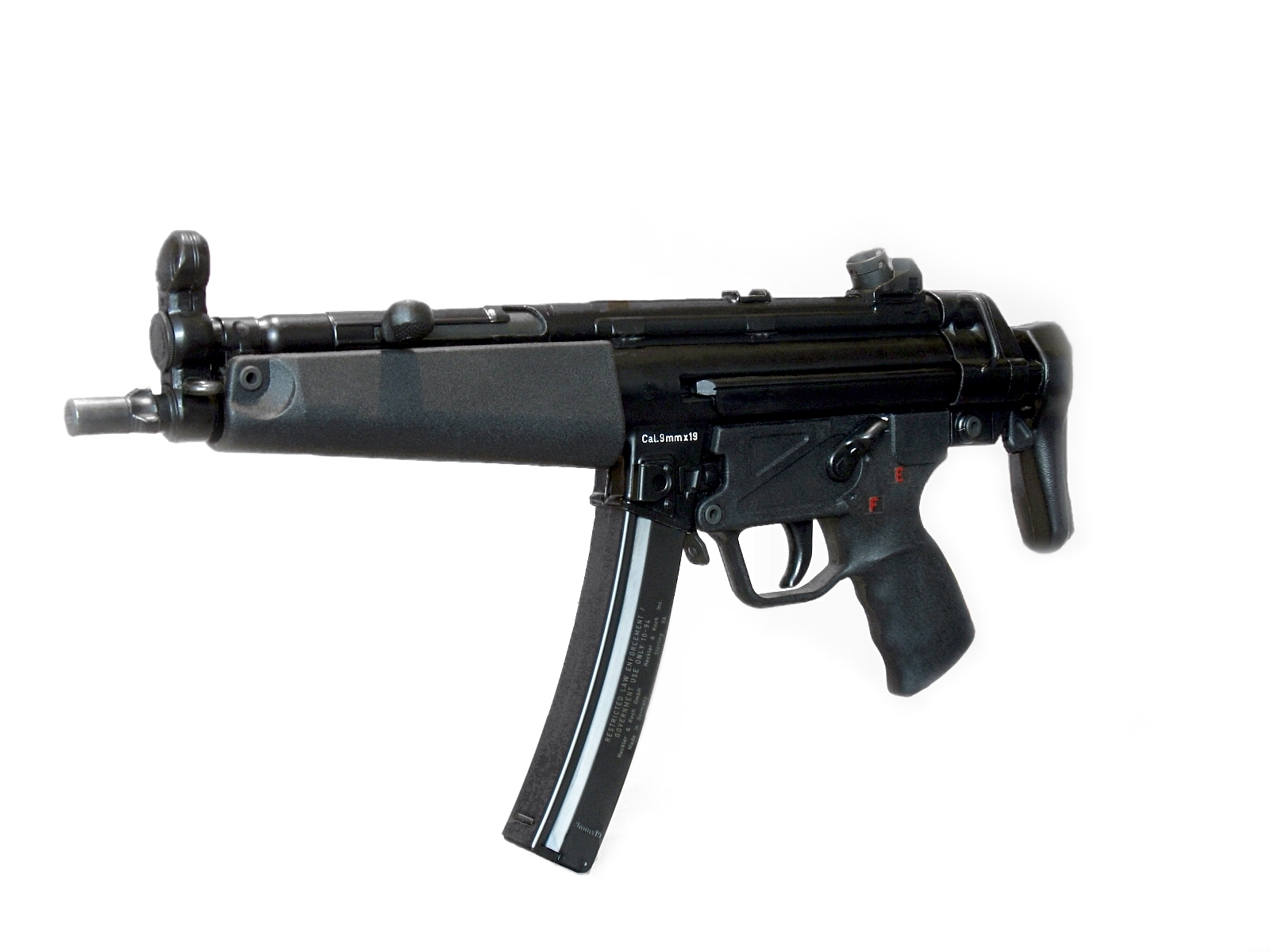
Before the MP5’s retractable stock became standard, Heckler & Koch tested early folding-stock configurations. These trial models retained the roller-delayed blowback system that defined the MP5’s smooth recoil impulse. Chambered in 9×19mm, they offered excellent control in automatic fire. The folding stock significantly shortened the weapon for close-protection roles. Only small trial runs were produced, and most were later converted or retired. These early examples are rarely documented and even more rarely preserved. Their value lies in developmental history rather than visual flair. They reveal how one of the world’s most successful submachine guns reached its final form through careful experimentation.
MAB PA-15 Folding-Stock Variant
The French MAB PA-15 with a folding stock is a little-known postwar submachine gun designed primarily for police use. Chambered in 9×19mm and operating via open-bolt blowback, it emphasized simplicity and compactness. The folding metal stock allowed discreet transport and storage. Production numbers were modest, and folding-stock versions were ordered in particularly small quantities. Its design reflects France’s postwar focus on internal security rather than large-scale military deployment. Visually utilitarian, the PA-15 lacks dramatic styling but compensates with historical relevance. Surviving folding-stock examples are scarce, making them attractive to collectors interested in overlooked European designs.
FAMAE SAF Folding-Stock Submachine Gun
Chile’s FAMAE SAF folding-stock variant represents a localized adaptation of global submachine gun trends. Chambered in 9×19mm, it used a straightforward blowback operation and open-bolt firing. The side-folding stock was rugged and practical, prioritizing durability over elegance. Domestic production was limited, and export was minimal, contributing to its rarity. Designed for urban and vehicle operations, the SAF reflected regional needs rather than international markets. Its visual profile is distinctly utilitarian. For collectors, the folding-stock SAF offers both scarcity and a unique national origin rarely represented in major collections.
Star Z-62 Folding-Stock Prototype
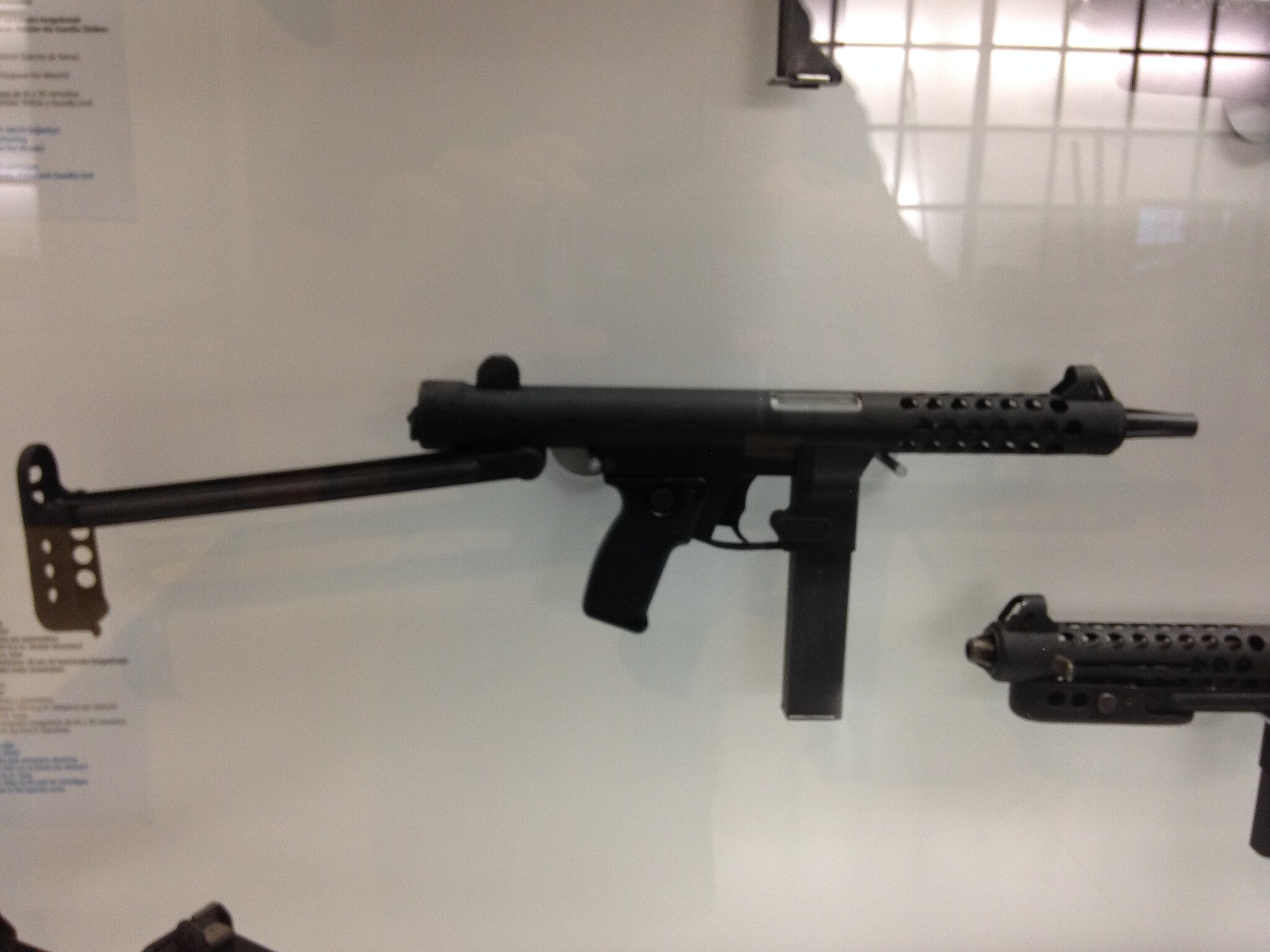
The Spanish Star Z-62 folding-stock prototype is among the rarest submachine gun variants from early Cold War Europe. Chambered in 9×19mm, it featured a compact receiver and open-bolt operation. Folding stocks were tested to improve portability for mechanized units. These stocks folded closely along the weapon, minimizing protrusions. Only a handful of prototypes were produced, and most never left trial status. Documentation is limited, increasing uncertainty about exact numbers. The Z-62 prototype highlights Spain’s independent development path during a politically isolated period. Its scarcity makes it a prized reference for advanced collectors.
BSA Patchett Folding-Stock Development Model
The BSA Patchett folding-stock development models predate the famous Sterling submachine gun. Chambered in 9×19mm, these early designs explored multiple folding mechanisms to reduce length for airborne use. They already exhibited the smooth handling that later defined the Sterling. Production was extremely limited, as these were iterative prototypes rather than finalized weapons. Many were scrapped or modified during development. Surviving examples offer direct insight into postwar British small-arms evolution. Their value lies in transitional design features that bridge wartime concepts and modern refinements.
Czech Sa 23 Folding-Stock Experimental Variant
The Czech Sa 23 experimental folding-stock variant combines innovation with extreme rarity. Chambered in 9×19mm, it used a telescoping bolt that wrapped around the barrel, a forward-thinking design. Folding stocks were tested to further reduce overall length for mechanized infantry. Only limited experimental numbers were produced. These variants never saw widespread service but influenced later firearm layouts globally. The Sa 23 folding-stock experiment reflects Czech engineering creativity and willingness to challenge conventions. Today, it is valued for technical significance as much as scarcity.