Weapons regulation is one of those areas where public assumption and legal reality rarely line up the way most people expect. The average person tends to believe that anything capable of causing serious harm sits somewhere on a prohibited list, but the actual legal landscape across the United States tells a far more complicated and often surprising story. Jurisdiction matters enormously, with legal status shifting between states, counties, and municipalities in ways that leave a remarkable number of genuinely dangerous weapons entirely accessible to ordinary civilians. A 2022 report by the Giffords Law Center identified that fewer than 8 states maintain comprehensive regulatory frameworks covering non-firearm weapon categories, meaning most jurisdictions contain significant legislative gaps. This list covers seven weapons that remain legal across large portions of the country, with precise legal context, historical background, capability data, and the details that explain both why they are still permitted and why that reality continues to catch people completely off guard.
1. Suppressors
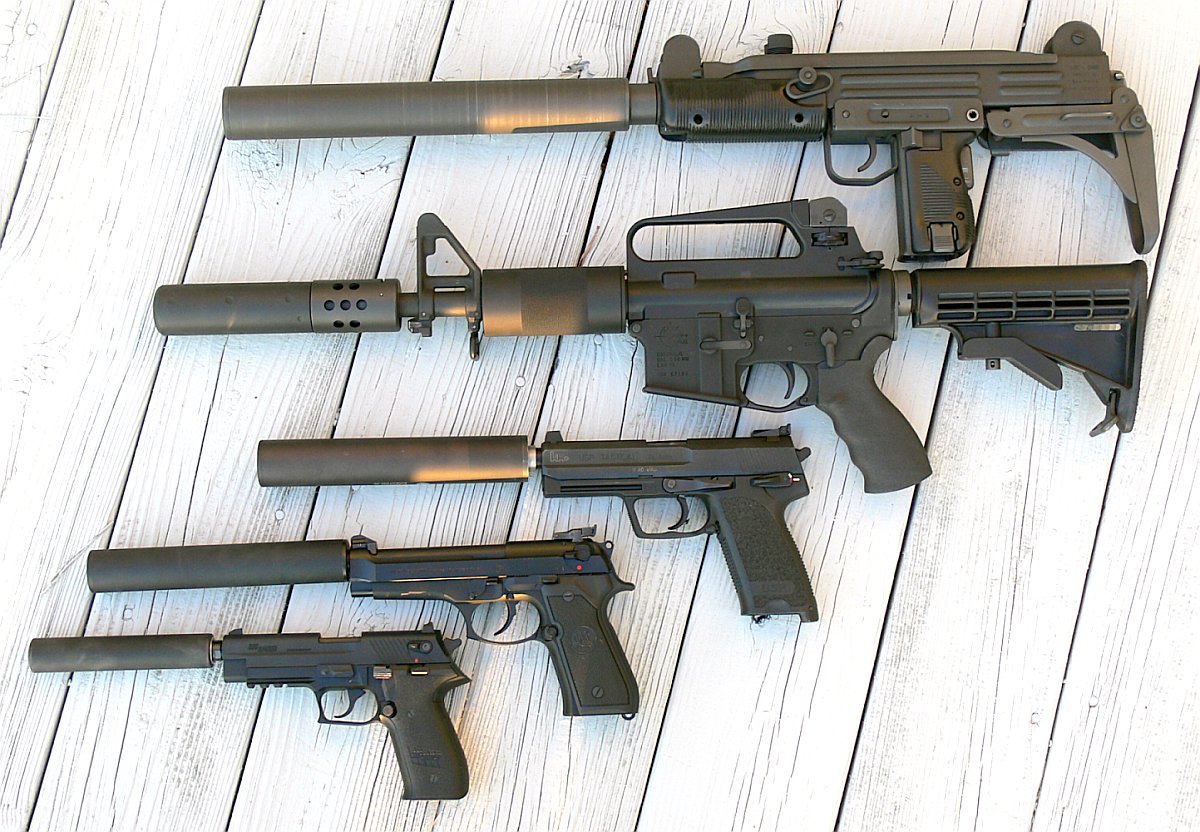
Suppressors sit in a legal position that confuses even experienced gun owners who have been shooting for decades. They are federally legal under the National Firearms Act of 1934, but civilian acquisition requires completing an ATF Form 4 transfer application, paying a $200 tax stamp fee, undergoing an FBI background check, and enduring an approval wait averaging 6 to 12 months as of 2023. Approximately 42 states permit civilian ownership, while Hawaii, California, Illinois, New York, New Jersey, Massachusetts, Rhode Island, and Delaware maintain outright prohibitions. The widespread belief that suppressors are categorically illegal stems almost entirely from their portrayal in film and television as near-silent assassination tools, which has virtually no connection to their real acoustic performance. A suppressed gunshot still produces between 125 and 140 decibels, depending on caliber, comfortably above the 85-decibel threshold at which permanent hearing damage begins accumulating. Their primary legitimate application is hearing conservation during recreational and defensive shooting. The American Suppressor Association estimates approximately 2.7 million suppressors are currently registered with the ATF nationwide, reflecting substantial civilian demand that their regulated but legal status continues to be accommodated despite persistent public misconceptions about their actual accessibility under federal law.
2. Solvent Trap Kits
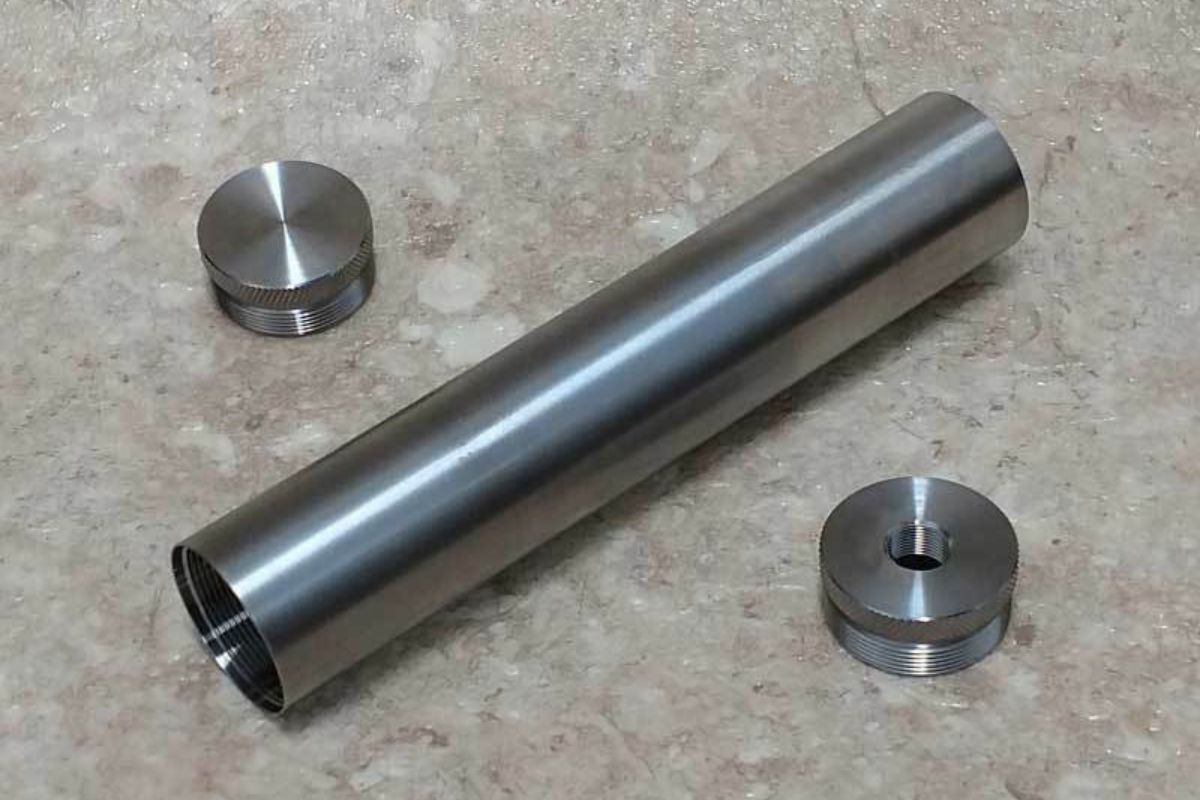
Solvent trap kits represent one of the most legally ambiguous weapon-adjacent products sold openly across mainstream retail platforms in the United States today, and their continued availability generates substantial regulatory debate. They are marketed as firearm cleaning accessories, specifically muzzle-threaded devices that collect cleaning solvent during barrel maintenance to prevent fluid from contaminating work surfaces. A complete kit typically retails between $50 and $200 and is entirely legal to purchase and possess in most states without any permit or registration requirement. The legal complexity arises because their internal geometry closely resembles suppressor baffling components, and any modification toward suppressor function without prior ATF approval and a $200 tax stamp constitutes a federal felony carrying penalties reaching 10 years imprisonment and fines up to $250,000. The ATF has issued multiple public advisories explicitly acknowledging that unmodified solvent traps remain legal while clearly warning against conversion attempts. Their continued open availability reflects the genuine regulatory difficulty of restricting a product with documented legitimate cleaning applications but obvious conversion potential. This tension between intended use and possible misuse has kept solvent traps in a persistent legal grey zone that neither comprehensive NFA reclassification nor outright prohibition has resolved at the federal level, despite ongoing pressure from both regulatory advocates and law enforcement agencies tracking their distribution patterns.
3. Ballistic Knives
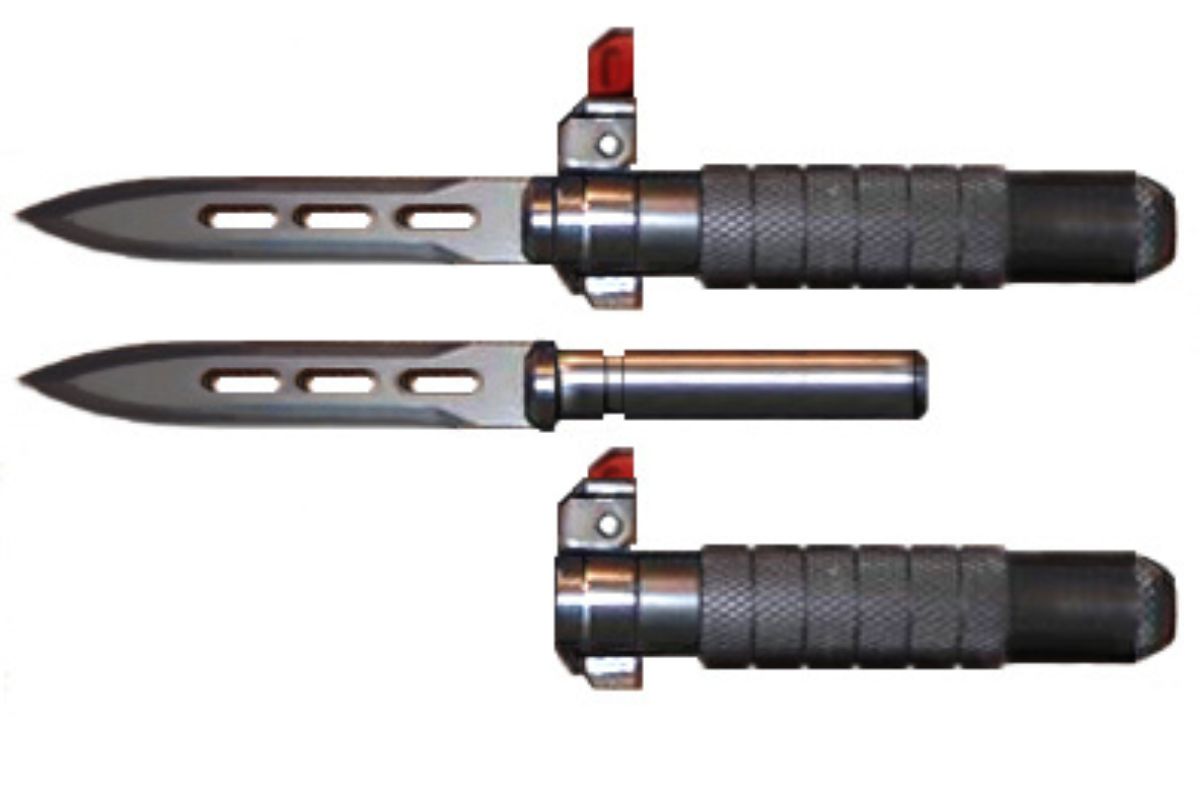
A ballistic knife uses a spring mechanism, compressed gas cartridge, or tensioned elastic cord to propel a detachable blade from its handle at meaningful velocity, functioning essentially as a close-range projectile weapon built around an edged tool. The Federal Switchblade Act of 1958 was amended in 1986 specifically to prohibit interstate commerce, importation, and civilian transfer of ballistic knives, yet ownership itself was never universally criminalised at the federal level, creating a legislative gap that individual states fill with wildly inconsistent results. Approximately 30 states have enacted possession prohibitions, while the remaining states leave ballistic knives in varying degrees of legal accessibility depending on local ordinance. Spring-powered versions documented in controlled testing have projected blades at velocities between 35 and 40 feet per second, sufficient to cause penetrating injury at close range without any additional force from the user beyond activating the release mechanism. Their cultural visibility peaked during the 1980s when action films brought them to public attention and prompted congressional action, yet their actual appearance in documented criminal incidents remains negligible compared to conventional edged weapons. The combination of federal commerce restrictions without universal possession prohibition creates a situation where legal status depends almost entirely on which state a person is standing in at the precise moment of possession, producing one of the more geographically inconsistent weapons legal frameworks currently active in American law.
4. Weighted and Impact-Enhanced Gloves
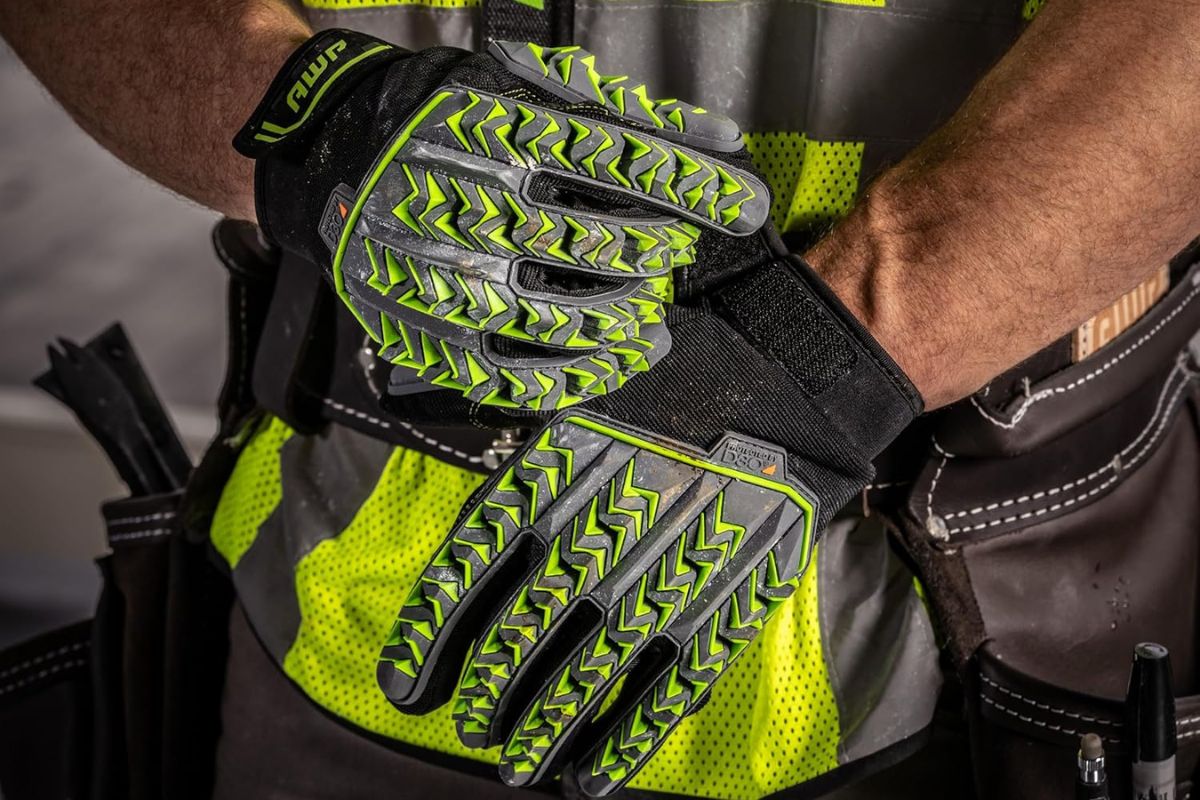
Weighted and impact-enhanced tactical gloves occupy a weapons category that rarely surfaces in mainstream legal discussions despite their open retail availability and genuine capacity for serious harm. Commercially sold tactical gloves incorporating hardened knuckle inserts, steel shot filling, or weighted panel construction are available across dozens of online retailers at prices ranging from $30 to $150, requiring no background check, permit, or age verification beyond standard retail policies in most jurisdictions. Their legal accessibility stems from the fact that most state statutes prohibiting brass knuckles define prohibited items as rigid metal devices, and the soft outer construction of gloves places them outside that statutory language despite producing functionally comparable impact force concentration. Independent biomechanical testing of weighted tactical gloves has documented striking force increases of 40 to 60% compared to unassisted bare-knuckle impact, with the added mass focusing energy across a reduced contact surface area that intensifies tissue damage at the point of contact. Their marketing targets personal protection consumers, security professionals, and tactical training communities, providing commercially plausible legitimate use cases that complicate regulatory action considerably. Several jurisdictions have begun expanding brass knuckle definitions to capture any hand-worn device that mechanically enhances striking force, but the majority of American states have not yet addressed this category with specific legislation, leaving weighted gloves in a legal space that their documented harm potential arguably does not justify maintaining without additional oversight.
5. Bowie Knives and Large Fixed Blades
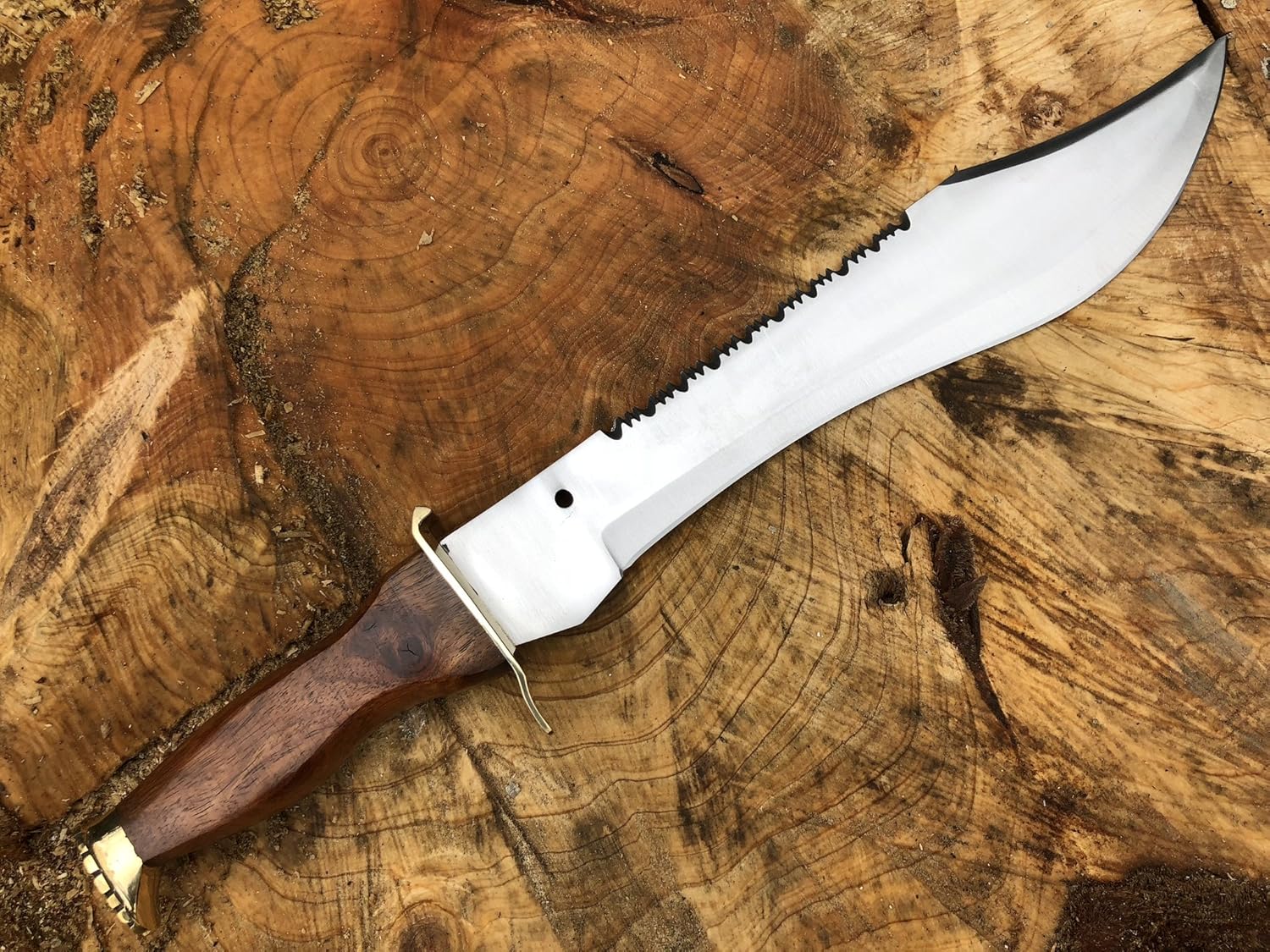
Bowie knives and large fixed-blade knives with blades exceeding 5 inches remain legal to openly carry in a substantial majority of U.S. states, a fact that consistently surprises people who assume uniform blade length restrictions apply across the country. Texas, historically associated with moderately restrictive blade regulations among southern states, revised its weapons statutes in 2017 to permit open carry of blades of any length in most public locations, restricting carry only at specifically designated sensitive sites, including schools, polling locations, and correctional facilities. Alaska and Arizona impose virtually no length restrictions on fixed blades carried openly. A standard Bowie knife features a blade measuring between 8 and 12 inches with a clipped point profile developed for the frontier conditions of the 1830s, capable of serving simultaneously as a hunting tool, camp utility knife, and close-range combat weapon with equal mechanical effectiveness. The legal distinction most states maintain separates open carry from concealed carry rather than regulating by blade length alone, permitting visible carry of large fixed blades while restricting concealed carry of blades exceeding thresholds that vary from 2.5 to 4 inches depending on jurisdiction. This open carry permission for knives that most people instinctively assume fall under strict regulation reflects the degree to which historical tradition, cultural context, and frontier heritage continue shaping American weapons law in ways that modern urban residents frequently find difficult to reconcile with contemporary expectations about public safety regulation.
6. Crossbows
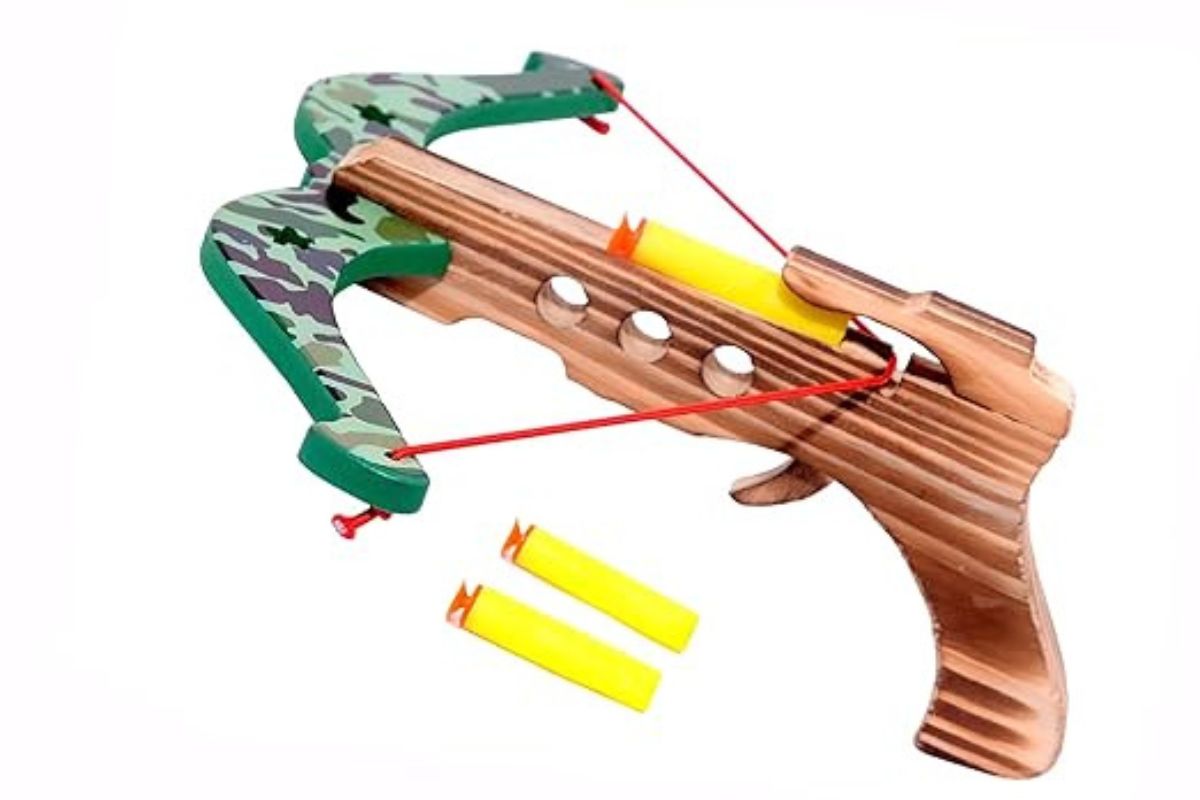
Crossbows are mechanically capable of launching bolts at velocities between 300 and 470 feet per second, generating kinetic energy ranging from 60 to over 100 foot-pounds depending on draw weight and bolt mass, figures that exceed the terminal energy of numerous common handgun cartridges at equivalent distances. Despite these measurable capability numbers, crossbows remain legal for civilian ownership without any federal permit, registration requirement, or background check across all 50 U.S. states, regulated entirely outside the firearms legal framework because they rely on mechanical tension rather than explosive propellant for projectile acceleration. This single mechanical distinction places sophisticated modern crossbows in the same unregulated category as traditional archery equipment, regardless of their engineering complexity or documented projectile energy output. Hunting-grade crossbows retail between $300 and $1,500, with premium models featuring precision-adjustable stocks, integrated optical scopes, automatic safety mechanisms, and anti-dry-fire systems that reflect genuinely advanced manufacturing. The Archery Trade Association estimated approximately 4.7 million Americans actively participate in crossbow hunting as of 2022, reflecting substantial mainstream adoption. Their legal accessibility extends into urban and suburban environments in many jurisdictions without the discharge distance restrictions applied to firearms of lesser projectile energy, creating legally permissible use scenarios that the unmodified firearms regulatory framework would prohibit entirely. This persistent gap between legal treatment and actual capability reflects broader inconsistencies in how American law categorises weapons based on mechanism rather than measurable harm potential.
7. Nunchaku
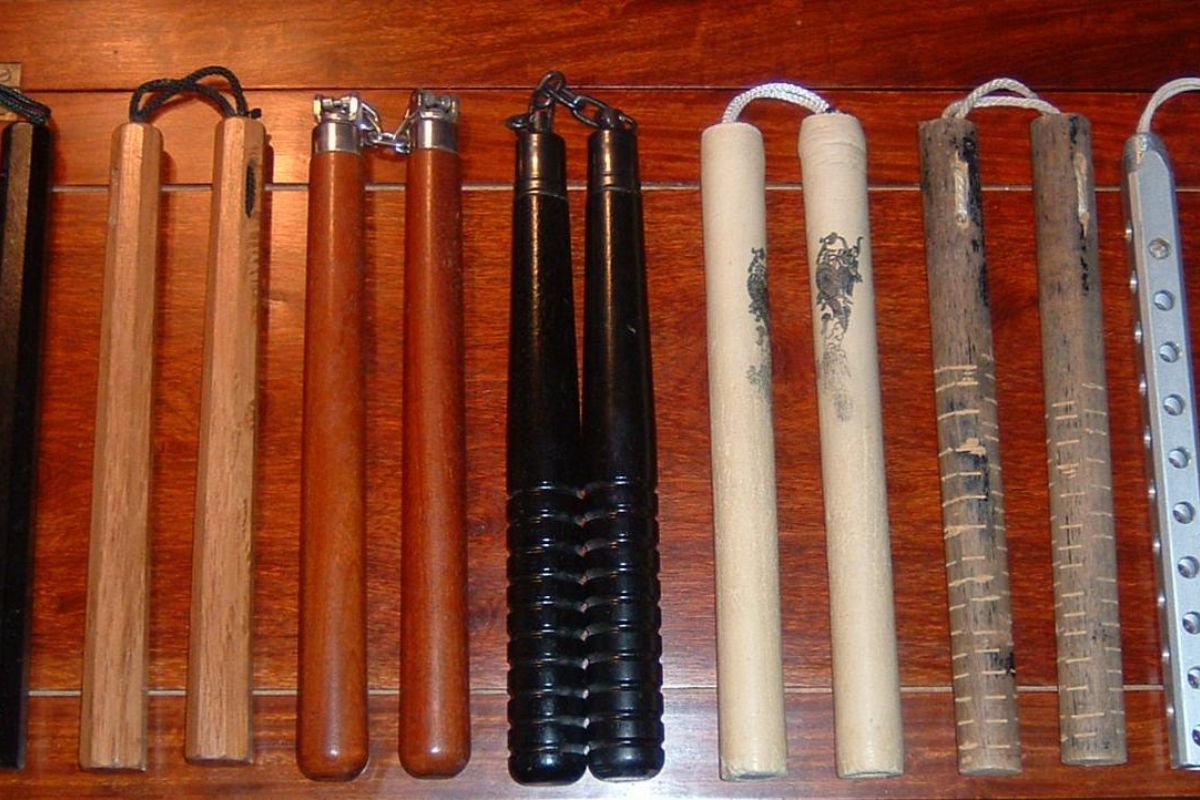
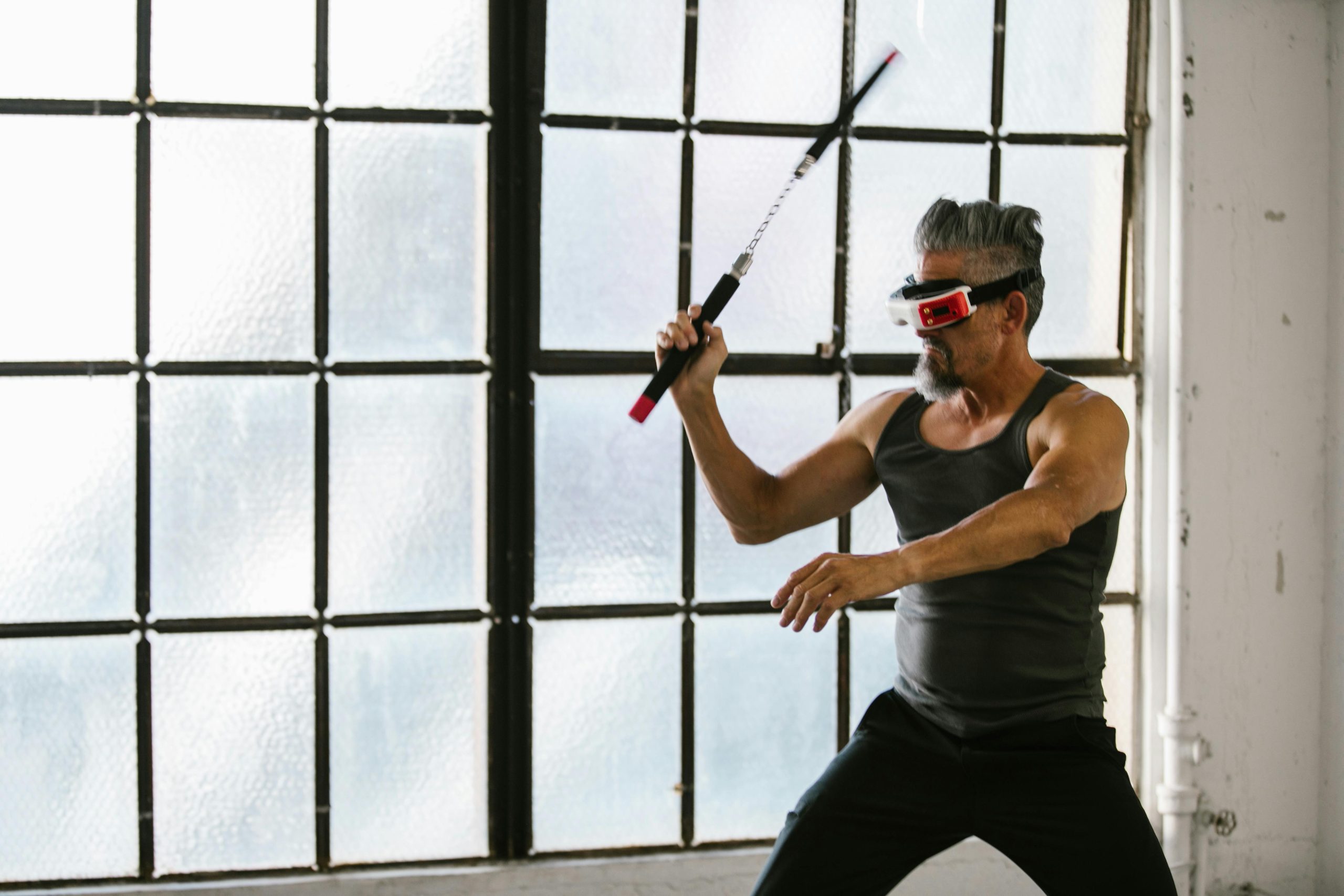
Nunchaku, consisting of two rigid handles connected by a short chain or braided cord, occupies one of the most geographically inconsistent legal positions of any weapon currently subject to active regulation across American jurisdictions. Their cultural prominence arrived through martial arts cinema of the 1970s, particularly films featuring Bruce Lee, triggering a wave of state-level prohibitions driven more by public alarm than by documented criminal use statistics. New York maintained a categorical ban on nunchaku possession for over 40 years before a federal district court ruled in 2018 that the prohibition violated Second Amendment protections, overturning the longstanding ban in a decision that drew considerable national legal attention and commentary. California continues prohibiting nunchaku possession under Penal Code Section 22010, with violations carrying misdemeanor penalties and potential confiscation. Arizona, Texas, and Florida permit nunchaku ownership without meaningful restriction. When wielded by a trained practitioner, nunchaku generate strike velocities exceeding 100 miles per hour with concentrated blunt force impact capable of producing concussion, bone fracture, and serious soft tissue trauma. Yet their documented appearance in actual crime statistics remains negligible compared to conventional impact weapons available without restriction in every hardware store. Their patchwork legal status across state lines makes nunchaku one of the clearest illustrations of how American weapons law continues applying inconsistent standards based on cultural anxiety generated decades ago by entertainment rather than evidence drawn from measurable real-world harm data.