Military firearms hold a special place in the minds of enthusiasts because they combine engineering, history, and battlefield legacy. Many of these weapons shaped major conflicts and influenced the design of countless modern rifles and sidearms. Collectors and historians often admire them not only for their mechanical design but also for the stories attached to them. Some firearms became symbols of entire armies, while others introduced innovations that changed military doctrine. Enthusiasts often study their construction, historical deployment, and the soldiers who carried them. Photographs, museum displays, and collector pieces continue to keep their legacy alive. The following ten military firearms remain especially memorable to enthusiasts because of their reputation, design, and historical impact.
1. M1 Garand
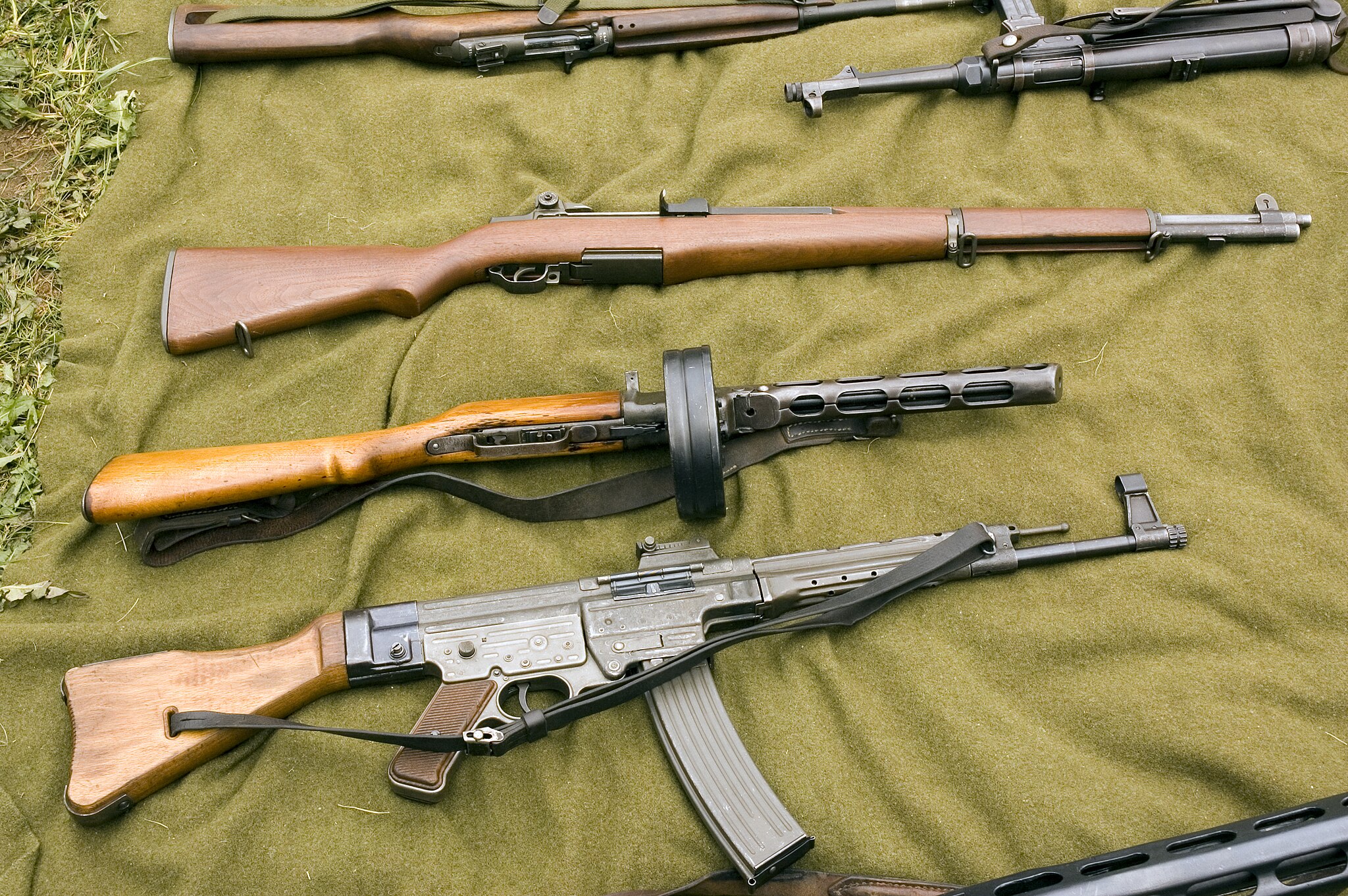
The M1 Garand is one of the most respected rifles in American military history. Adopted by the United States military in the late 1930s, it became the standard infantry rifle during World War II and the Korean War. What made the rifle remarkable was its semi-automatic action at a time when many armies still relied on bolt-action rifles. Soldiers could fire faster and maintain better pressure during combat engagements. The rifle used an eight-round en bloc clip that produced the well-known metallic ping when empty. Enthusiasts often admire its strong construction, walnut stock, and smooth cycling system. Beyond engineering, the Garand represents a turning point in infantry firepower and remains a centerpiece of many military collections.
2. AK 47
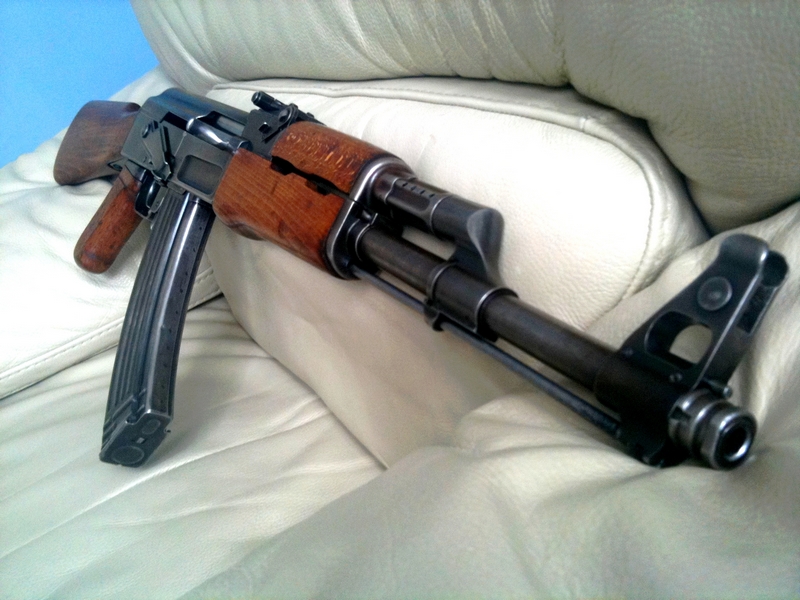
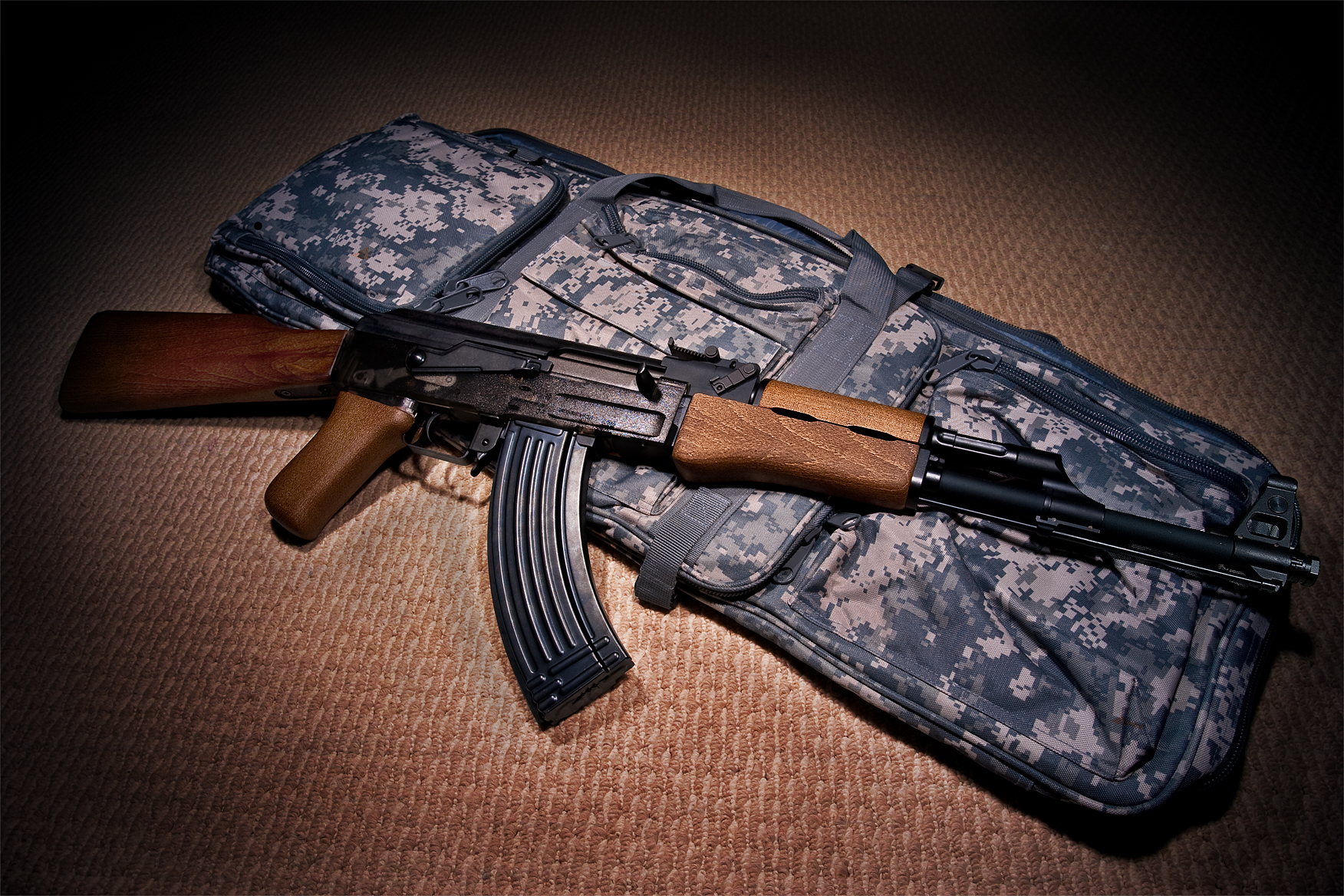
Few firearms have achieved the global recognition of the AK-47. Designed in the Soviet Union by Mikhail Kalashnikov, the rifle entered service in the late 1940s and quickly became one of the most widely distributed military rifles ever produced. Enthusiasts respect the design for its simplicity, durability, and ability to function under difficult environmental conditions. Mud, sand, and rough handling rarely stopped it from operating. The rifle’s distinctive curved magazine and compact profile made it recognizable around the world. Over the decades, numerous variants appeared across many countries. For collectors and historians, the AK-47 represents a major chapter in Cold War military history and continues to influence modern rifle design.
3. M16 Rifle
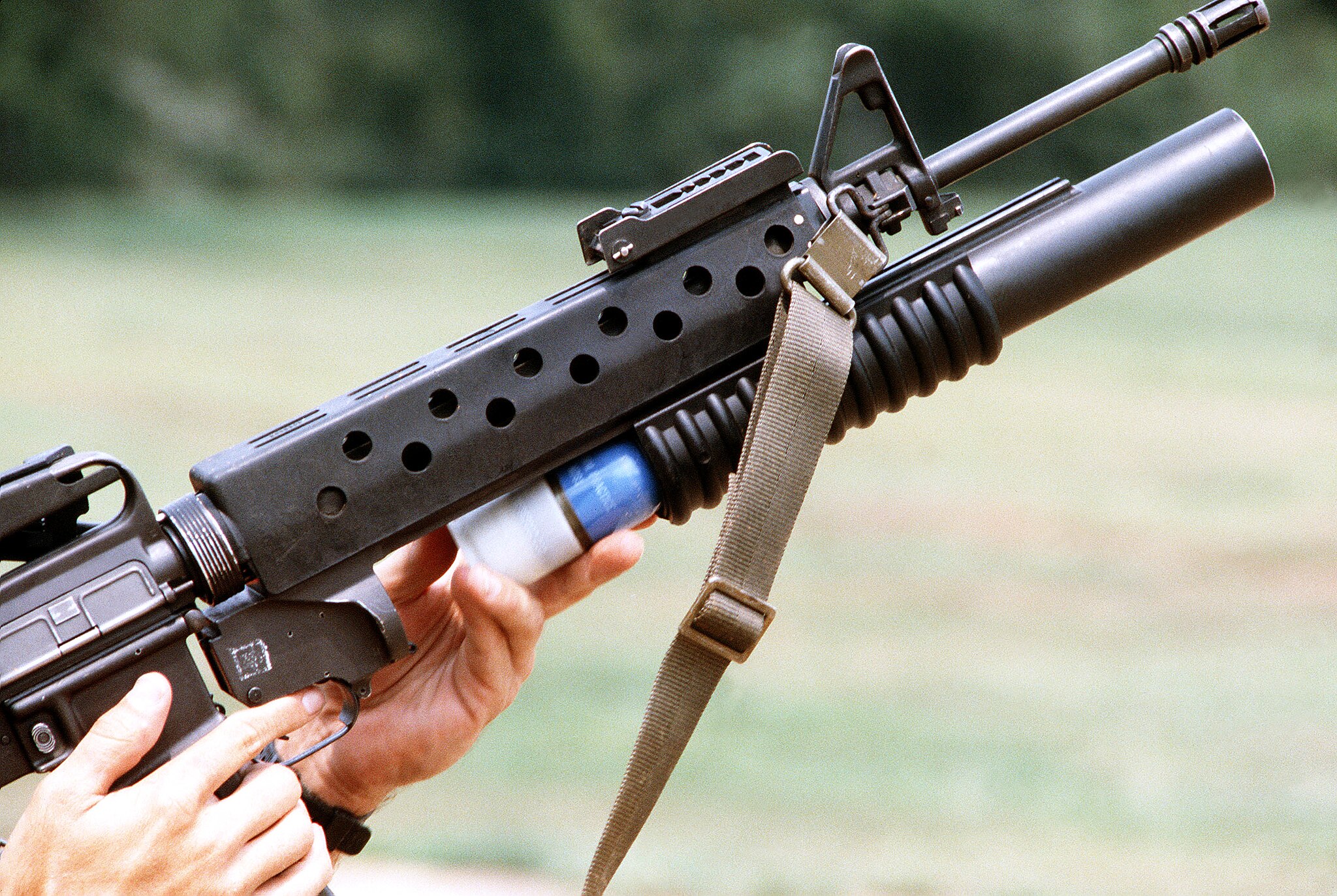
The M16 rifle marked a major shift in modern military small arms design. Introduced during the Vietnam War era, it brought lightweight materials, a smaller caliber cartridge, and high-capacity magazines to the battlefield. Its aluminum receiver and synthetic furniture reduced the weight compared with earlier service rifles. Enthusiasts often appreciate the rifle for its modular design and its role in shaping later military carbines. Early versions experienced reliability concerns in harsh jungle conditions, but later improvements greatly enhanced performance. Over time, the platform evolved into multiple versions used by military forces around the world. The M16 remains a defining symbol of late twentieth-century American military equipment.
4. Lee Enfield No.4
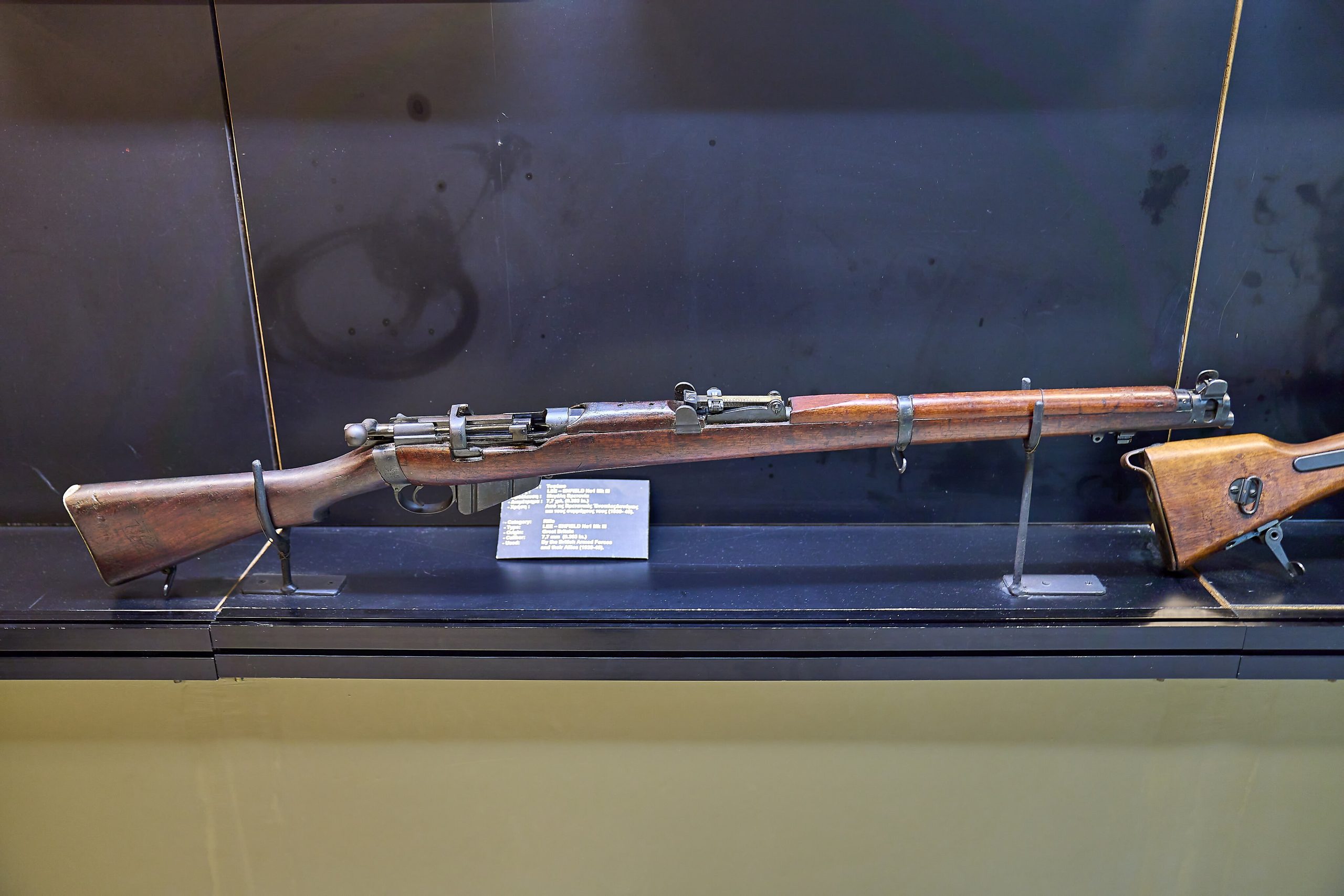
The Lee Enfield rifle served as a primary infantry weapon for British and Commonwealth forces for decades. Known for its smooth bolt action and ten-round magazine capacity, it allowed trained soldiers to maintain impressive firing speed. Enthusiasts often admire the rifle’s craftsmanship and historical association with both World Wars. The design emphasized rapid operation, and skilled riflemen could cycle the bolt while keeping the rifle shouldered. The rifle’s long service life also reflects its reliability and adaptability. Today, collectors value original examples for their markings, wood stocks, and historical significance within British military history.
5. Mauser Karabiner 98k
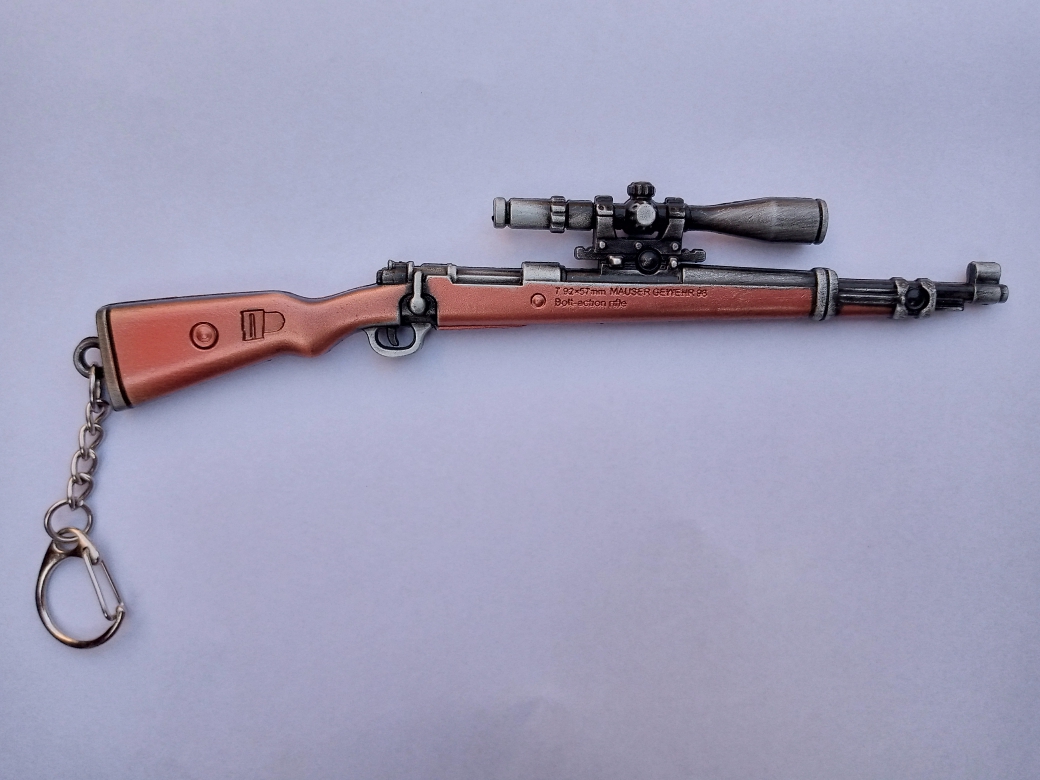
The Karabiner 98k represents one of the most influential bolt-action rifles ever produced. Developed in Germany before World War II, it served as the primary infantry rifle for German forces throughout the conflict. The Mauser action became famous for its strength, precision, and controlled feeding system. Many later sporting rifles adopted similar mechanical principles. Enthusiasts appreciate the rifle for its clean engineering and its lasting influence on firearms design worldwide. Surviving examples often show distinctive markings and historical wear that reflect their wartime production. For many collectors, the 98k stands as one of the most important bolt-action rifles in military history.
6. FN FAL
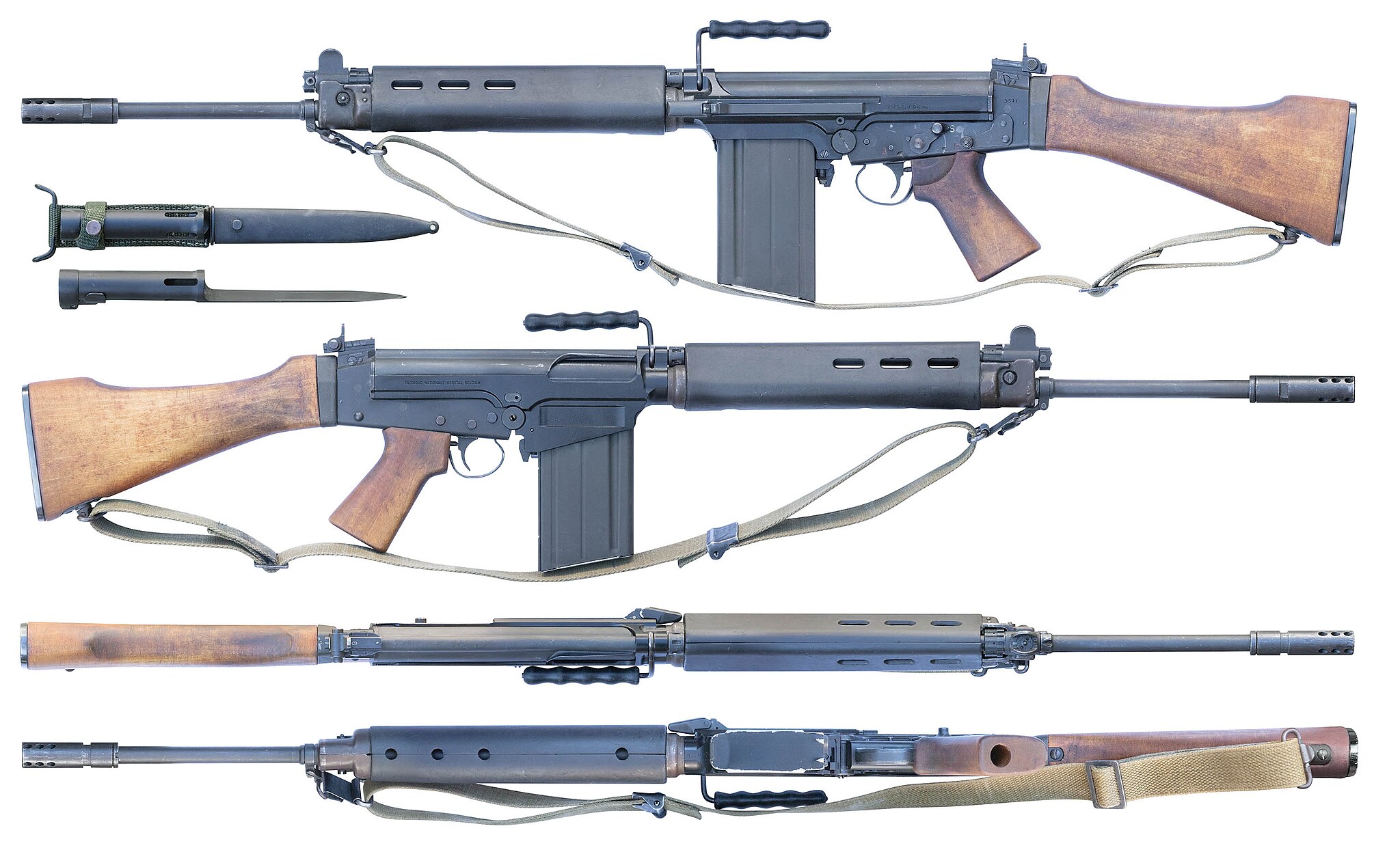
Often referred to as the “Right Arm of the Free World,” the FN FAL became a widely adopted battle rifle during the Cold War. Designed in Belgium, the rifle chambered a powerful full-size cartridge and served in the armed forces of many NATO-aligned countries. Enthusiasts admire its distinctive profile, adjustable gas system, and reputation for reliability. The rifle also appeared in many regional conflicts throughout the twentieth century. Its strong receiver and traditional battle rifle configuration give it a commanding presence among military firearms. Collectors frequently seek examples from different nations because many countries produced their own licensed versions.
7. M14 Rifle
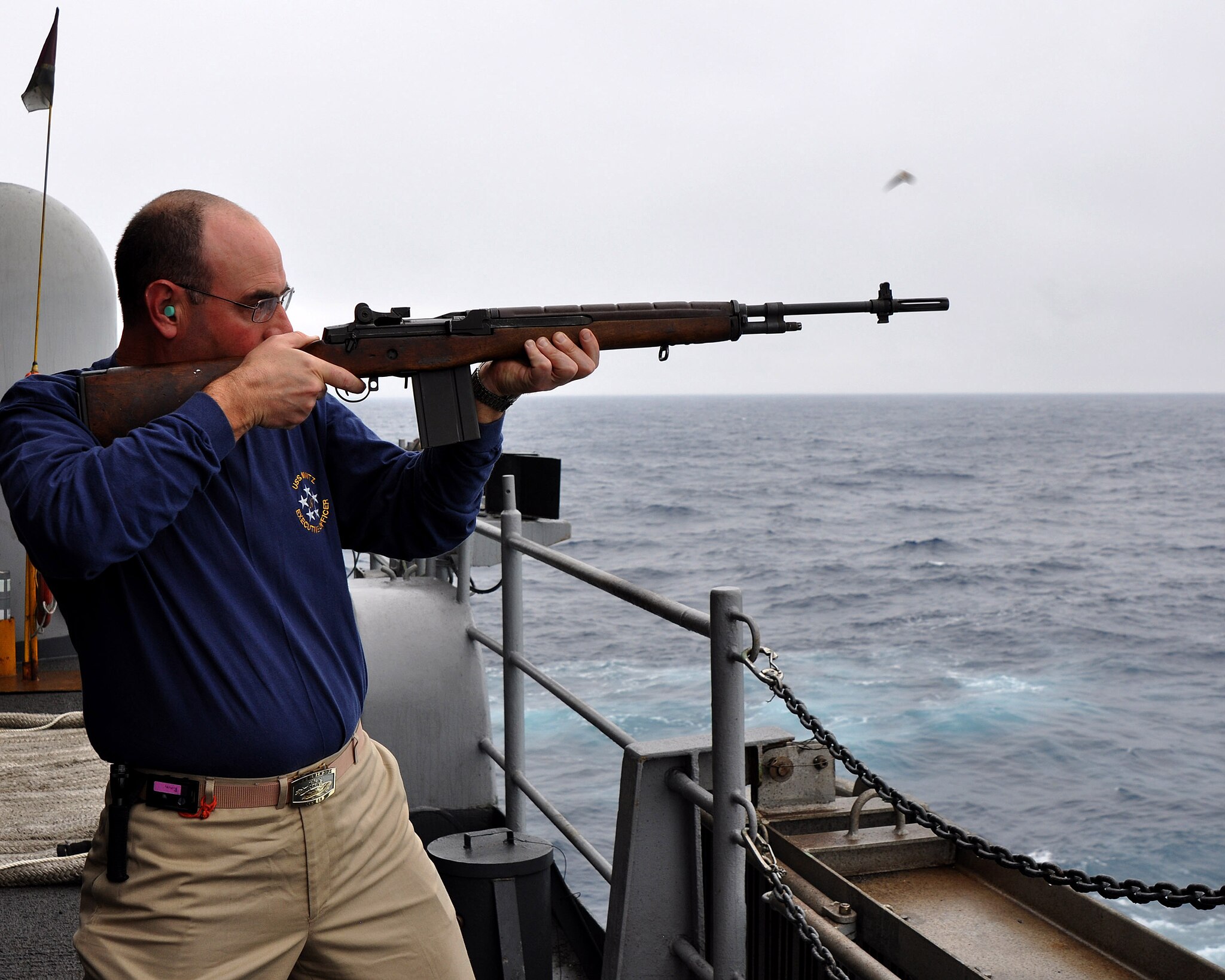
The M14 rifle followed the M1 Garand as a standard service rifle for the United States military. It retained the Garand’s strong operating system while introducing a detachable magazine and selective fire capability. Although its frontline service period as a primary infantry rifle was relatively short, the design remained respected for accuracy and power. Enthusiasts often appreciate the rifle for its traditional wood stock combined with modern military features. The M14 also gained a reputation for precision roles, and modified versions served as designated marksman rifles. Its blend of classic design and modern function keeps it popular among collectors and historians.
8. Mosin Nagant Model 1891/30
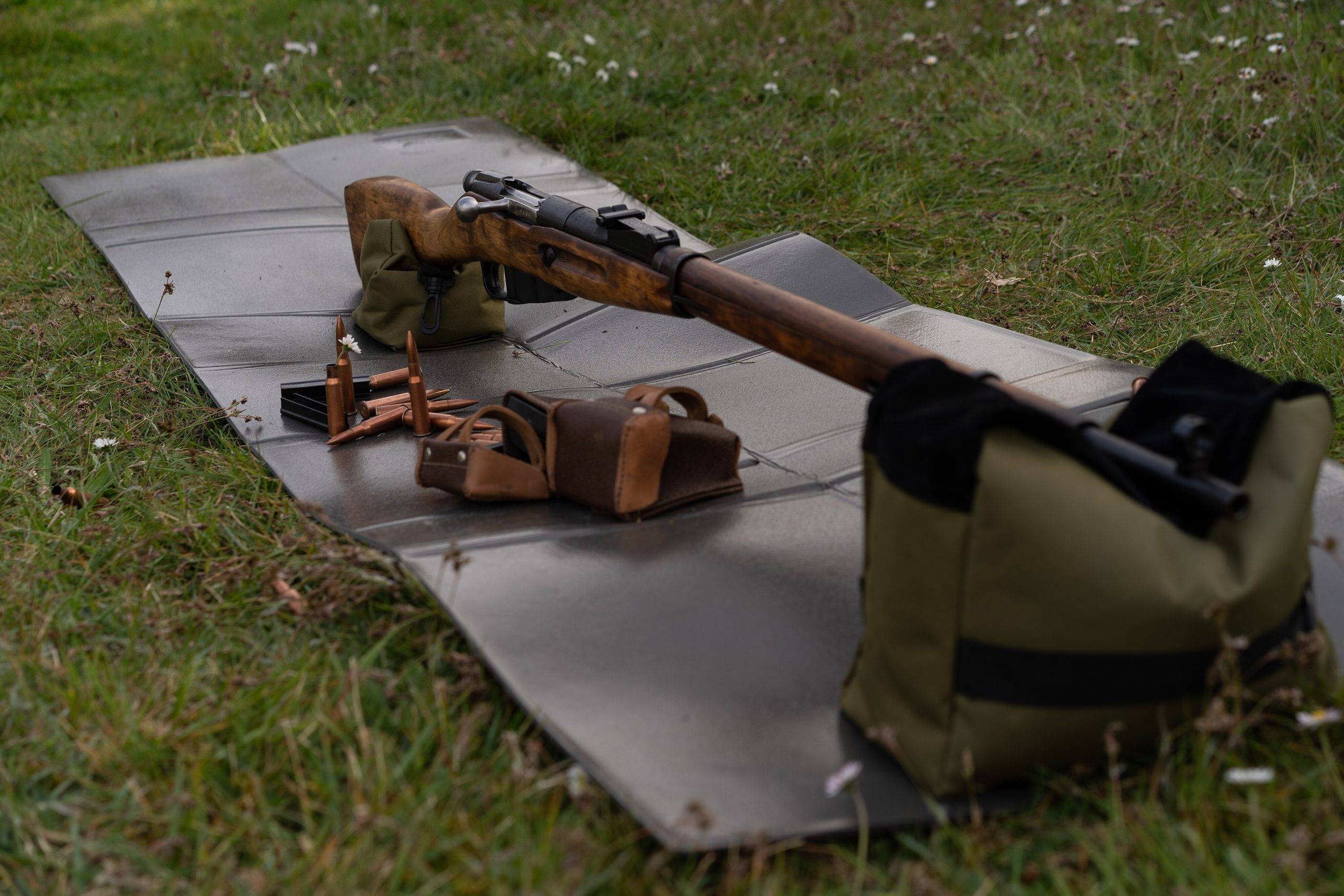
The Mosin-Nagant rifle served the Russian Empire and later the Soviet Union for many decades. Introduced in the late nineteenth century, it remained widely used through World War II. Enthusiasts recognize it for its rugged design and long battlefield history. The rifle’s simple bolt action system allowed large-scale production and dependable service under harsh conditions. Many surviving rifles display markings from wartime factories and arsenals. These historical details make them fascinating pieces for collectors. The Mosin Nagant also became associated with famous wartime snipers, further strengthening its reputation among military firearm enthusiasts.
9. Thompson Submachine Gun
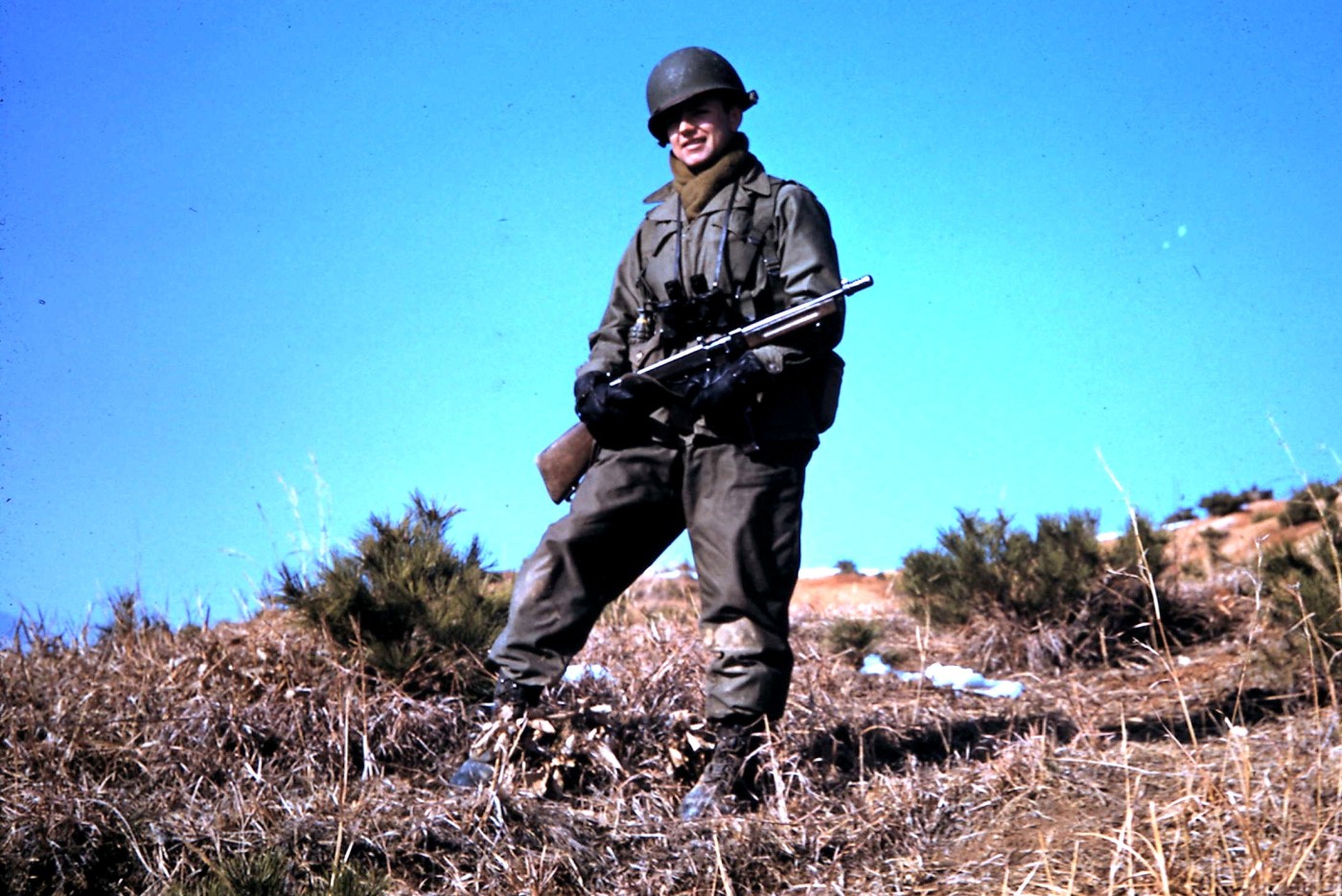
The Thompson submachine gun became one of the most recognizable firearms of the twentieth century. Originally designed in the United States, it gained prominence during World War II with American and Allied forces. Enthusiasts often associate it with its distinctive vertical grip, drum or box magazines, and heavy construction. The weapon fired pistol caliber ammunition at a high rate, making it effective for close quarters combat. Its solid steel design and recognizable silhouette give it a strong visual identity. Beyond military service, the Thompson also appeared in films and historical exhibits, cementing its place in popular culture and firearms history.
10. MP40
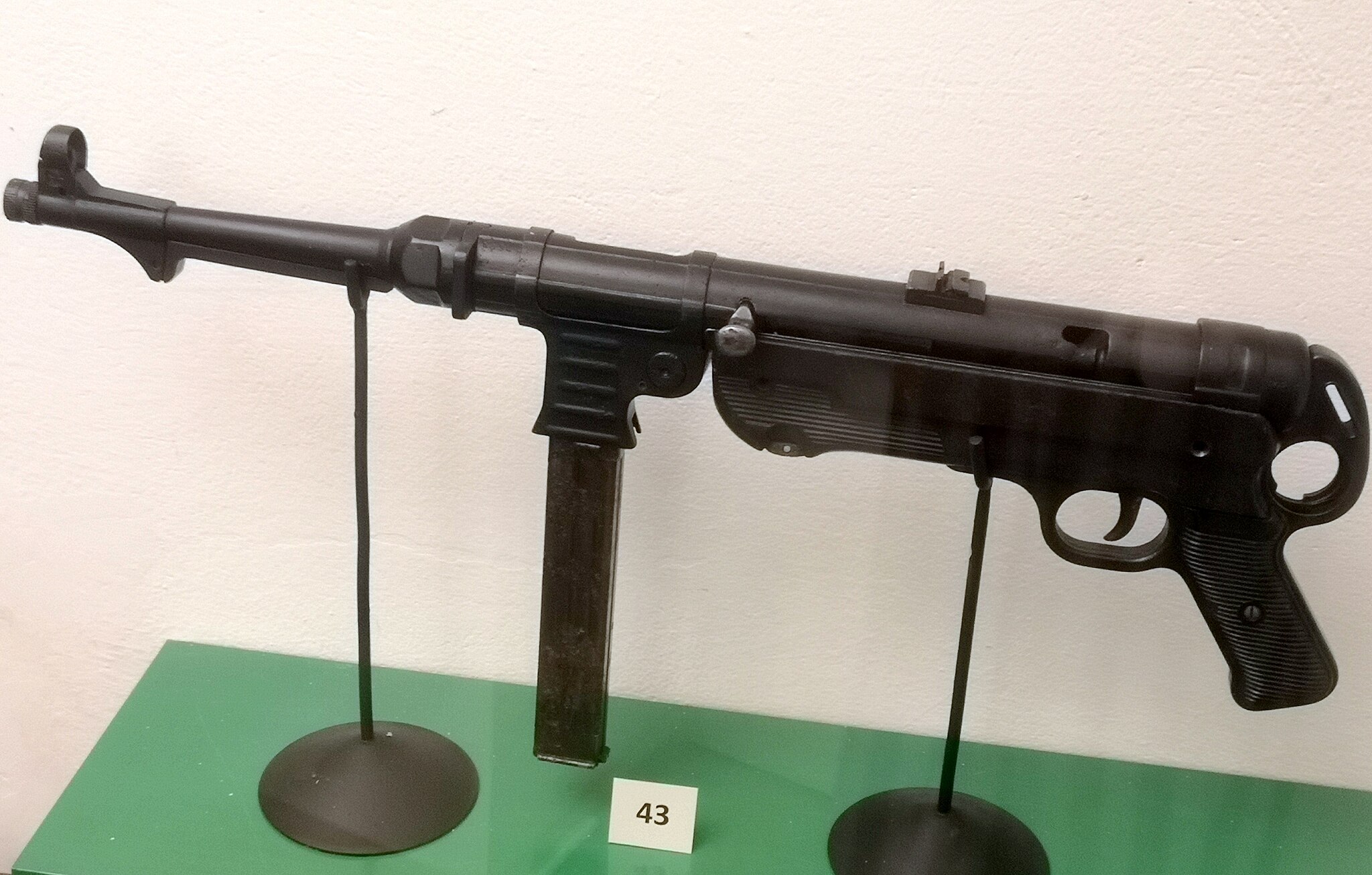
The MP40 submachine gun became a well-known German firearm during World War II. Designed for portability and efficient mass production, it featured a folding metal stock and a compact structure suited for mechanized infantry and vehicle crews. Enthusiasts often appreciate its distinctive profile and historical role during the conflict. The weapon fired pistol caliber ammunition and emphasized controllable automatic fire in close combat situations. Its design also reflected wartime manufacturing needs, using stamped metal components to simplify production. Today, the MP40 remains one of the most recognizable submachine guns in military history and frequently appears in museums and historical collections.